

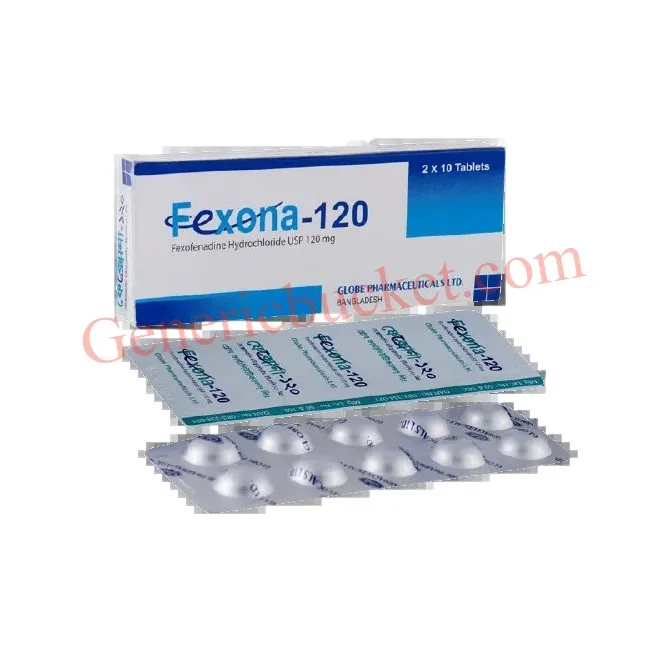

Fexona Tablet (Fexofenadine 120mg)
Price range: $29.00 through $78.00
| Country of Origin | india |
|---|---|
| Dosage Form | Tablets |
| Generic Name | Fexofenadine |
| Indication | treatment of sneezing and runny nose due to allergies |
| Packaging | 10 tablets in 1 strip |
| Manufacturer | Hetero Healthcare Limited |
| Composition | Montelukast (10mg) + Fexofenadine (150mg) |
| Fexona Tablet (Fexofenadine 120mg) | |||
| Pack Size | Price | Price/Unit | Add To Cart |
| 30 Tablet/s | $29.00 (0.97/unit) | $0.97 | |
| 60 Tablet/s | $54.00 (0.9/unit) | $0.9 | |
| 90 Tablet/s | $78.00 (0.87/unit) | $0.87 | |
Fexona Tablet is an anti-allergy medicine used to help relieve common allergy symptoms such as sneezing, runny nose, nasal congestion, itchy or watery eyes, and other symptoms associated with allergic conditions. Importantly, the exact formulation of products sold under the Fexona name can vary by manufacturer and strength. Current product listings identify Fexona formulations containing fexofenadine alone as well as combinations containing fexofenadine and montelukast, so patients should check the package strength and ingredients before use.
What Is Fexona Tablet?
Fexona Tablet is marketed as an oral allergy medicine. Fexofenadine, when present, belongs to a group of medicines called antihistamines. It works by blocking histamine, a chemical involved in many allergy symptoms. Fexofenadine is approved for relief of symptoms associated with seasonal allergic rhinitis and for uncomplicated skin symptoms of chronic idiopathic urticaria, commonly known as hives.
Some Fexona products also contain montelukast. Therefore, you should not assume that every Fexona Tablet has the same ingredients or dosage. One currently listed formulation contains fexofenadine 120 mg with montelukast 10 mg, while another product listed under the Fexona name contains fexofenadine 120 mg alone.
How Fexona Tablet Helps With Allergies
When an allergic reaction occurs, the body can release histamine and other inflammatory substances. Histamine can contribute to sneezing, itching, watery eyes, runny nose, and other uncomfortable symptoms. Fexofenadine reduces the effects of histamine by blocking H1 receptors. This action can provide symptomatic relief without treating the underlying cause of an allergy.
For people with allergic rhinitis, an appropriate fexofenadine product can help control symptoms such as sneezing, runny nose, itchy nose or throat, and itchy or watery eyes. FDA labeling also recognizes fexofenadine for uncomplicated skin manifestations of chronic idiopathic urticaria.
It is more accurate to describe this medicine as symptom-relieving treatment rather than a cure. Allergies can continue to occur when a person encounters the relevant allergen, so treatment aims to control symptoms and improve daily comfort.
Common Uses
Healthcare professionals may recommend an appropriate Fexona formulation for allergy-related symptoms. Depending on the formulation and active ingredients, potential uses may include:
Seasonal allergic rhinitis or hay fever
Sneezing and runny nose
Itchy or watery eyes
Itchy nose or throat
Certain symptoms associated with allergic reactions
Chronic idiopathic urticaria (hives), when an appropriate fexofenadine formulation is indicated
The indication depends on the exact product, strength, patient age, and medical circumstances. Always verify the label before taking the medicine.
How to Take Fexona Tablet
Take the medicine exactly as directed by your healthcare professional or according to the product label. Do not increase the dose because your allergy symptoms feel severe. Taking more than recommended does not necessarily provide better relief and can increase the risk of adverse effects.
For fexofenadine products, the FDA labeling recommends taking tablets with water. Certain formulations have specific administration requirements, so follow the instructions supplied with your particular product.
Do not automatically substitute one Fexona formulation for another because the active ingredients and strengths may differ. If your package contains montelukast in addition to fexofenadine, follow the prescribing instructions for that combination rather than treating it as plain fexofenadine.
Possible Side Effects
Most people tolerate fexofenadine well, but side effects can occur. Depending on the formulation, patients may experience headache, nausea, dizziness, or other unwanted effects.
Seek medical attention promptly if you develop signs of a serious allergic reaction, including facial or throat swelling, difficulty breathing, severe rash, or other symptoms suggesting hypersensitivity. Fexofenadine labeling recognizes rare hypersensitivity reactions, including angioedema and anaphylaxis.
If your Fexona formulation contains montelukast, ask your healthcare professional about its specific warnings and potential adverse effects because the safety profile differs from fexofenadine alone.
Important Precautions
Tell your doctor or pharmacist about your medical history before using this medicine. People with kidney disease may require special consideration because fexofenadine dosing can differ with reduced renal function. Current U.S. labeling specifically advises patients with kidney disease to ask a doctor before use.
Also tell your healthcare professional about all prescription medicines, over-the-counter products, vitamins, and supplements you take. Some antacids containing aluminum or magnesium can interfere with fexofenadine absorption, and product labeling advises avoiding simultaneous administration.
Pregnant or breastfeeding patients should consult a healthcare professional before using any allergy medicine. Never use the product if you previously experienced an allergic reaction to its active ingredients or other components.
Storage and Handling
Store the medicine according to the instructions printed on its packaging. Keep tablets in their original container, protect them from unsuitable temperatures and moisture, and keep them out of the reach of children. Do not use tablets that have changed appearance or passed their expiration date.
Why Choose the Right Allergy Treatment?
Choosing the correct allergy medicine starts with identifying the symptoms and confirming the active ingredients. Fexona products may have different strengths and formulations, making it important to compare the package information with your prescription or healthcare professional’s recommendation.
If you are purchasing Fexona Tablet, verify the strength, active ingredients, manufacturer, expiration date, and directions before placing an order. A pharmacist can help you determine whether the selected product matches your treatment plan.
Frequently Asked Questions
1. What is Fexona Tablet used for?
It is used to relieve allergy-related symptoms. Depending on the formulation, it may contain fexofenadine alone or fexofenadine combined with montelukast. Fexofenadine is used for allergic rhinitis and certain symptoms of chronic idiopathic urticaria.
2. Does Fexona Tablet cure allergies permanently?
No. Allergy medicines generally control or relieve symptoms rather than permanently curing the underlying allergic tendency.
3. Is Fexona Tablet an antihistamine?
Fexona products containing fexofenadine are antihistamine medicines. Fexofenadine works by blocking the effects of histamine.
4. Can I take Fexona Tablet every day?
Some fexofenadine products are designed for regular daily use, but the appropriate schedule depends on the formulation, strength, age, kidney function, and medical condition. Follow your healthcare professional’s instructions or the product label.
5. Can I take Fexona Tablet with antacids?
Aluminum- or magnesium-containing antacids can reduce fexofenadine absorption. Follow the product labeling regarding separation of doses.
Be the first to review “Fexona Tablet (Fexofenadine 120mg)”
Related products





Allergy
Reviews
There are no reviews yet.