

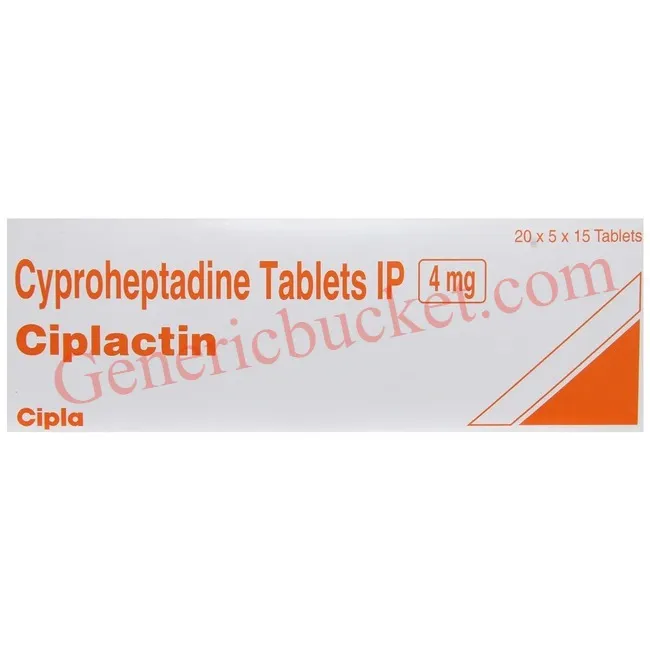

Ciplactin Tablet (Cyproheptadine 4mg)
Price range: $25.00 through $76.00
| Active Ingredient (Generic Name): | Cyproheptadine |
|---|---|
| Indication: | Appetite stimulant |
| Manufacturer: | Cipla Limited |
| Packaging: | 15 tablets in 1 strip |
| Strength | 4mg |
| Pack Size | 60 Tablet/s, 120 Tablet/s, 240 Tablet/s |
| Ciplactin Tablet (Cyproheptadine 4mg) | |||
| Pack Size | Price | Price/Unit | Add To Cart |
| 60 Tablet/s | $25.00 (0.42/unit) | $0.42 | |
| 120 Tablet/s | $42.00 (0.35/unit) | $0.35 | |
| 240 Tablet/s | $76.00 (0.32/unit) | $0.32 | |
Ciplactin Tablet contains cyproheptadine hydrochloride, an antihistamine that helps relieve several allergic symptoms. The manufacturer’s prescribing information identifies cyproheptadine hydrochloride as the active ingredient and lists a 4 mg tablet formulation. It is used for conditions such as allergic rhinitis, allergic conjunctivitis, hives (urticaria), angioedema, cold urticaria, and dermatographism.
Ciplactin is a first-generation antihistamine, meaning it blocks histamine, a substance involved in many allergy symptoms. Cyproheptadine also has antiserotonergic and anticholinergic activity. Because of these effects, it can cause drowsiness and other side effects in some people.
How Ciplactin Tablet Works
When an allergic reaction occurs, the body releases histamine. Histamine can contribute to sneezing, runny nose, itchy or watery eyes, itching, rashes, and hives. Cyproheptadine blocks histamine receptors, which reduces these symptoms. MedlinePlus describes cyproheptadine as an antihistamine that works by blocking histamine responsible for allergic symptoms.
The medicine can also block serotonin receptors. Clinicians may use this property for certain conditions outside its principal allergy indications, but such use should be based on an individualized medical assessment. Do not use the medicine simply because it may have been prescribed for someone else.
Uses and Potential Benefits
Doctors may prescribe Ciplactin for several allergy-related conditions. These include seasonal or perennial allergic rhinitis, where symptoms may include sneezing, nasal irritation, and a runny nose. It may also help allergic conjunctivitis involving itchy, red, or watery eyes.
Healthcare professionals may also use cyproheptadine for allergic skin problems such as hives, itching, angioedema, cold urticaria, and dermatographism. It may reduce the itching and other symptoms associated with these conditions.
Cyproheptadine is also sometimes prescribed to stimulate appetite. However, appetite stimulation and weight gain should not be treated as a reason to self-medicate. A healthcare professional should determine why appetite is poor and whether cyproheptadine is appropriate.
Ciplactin Tablet Dosage
The appropriate dose depends on the patient’s age, medical condition, response to treatment, and other medicines. The official product information states that dosage should be individualized. For the 4 mg formulation, the manufacturer’s prescribing information provides different dosing recommendations for adults and pediatric patients.
Do not increase the dose because you believe a larger amount will provide faster relief. Taking more cyproheptadine than prescribed can increase the risk of excessive sedation and potentially serious toxicity. Pediatric dosing requires particular care because antihistamine overdoses can be dangerous in young children.
Take the tablet exactly as directed by your healthcare professional. If you forget a dose, follow the instructions provided by your prescriber or pharmacist rather than taking extra medicine to compensate.
Common Side Effects
Because cyproheptadine can affect the central nervous system, drowsiness is one of the important side effects to consider. Dizziness, reduced alertness, dry mouth, nausea, and other anticholinergic effects may also occur. Individual responses vary.
Avoid driving, operating machinery, or performing activities requiring full concentration until you know how the medicine affects you. Alcohol and other central nervous system depressants can increase sedative effects.
Seek urgent medical attention for severe or unusual symptoms, particularly signs of a serious allergic reaction, severe confusion, seizures, difficulty breathing, or significant loss of consciousness.
Important Precautions
Before starting Ciplactin, tell your doctor or pharmacist about your complete medical history and all medicines, vitamins, and supplements you take. Cyproheptadine can interact with other medicines, and certain medical conditions can make it unsuitable.
The prescribing information lists contraindications including hypersensitivity to cyproheptadine, use with monoamine oxidase inhibitors, narrow-angle glaucoma, stenosing peptic ulcer, symptomatic prostate enlargement, bladder-neck obstruction, and pyloroduodenal obstruction. It is also contraindicated in newborn or premature infants and in nursing mothers according to the cited prescribing information.
People with glaucoma, urinary difficulties, stomach or intestinal obstruction, or other conditions affected by anticholinergic medicines should receive professional advice before using it. Older adults may also be more susceptible to dizziness, sedation, and low blood pressure.
Ciplactin and Appetite or Weight Gain
Cyproheptadine is sometimes used under medical supervision when appetite stimulation is clinically appropriate. Some medicine references describe this additional use, but it does not mean that everyone who wants to gain weight should take the medicine.
Unexplained appetite loss or weight loss can have many causes. A healthcare professional should evaluate the underlying problem before recommending an appetite stimulant. Healthy nutrition, adequate protein and calories, and treatment of the underlying condition remain important.
Storage and Responsible Use
Keep Ciplactin in its original packaging and store it according to the product label. Keep medicines away from children. Never share prescription medicine with another person, even when that person appears to have similar symptoms.
For customers seeking to obtain Ciplactin, the safest approach is to use a legitimate pharmacy and follow applicable prescription requirements. Availability and dispensing rules vary by country. In the United States, patients should confirm whether a particular imported or branded formulation is legally available and appropriate for their treatment with a licensed healthcare professional.
Frequently Asked Questions
1. What is Ciplactin Tablet used for?
Ciplactin contains cyproheptadine, an antihistamine used for several allergic conditions, including allergic rhinitis, allergic conjunctivitis, hives, itching, and certain other allergic skin manifestations.
2. Does Ciplactin cause sleepiness?
Yes. Cyproheptadine can cause drowsiness and reduced alertness. Avoid driving or operating machinery until you understand how it affects you. Alcohol may increase sedation.
3. Can Ciplactin increase appetite?
Cyproheptadine may stimulate appetite and is sometimes prescribed for this purpose. However, it should not be used for weight gain without medical guidance because the underlying cause of poor appetite should first be evaluated.
4. Can children take Ciplactin?
Cyproheptadine requires careful age-appropriate dosing. The prescribing information provides specific pediatric dosing for children aged 2 years and older and states that it should not be used in newborn or premature infants. Never give a child’s dose without professional guidance.
5. Can I take Ciplactin with alcohol?
It is best to avoid alcohol because both alcohol and cyproheptadine can depress the central nervous system and increase drowsiness or impaired alertness.Ciplactin Tablet contains cyproheptadine hydrochloride, an antihistamine that helps relieve several allergic symptoms. The manufacturer’s prescribing information identifies cyproheptadine hydrochloride as the active ingredient and lists a 4 mg tablet formulation. It is used for conditions such as allergic rhinitis, allergic conjunctivitis, hives (urticaria), angioedema, cold urticaria, and dermatographism.
Ciplactin is a first-generation antihistamine, meaning it blocks histamine, a substance involved in many allergy symptoms. Cyproheptadine also has antiserotonergic and anticholinergic activity. Because of these effects, it can cause drowsiness and other side effects in some people.
How Ciplactin Tablet Works
When an allergic reaction occurs, the body releases histamine. Histamine can contribute to sneezing, runny nose, itchy or watery eyes, itching, rashes, and hives. Cyproheptadine blocks histamine receptors, which reduces these symptoms. MedlinePlus describes cyproheptadine as an antihistamine that works by blocking histamine responsible for allergic symptoms.
The medicine can also block serotonin receptors. Clinicians may use this property for certain conditions outside its principal allergy indications, but such use should be based on an individualized medical assessment. Do not use the medicine simply because it may have been prescribed for someone else.
Uses and Potential Benefits
Doctors may prescribe Ciplactin for several allergy-related conditions. These include seasonal or perennial allergic rhinitis, where symptoms may include sneezing, nasal irritation, and a runny nose. It may also help allergic conjunctivitis involving itchy, red, or watery eyes.
Healthcare professionals may also use cyproheptadine for allergic skin problems such as hives, itching, angioedema, cold urticaria, and dermatographism. It may reduce the itching and other symptoms associated with these conditions.
Cyproheptadine is also sometimes prescribed to stimulate appetite. However, appetite stimulation and weight gain should not be treated as a reason to self-medicate. A healthcare professional should determine why appetite is poor and whether cyproheptadine is appropriate.
Ciplactin Tablet Dosage
The appropriate dose depends on the patient’s age, medical condition, response to treatment, and other medicines. The official product information states that dosage should be individualized. For the 4 mg formulation, the manufacturer’s prescribing information provides different dosing recommendations for adults and pediatric patients.
Do not increase the dose because you believe a larger amount will provide faster relief. Taking more cyproheptadine than prescribed can increase the risk of excessive sedation and potentially serious toxicity. Pediatric dosing requires particular care because antihistamine overdoses can be dangerous in young children.
Take the tablet exactly as directed by your healthcare professional. If you forget a dose, follow the instructions provided by your prescriber or pharmacist rather than taking extra medicine to compensate.
Common Side Effects
Because cyproheptadine can affect the central nervous system, drowsiness is one of the important side effects to consider. Dizziness, reduced alertness, dry mouth, nausea, and other anticholinergic effects may also occur. Individual responses vary.
Avoid driving, operating machinery, or performing activities requiring full concentration until you know how the medicine affects you. Alcohol and other central nervous system depressants can increase sedative effects.
Seek urgent medical attention for severe or unusual symptoms, particularly signs of a serious allergic reaction, severe confusion, seizures, difficulty breathing, or significant loss of consciousness.
Important Precautions
Before starting Ciplactin, tell your doctor or pharmacist about your complete medical history and all medicines, vitamins, and supplements you take. Cyproheptadine can interact with other medicines, and certain medical conditions can make it unsuitable.
The prescribing information lists contraindications including hypersensitivity to cyproheptadine, use with monoamine oxidase inhibitors, narrow-angle glaucoma, stenosing peptic ulcer, symptomatic prostate enlargement, bladder-neck obstruction, and pyloroduodenal obstruction. It is also contraindicated in newborn or premature infants and in nursing mothers according to the cited prescribing information.
People with glaucoma, urinary difficulties, stomach or intestinal obstruction, or other conditions affected by anticholinergic medicines should receive professional advice before using it. Older adults may also be more susceptible to dizziness, sedation, and low blood pressure.
Ciplactin and Appetite or Weight Gain
Cyproheptadine is sometimes used under medical supervision when appetite stimulation is clinically appropriate. Some medicine references describe this additional use, but it does not mean that everyone who wants to gain weight should take the medicine.
Unexplained appetite loss or weight loss can have many causes. A healthcare professional should evaluate the underlying problem before recommending an appetite stimulant. Healthy nutrition, adequate protein and calories, and treatment of the underlying condition remain important.
Storage and Responsible Use
Keep Ciplactin in its original packaging and store it according to the product label. Keep medicines away from children. Never share prescription medicine with another person, even when that person appears to have similar symptoms.
For customers seeking to obtain Ciplactin, the safest approach is to use a legitimate pharmacy and follow applicable prescription requirements. Availability and dispensing rules vary by country. In the United States, patients should confirm whether a particular imported or branded formulation is legally available and appropriate for their treatment with a licensed healthcare professional.
Frequently Asked Questions
1. What is Ciplactin Tablet used for?
Ciplactin contains cyproheptadine, an antihistamine used for several allergic conditions, including allergic rhinitis, allergic conjunctivitis, hives, itching, and certain other allergic skin manifestations.
2. Does Ciplactin cause sleepiness?
Yes. Cyproheptadine can cause drowsiness and reduced alertness. Avoid driving or operating machinery until you understand how it affects you. Alcohol may increase sedation.
3. Can Ciplactin increase appetite?
Cyproheptadine may stimulate appetite and is sometimes prescribed for this purpose. However, it should not be used for weight gain without medical guidance because the underlying cause of poor appetite should first be evaluated.
4. Can children take Ciplactin?
Cyproheptadine requires careful age-appropriate dosing. The prescribing information provides specific pediatric dosing for children aged 2 years and older and states that it should not be used in newborn or premature infants. Never give a child’s dose without professional guidance.
5. Can I take Ciplactin with alcohol?
It is best to avoid alcohol because both alcohol and cyproheptadine can depress the central nervous system and increase drowsiness or impaired alertness.
Be the first to review “Ciplactin Tablet (Cyproheptadine 4mg)”
Related products

Allergy








Reviews
There are no reviews yet.