
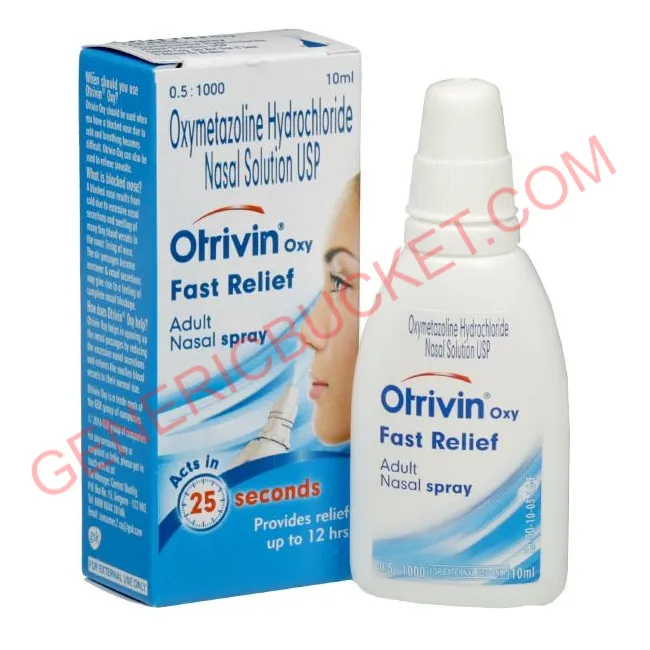

Otrivin Paediatric Nasal Drops (Xylometazoline0.05%)
Price range: $30.00 through $75.00
| Country of Origin | India |
|---|---|
| Dosage Form | Nasal Solution |
| Equivalent Brand | Otrivin |
| Generic Name | Xylometazoline |
| Indication | Common cold symptoms |
| Manufacturer | Novartis India Ltd |
| Packaging | 10 ml in1 bottle |
| Composition | Xylometazoline (0.05%) |
| Pack Size | 3 Bottle/s, 6 Bottle/s, 9 Bottle/s |
| Otrivin Paediatric Nasal Drops (Xylometazoline0.05%) | |||
| Pack Size | Price | Price/Unit | Add To Cart |
| 3 Bottle/s | $30.00 (10/unit) | $10 | |
| 6 Bottle/s | $55.00 (9.17/unit) | $9.17 | |
| 9 Bottle/s | $75.00 (8.33/unit) | $8.33 | |
Otrivin Paediatric Nasal Drops are designed to provide temporary relief from nasal congestion and help children breathe more comfortably when their nose becomes blocked. Nasal blockage can occur with common colds, allergies, sinus irritation, or exposure to environmental irritants. A congested nose can make sleeping, feeding, and everyday activities more difficult, particularly for younger children. These nasal drops may help reduce swelling inside the nasal passages when used according to the product label and a healthcare professional’s advice.
Parents should understand that Otrivin Paediatric Nasal Drops do not cure the underlying infection that causes a cold. Instead, an appropriate pediatric nasal decongestant may provide symptomatic relief while the child’s body recovers. Because pediatric medicines require careful dosing, parents should always verify the exact strength, ingredients, age recommendation, and directions supplied with their specific product.
How Otrivin Paediatric Nasal Drops Work
Depending on the specific formulation, pediatric Otrivin products may contain a nasal decongestant such as xylometazoline. Decongestants work by narrowing swollen blood vessels in the lining of the nose. This action can reduce tissue swelling and temporarily open the nasal passages.
When congestion decreases, a child may find it easier to breathe through the nose. This can make rest and sleep more comfortable. However, parents should never increase the dose or frequency simply because congestion remains. More medicine does not necessarily provide better relief and may increase the risk of unwanted effects.
Potential Benefits
Used appropriately, Otrivin Paediatric Nasal Drops may offer several practical benefits for children experiencing nasal congestion. The drops can help open blocked nasal passages, support more comfortable nasal breathing, and provide temporary symptomatic relief associated with a stuffy nose.
Some children may experience congestion during a cold or because of allergic or environmental triggers. In these situations, relieving nasal obstruction can make daily activities easier. Parents should still address the underlying cause when necessary and seek professional advice if symptoms persist, worsen, or repeatedly return.
How to Use Otrivin Paediatric Nasal Drops
Before using Otrivin Paediatric Nasal Drops, read the package instructions carefully. Pediatric formulations can differ in concentration and age suitability, so never assume that a product intended for an older child or adult is appropriate for a younger child.
Wash your hands before administration. Gently clear excessive mucus from the child’s nose if possible. Position the child according to the product instructions, administer only the recommended number of drops, and avoid touching the dropper tip to the nose or another surface. Replace the cap securely after use.
Follow the recommended dosing schedule exactly. Do not use the drops more frequently or for longer than directed. Prolonged or excessive use of topical nasal decongestants can cause rebound congestion, in which nasal blockage returns or becomes worse after the medicine wears off.
Safety and Precautions
Safety is particularly important when using Otrivin Paediatric Nasal Drops in young children. Confirm the child’s age and the product’s recommended pediatric strength before administration. If the child has an underlying medical condition, takes other medicines, or has previously reacted to nasal decongestants, speak with a healthcare professional before use.
Parents should also avoid sharing nasal-drop bottles between children because this can contribute to contamination. Store the medicine according to the manufacturer’s instructions and keep it out of children’s reach.
Stop using the product and seek appropriate medical advice if the child develops concerning symptoms such as significant irritation, unusual behavior, severe headache, difficulty breathing, or other unexpected reactions.
Possible Side Effects
Some children may experience temporary nasal irritation, dryness, sneezing, or discomfort after using Otrivin Paediatric Nasal Drops. These effects are not necessarily serious, but parents should monitor the child and follow the product’s safety information.
Using excessive amounts may increase the possibility of systemic effects, particularly in young children. Symptoms such as unusual sleepiness, agitation, changes in heartbeat, or marked weakness require prompt medical attention.
Who Should Use Pediatric Nasal Drops?
Otrivin Paediatric Nasal Drops should only be used in children who meet the age and formulation requirements stated on the package. Pediatric products are specifically formulated to account for children’s needs, but age recommendations can vary between formulations and markets.
For infants and very young children, parents should obtain professional advice before using a medicated nasal decongestant. Saline nasal drops, humidified air, adequate fluids, and gentle mucus removal may sometimes provide useful supportive care, depending on the child’s situation.
Storage and Handling
Keep Otrivin Paediatric Nasal Drops in the storage conditions specified by the manufacturer. Protect the bottle from inappropriate heat and moisture, and do not use the product after its stated expiry date. Keep the bottle closed when it is not being used.
Parents should never transfer the medicine into another container because doing so can cause identification and dosing errors. Always retain the original packaging and instructions.
When to Contact a Healthcare Professional
A healthcare professional should evaluate a child when nasal symptoms are severe, persistent, recurrent, or accompanied by concerning symptoms. Seek prompt medical attention if the child develops significant breathing difficulty, bluish lips or skin, severe weakness, dehydration, or another serious symptom.
A pharmacist can also help parents confirm whether the specific formulation, concentration, and dosing instructions are appropriate for the child’s age.
Common FAQs
1. What are Otrivin Paediatric Nasal Drops used for?
They are used for temporary symptomatic relief of nasal congestion in children when the particular formulation is appropriate for the child’s age.
2. Do Otrivin Paediatric Nasal Drops cure a cold?
No. Nasal decongestant drops can relieve congestion but do not eliminate the virus responsible for an ordinary cold.
3. Can I use Otrivin Paediatric Nasal Drops for a baby?
Do not assume that every pediatric nasal drop is suitable for infants. Check the exact product label and consult a pediatrician or pharmacist before use in very young children.
4. How often can my child use them?
Use only the frequency and duration stated on the specific product label or recommended by a healthcare professional. Do not exceed the recommended dose.
5. Can prolonged use cause problems?
Yes. Frequent or prolonged use of topical nasal decongestants can cause rebound congestion and additional nasal irritation. Follow the recommended treatment duration carefully.
Related products