
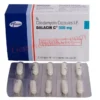

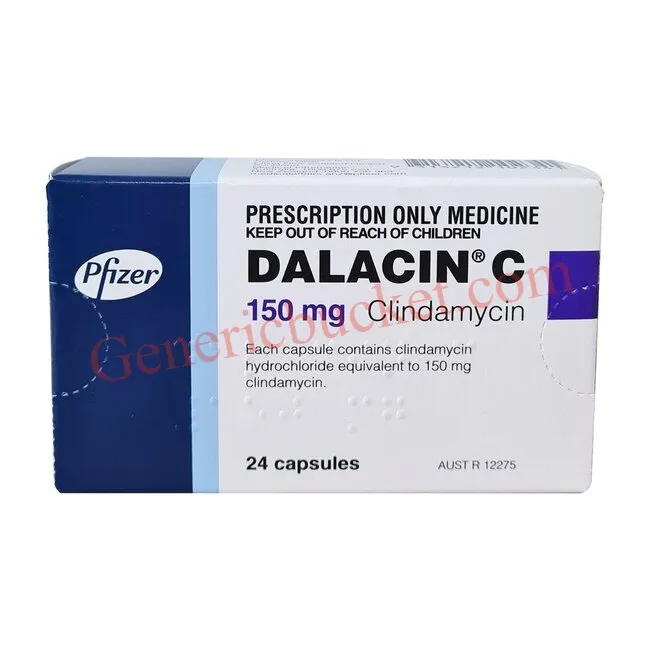

Dalacin C 150mg Capsule (Clindamycin 150mg)
Price range: $42.00 through $117.00
| Country of Origin | india |
|---|---|
| Dosage Form | Capsules |
| Equivalent Brand | Cleocin |
| Generic Name | Clindamycin |
| Indication | Bacterial infection |
| Manufacturer | Pfizer India Ltd |
| Packaging | 10 capsules in 1 strip |
| Composition | Clindamycin (150mg) |
| Dalacin C 150mg Capsule (Clindamycin 150mg) | |||
| Pack Size | Price | Price/Unit | Add To Cart |
| 50 Capsule/s | $42.00 (0.84/unit) | $0.84 | |
| 100 Capsule/s | $80.00 (0.8/unit) | $0.8 | |
| 150 Capsule/s | $117.00 (0.78/unit) | $0.78 | |
Dalacin C 150mg Capsule is a prescription antibiotic containing clindamycin hydrochloride, an antibacterial medicine used to treat certain serious bacterial infections caused by susceptible organisms. It belongs to the lincosamide class of antibiotics and works by interfering with bacterial protein production, which prevents susceptible bacteria from growing and multiplying. The product information identifies Dalacin C 150 mg Capsules as a prescription-only medicine containing clindamycin hydrochloride equivalent to 150 mg of clindamycin.
What is Dalacin C 150mg Capsule used for?
Doctors prescribe Dalacin C 150mg Capsule when a bacterial infection is susceptible to clindamycin and treatment with an appropriate antibiotic is required. Depending on the infection and the bacteria involved, clindamycin may be used for infections involving the skin and soft tissues, bones and joints, respiratory tract, abdomen, pelvis, and other areas. The official product information describes clindamycin as an antibacterial medicine for serious infections caused by susceptible gram-positive organisms and susceptible anaerobic pathogens.
This medicine does not treat viral infections such as ordinary colds or influenza. Antibiotics should only be used when a bacterial infection is confirmed or strongly suspected. Unnecessary antibiotic use can contribute to antimicrobial resistance. U.S. prescribing information similarly emphasizes reserving oral clindamycin for appropriate bacterial infections where its use is justified.
How does clindamycin work?
The active ingredient, clindamycin, acts against susceptible bacteria by interfering with bacterial protein synthesis. Without the proteins needed for growth and reproduction, susceptible bacteria cannot multiply normally, allowing the body’s immune system to help control and clear the infection.
The exact dose and duration depend on the type and severity of infection, the causative organism, and individual patient factors. For this reason, patients should not select a clindamycin dose based solely on information found online. Your prescriber determines the appropriate regimen.
How should you take Dalacin C?
Take Dalacin C 150mg Capsule exactly as prescribed. Swallow the capsule whole with a full glass of water and do not chew or crush it. Remaining upright after taking the capsule can help reduce the risk of irritation of the esophagus.
Take each dose at the prescribed interval and complete the treatment course unless your healthcare professional tells you to stop. Do not double the next dose if you forget one. Instead, follow your pharmacist’s or prescriber’s instructions for a missed dose.
Do not share antibiotics with another person, even if that person has symptoms that appear similar. Different infections can require different medicines, and an antibiotic that is appropriate for one person may be unsuitable for another.
Important safety information
One of the most important warnings associated with oral clindamycin is Clostridioides difficile-associated diarrhea (CDAD). Antibiotic treatment can disturb normal intestinal bacteria and allow C. difficile to multiply. This complication can range from significant diarrhea to severe inflammation of the colon and can occur during treatment or even after treatment has finished.
Contact a healthcare professional promptly if you develop severe, persistent, or bloody diarrhea during or after antibiotic treatment. Do not automatically treat significant antibiotic-associated diarrhea with an over-the-counter antidiarrheal medicine without medical advice.
Patients with a previous history of antibiotic-associated colitis, inflammatory bowel problems, or significant gastrointestinal disease should tell their healthcare professional before taking clindamycin.
Seek urgent medical attention for symptoms suggesting a severe allergic reaction, including difficulty breathing, swelling of the face or throat, widespread blistering or peeling skin, or a rapidly developing severe rash. Serious hypersensitivity reactions have been reported with clindamycin.
Related Product
Possible side effects
Like other prescription medicines, Dalacin C 150mg Capsule can cause side effects. Gastrointestinal effects such as abdominal discomfort, nausea, vomiting, or diarrhea may occur. Some people can also experience skin reactions or other hypersensitivity effects.
Most importantly, severe or persistent diarrhea requires medical attention because it can indicate C. difficile-associated disease. Serious skin reactions and anaphylactic reactions have also been reported with clindamycin.
Tell your doctor or pharmacist about any unusual or persistent symptom rather than stopping or changing treatment without professional guidance.
Who should discuss this medicine with a doctor first?
Before using Dalacin C 150mg Capsule, tell your healthcare professional about allergies to clindamycin, lincomycin, or any other medicines. Also disclose your complete medication list, including prescription medicines, nonprescription products, vitamins, and supplements.
Your clinician should know if you have previously experienced severe diarrhea or colitis after taking an antibiotic. They can assess whether clindamycin remains an appropriate treatment option.
Pregnant or breastfeeding patients should discuss clindamycin use with their healthcare professional before treatment. Your clinician can evaluate the benefits and potential risks based on your individual circumstances.
Drug interactions
Clindamycin can interact with certain medicines, so provide your prescriber and pharmacist with an up-to-date medication list. Particular attention may be needed when clindamycin is used alongside medicines that can affect neuromuscular transmission or other treatments with clinically relevant interactions.
Never assume that an antibiotic is automatically compatible with every medicine you take. A pharmacist can review your medications and identify potential problems before you begin treatment.
Storage and handling
Keep the capsules in their original packaging and store them according to the product label. Keep all medicines away from children and pets. Do not use capsules that appear damaged or that have passed their expiration date.
Why choose prescribed clindamycin responsibly?
The goal of antibiotic treatment is not simply to eliminate symptoms as quickly as possible. The medicine should target the bacteria responsible for the infection while minimizing unnecessary exposure. Using Dalacin C 150mg Capsule only when prescribed helps support responsible antibiotic use and may reduce avoidable antimicrobial resistance.
Patients should also understand that feeling better does not necessarily mean that the infection has completely resolved. Follow the treatment plan provided by your healthcare professional and seek advice if symptoms worsen, fail to improve, or return.
Frequently Asked Questions
1. What is Dalacin C 150mg Capsule?
It is a prescription antibiotic containing clindamycin hydrochloride equivalent to 150 mg of clindamycin. It treats certain bacterial infections caused by susceptible organisms.
2. Is Dalacin C an antibiotic?
Yes. Clindamycin is an antibacterial antibiotic belonging to the lincosamide class.
3. Can Dalacin C treat a viral infection?
No. It does not treat viral illnesses such as influenza or the common cold. Antibiotics work against susceptible bacteria.
4. Can I stop the capsules when I feel better?
Do not change or discontinue prescribed antibiotic treatment without speaking with your healthcare professional. Follow the prescribed treatment duration.
5. What should I do if I develop severe diarrhea?
Contact a healthcare professional promptly. Severe or persistent diarrhea during or after clindamycin treatment may indicate C. difficile-associated disease and requires medical assessment.
Be the first to review “Dalacin C 150mg Capsule (Clindamycin 150mg)”
Related products







Reviews
There are no reviews yet.