
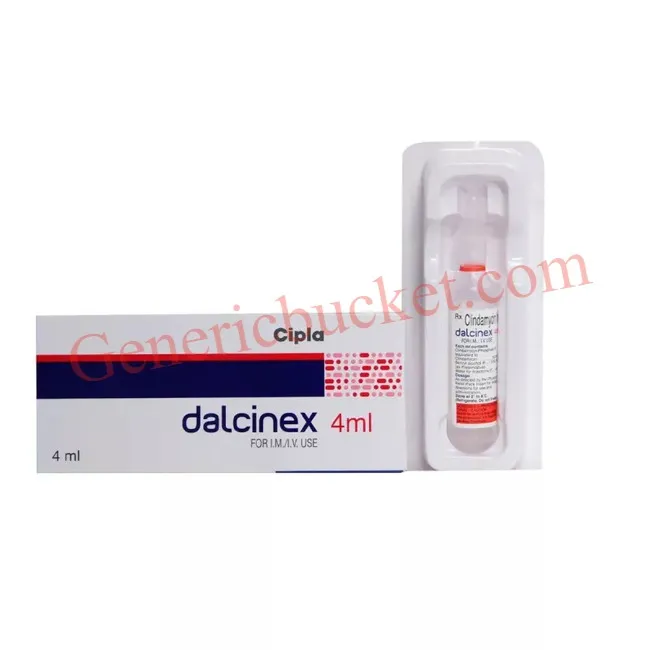

Dalcinex Injection (Clindamycin 150mg) 4ml
Price range: $32.00 through $88.00
| Country of Origin | india |
|---|---|
| Dosage Form | Injection |
| Generic Name | Clindamycin |
| Indication | Bacterial infections |
| Packaging | 4 ml in 1 vial |
| Manufacturer | Cipla Ltd |
| Composition | Clindamycin (150mg) |
| Dalcinex Injection (Clindamycin 150mg) 4ml | |||
| Pack Size | Price | Price/Unit | Add To Cart |
| 1 Injection/s | $32.00 (32/unit) | $32 | |
| 2 Injection/s | $60.00 (30/unit) | $30 | |
| 3 Injection/s | $88.00 (29.33/unit) | $29.33 | |
Dalcinex Injection is a prescription antibiotic containing clindamycin, a lincosamide antibiotic used by healthcare professionals to manage susceptible bacterial infections. It is available in different strengths, including 150 mg, 300 mg, and 600 mg formulations depending on the product and market. Because this medicine is administered by a healthcare professional, patients should use it only when a qualified clinician has diagnosed or strongly suspected a bacterial infection. Available product information identifies clindamycin as the active ingredient in Dalcinex formulations.
What Is Dalcinex Injection?
Dalcinex Injection contains clindamycin, which works by interfering with bacterial protein production. By limiting the bacteria’s ability to produce essential proteins, clindamycin can stop susceptible bacteria from multiplying and help the immune system control the infection. The medicine does not treat viral illnesses such as ordinary colds or influenza.
Healthcare professionals may consider this antibiotic when a susceptible bacterial infection requires parenteral treatment. Depending on the infection and the patient’s clinical condition, clindamycin may be used for certain infections involving the lungs, skin and soft tissues, bones and joints, abdomen, blood, and female reproductive organs. The exact indication should always depend on the identified or suspected bacteria and current clinical guidance.
How Does Dalcinex Injection Work?
The active ingredient in Dalcinex Injection, clindamycin, inhibits bacterial protein synthesis. Bacteria need proteins to grow and reproduce, so blocking this process can suppress the growth of susceptible organisms. This mechanism makes clindamycin particularly useful against certain gram-positive and anaerobic bacteria.
Your healthcare professional chooses an antibiotic according to the suspected infection, local resistance patterns, patient-specific factors, and sometimes culture and susceptibility results. Patients should never select an antibiotic solely because they previously used it successfully for another infection.
Uses of Dalcinex Injection
Doctors may prescribe Dalcinex Injection for serious bacterial infections when clindamycin is an appropriate treatment. Reported uses include certain lower respiratory infections such as pneumonia, empyema, and lung abscess; selected gynecological infections; intra-abdominal infections; bloodstream infections; and bone or joint infections. Clindamycin can also have a role in selected skin and soft-tissue infections.
Dalcinex Injection should not be described as a universal treatment for every infection. Antibiotics only work against susceptible bacteria, and inappropriate antibiotic use can contribute to antimicrobial resistance. A clinician should determine whether clindamycin is suitable before treatment begins.
How Is Dalcinex Injection Given?
A doctor, nurse, or other appropriately trained healthcare professional administers Dalcinex Injection. Depending on the formulation and clinical circumstances, clindamycin injection may be administered intravenously or intramuscularly. Patients should not attempt to inject this prescription medicine themselves.
The healthcare professional determines the dose, interval, duration, and administration method according to the infection, patient age, body weight, medical history, and response to treatment. Do not change the prescribed dose or stop treatment without discussing it with your healthcare provider.
Related product
Important Safety Information
Before receiving Dalcinex Injection, tell your healthcare professional about previous allergies to clindamycin, lincomycin, or other medicines. Also disclose any history of colitis, severe or persistent diarrhea, gastrointestinal disease, liver problems, kidney problems, or other significant medical conditions. Product information specifically emphasizes caution in patients with gastrointestinal disease and certain liver or kidney problems.
One of the most important precautions with clindamycin is antibiotic-associated diarrhea, including potentially serious Clostridioides difficile-associated diarrhea. Contact your healthcare professional promptly if significant, persistent, or bloody diarrhea develops during or after treatment. Do not automatically treat severe diarrhea with an over-the-counter antidiarrheal medicine without medical advice.
Possible Side Effects
Like other medicines, Dalcinex Injection can cause adverse effects. Reported reactions include nausea, vomiting, abdominal discomfort or pain, diarrhea, skin rash, and discomfort, pain, or swelling at the injection site.
Seek urgent medical attention for signs of a severe allergic reaction, such as difficulty breathing, facial or throat swelling, widespread blistering rash, or severe dizziness. Severe or persistent diarrhea also requires prompt medical assessment.
Storage and Handling
Certain Dalcinex formulations are refrigerated at approximately 2°C to 8°C and should not be frozen. Storage requirements can vary by specific presentation, so follow the product label and pharmacy instructions rather than relying on general storage advice.
Pregnancy, Breastfeeding, and Other Medicines
Tell your healthcare professional if you are pregnant, planning pregnancy, or breastfeeding before receiving Dalcinex Injection. Your clinician can weigh the expected benefits against potential risks and select the most appropriate therapy.
Also provide a complete list of prescription medicines, over-the-counter products, vitamins, and supplements. This helps your healthcare team evaluate potential interactions and avoid unnecessary medication risks.
Why Professional Administration Matters
Dalcinex Injection requires professional administration because injectable antibiotics need appropriate dosing, preparation, administration, monitoring, and clinical assessment. A healthcare professional can monitor your response and identify complications early.
Patients should also complete the treatment plan exactly as prescribed. Do not save leftover antibiotic doses for future illnesses or share them with another person. Using antibiotics only when medically appropriate helps protect individual treatment effectiveness and supports responsible antibiotic use.
Ordering Dalcinex Injection
If your clinician has prescribed Dalcinex Injection, obtain it through a legitimate, licensed pharmacy that verifies the prescription and provides appropriate storage and handling. Before ordering, confirm the exact strength, formulation, quantity, expiration date, and storage requirements with the dispensing pharmacy. Because injectable antibiotics are prescription medicines, availability and dispensing requirements can vary by jurisdiction.
If you are purchasing from our pharmacy, use the product-ordering process provided on our website and submit a valid prescription where required. A pharmacist can help verify the formulation and answer questions about administration, storage, and safe use before dispensing.
Frequently Asked Questions
1. What is Dalcinex Injection used for?
It is a clindamycin antibiotic used by healthcare professionals to treat certain susceptible bacterial infections, including selected respiratory, abdominal, skin and soft-tissue, bone and joint, gynecological, and bloodstream infections.
2. Is Dalcinex Injection effective against viral infections?
No. Clindamycin treats susceptible bacterial infections and does not treat viral illnesses such as influenza or the common cold.
3. Who administers Dalcinex Injection?
A qualified healthcare professional administers the injection. Patients should not self-inject it.
4. What is the active ingredient?
The active ingredient is clindamycin. Different Dalcinex presentations contain different strengths, so always check the prescription and product label before administration.
5. Can Dalcinex Injection cause diarrhea?
Yes. Diarrhea can occur, and severe or persistent diarrhea may indicate a serious antibiotic-associated intestinal infection. Contact a healthcare professional if this occurs.
Be the first to review “Dalcinex Injection (Clindamycin 150mg) 4ml”
Related products










Acne

Reviews
There are no reviews yet.