
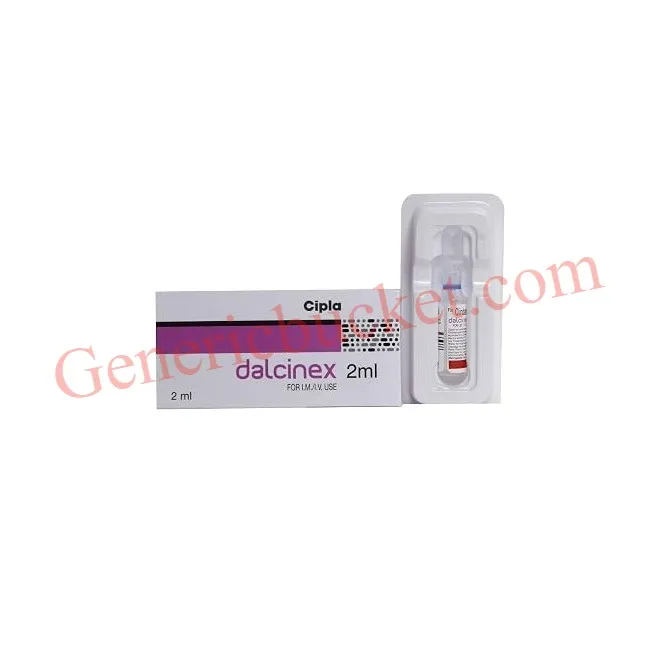

Dalcinex Injection (Clindamycin 150mg) 2ml
Price range: $23.00 through $78.00
| Country of Origin | india |
|---|---|
| Dosage Form | Injection |
| Generic Name | Clindamycin |
| Indication | Bacterial infections |
| Packaging | 2 ml Injection in 1 vial |
| Manufacturer | Cipla Ltd |
| Composition | Clindamycin (150mg) |
| Dalcinex Injection (Clindamycin 150mg) 2ml | |||
| Pack Size | Price | Price/Unit | Add To Cart |
| 1 Injection/s | $23.00 (23/unit) | $23 | |
| 2 Injection/s | $42.00 (21/unit) | $21 | |
| 4 Injection/s | $78.00 (19.5/unit) | $19.5 | |
Dalcinex Injection is a prescription antibiotic containing clindamycin. It is used under medical supervision to treat certain serious bacterial infections when the responsible bacteria are susceptible to clindamycin. Available Dalcinex products can contain different strengths, including 150 mg, 300 mg, and 600 mg, so patients should always verify the exact strength prescribed by their healthcare professional.
Clindamycin belongs to the lincosamide class of antibiotics. It works primarily by interfering with bacterial protein production, which slows or stops the growth of susceptible bacteria. Because bacterial infections vary considerably, a clinician should determine whether clindamycin is appropriate rather than using an antibiotic based only on symptoms.
What Is Dalcinex Injection Used For?
Doctors may prescribe Dalcinex Injection for selected serious bacterial infections involving the lungs, skin and soft tissues, bones and joints, abdomen, female reproductive organs, blood, or other susceptible sites. The precise indication depends on the organism causing the infection, its susceptibility, the infection’s severity, and the patient’s clinical condition.
Dalcinex Injection does not treat viral illnesses such as influenza, common colds, or most viral sore throats. Using antibiotics when they are unnecessary can contribute to antimicrobial resistance and may expose patients to avoidable adverse effects.
How Dalcinex Injection Works
The active ingredient, clindamycin, inhibits bacterial protein synthesis. Without adequate protein production, susceptible bacteria cannot grow and reproduce normally. This pharmacological action helps the body’s immune system control and eliminate the infection.
Clindamycin injection can be administered intravenously or intramuscularly by a healthcare professional. Intravenous administration must follow appropriate dilution and infusion procedures, while intramuscular administration requires proper injection technique.
Administration and Dosage
A healthcare professional should administer Dalcinex Injection according to the prescription. The dose and treatment duration depend on factors such as the type and severity of infection, the patient’s age, weight, medical history, kidney and liver function, and clinical response.
Patients should never select an injection strength or change the dosing schedule themselves. Different Dalcinex presentations contain different amounts of clindamycin, so checking the label before administration is essential.
If a clinician administers the medicine in a hospital or clinic, patients should follow all instructions concerning subsequent doses and monitoring. If home administration has specifically been arranged by a healthcare professional, the patient or caregiver should follow the supplied instructions precisely.
Common Side Effects
Like other antibiotics, Dalcinex Injection can cause adverse effects. Reported effects may include diarrhea, nausea, vomiting, abdominal discomfort, skin rash, and pain or swelling around the injection site.
The most important safety issue with clindamycin is antibiotic-associated diarrhea and colitis caused by Clostridioides difficile. This condition can occur during treatment or even several months afterward. Patients should promptly contact a healthcare professional if they develop persistent or severe diarrhea, watery or bloody stools, abdominal cramps, or fever.
Related product
Important Safety Information
Before receiving Dalcinex Injection, tell your doctor if you have previously experienced an allergic reaction to clindamycin, lincomycin, or any component of the formulation. Also disclose previous gastrointestinal disease, particularly colitis or severe antibiotic-associated diarrhea.
Tell your healthcare provider about every prescription medicine, over-the-counter product, vitamin, and supplement you use. Your clinician can assess potential interactions and determine whether clindamycin is appropriate for you.
Pregnant or breastfeeding patients should discuss treatment with their healthcare professional before receiving Dalcinex Injection. The clinician can weigh the benefits of treating the bacterial infection against potential risks based on the individual circumstances.
Storage Information
Storage requirements depend on the specific Dalcinex presentation. Current product listings for Dalcinex injection commonly specify refrigeration at 2°C–8°C and advise against freezing. Always follow the storage instructions printed on the supplied product packaging and those provided by the dispensing pharmacy.
Why Professional Supervision Matters
Dalcinex Injection is not a medicine that patients should self-diagnose or self-administer simply because they have symptoms of an infection. Antibiotic selection should consider the likely organism, local resistance patterns, infection site, allergy history, and patient-specific factors.
A healthcare professional may also reassess the patient if symptoms fail to improve. Lack of improvement can indicate antibiotic resistance, an incorrect diagnosis, an abscess requiring drainage, or another condition requiring different treatment.
Patients should complete the prescribed treatment exactly as directed unless their healthcare professional changes the plan. Never share leftover antibiotics with another person or save injectable antibiotics for a future illness.
Ordering and Prescription Guidance
Because Dalcinex Injection is a prescription medicine, patients should obtain it through a legitimate, licensed pharmacy after receiving an appropriate prescription. A reputable pharmacy should verify the prescription, provide the correct strength, maintain appropriate storage conditions, and supply instructions for safe administration.
Before purchasing Dalcinex Injection, confirm the strength and formulation on the prescription. Do not substitute a 150 mg, 300 mg, or 600 mg presentation without professional approval because these products contain different amounts of clindamycin.
Frequently Asked Questions
1. What is Dalcinex Injection?
Dalcinex Injection is a clindamycin-containing prescription antibiotic used to treat certain susceptible bacterial infections. It should be administered according to a healthcare professional’s instructions.
2. Does Dalcinex Injection treat viral infections?
No. Dalcinex Injection is intended for susceptible bacterial infections and does not treat viral infections such as colds or influenza.
3. Can I administer Dalcinex Injection myself?
Do not self-administer unless your healthcare professional has specifically prescribed and trained you or a caregiver to administer it. Intravenous and intramuscular administration requires appropriate technique.
4. What should I do if I develop severe diarrhea?
Contact a healthcare professional promptly, particularly if diarrhea is watery or bloody, occurs with abdominal cramps or fever, or develops during treatment or within the following months. Clindamycin can cause serious antibiotic-associated colitis.
5. Can I use a different strength of Dalcinex Injection?
No. Different strengths contain different amounts of clindamycin. Use only the strength prescribed by your clinician.
Be the first to review “Dalcinex Injection (Clindamycin 150mg) 2ml”
Related products


Acne









Reviews
There are no reviews yet.