
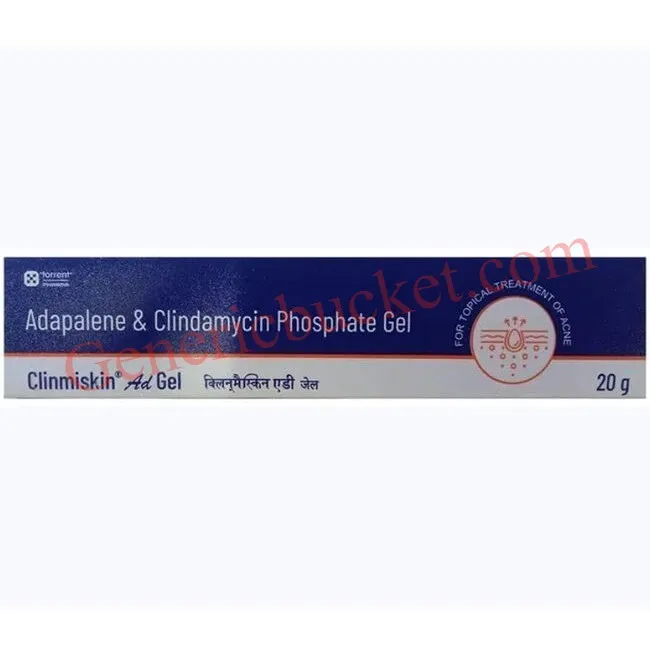

Clinmiskin AD Gel (Adapalene 0.1% / Clindamycin 1%)
Price range: $45.00 through $124.00
| Country of Origin | india |
|---|---|
| Dosage Form | Cream |
| Generic Name | Adapalene |
| Indication | Acne |
| Packaging | 20 gm in 1 tube |
| Manufacturer | Curatio Healthcare India Pvt Ltd |
| Composition | Adapalene (0.1% w/w) + Clindamycin (1% w/w) |
| Clinmiskin AD Gel (Adapalene 0.1% / Clindamycin 1%) | |||
| Pack Size | Price | Price/Unit | Add To Cart |
| 3 Tube/s | $45.00 (15/unit) | $15 | |
| 6 Tube/s | $86.00 (14.33/unit) | $14.33 | |
| 9 Tube/s | $124.00 (13.78/unit) | $13.78 | |
Clinmiskin AD Gel is a prescription topical medicine used to manage acne vulgaris. It contains adapalene 0.1% w/w and clindamycin 1% w/w, two active ingredients that work through different mechanisms to address acne. Product information from the manufacturer identifies acne vulgaris as its therapeutic indication and recommends once-daily evening application to affected areas.
What Is Clinmiskin AD Gel?
Clinmiskin AD Gel combines a topical retinoid-like medicine, adapalene, with the topical antibiotic clindamycin. Adapalene helps regulate abnormal follicular cell differentiation and reduces the formation of microcomedones, which are early clogged-pore lesions associated with acne. Clindamycin acts against acne-associated bacteria and helps reduce inflammatory activity. Together, these ingredients provide complementary acne management.
The combination may help people who experience inflammatory pimples along with clogged pores, blackheads, or whiteheads. However, it should not be described as a permanent cure for acne. Acne is a chronic skin condition that can return, and treatment should follow an individualized plan recommended by a qualified healthcare professional.
How Does Clinmiskin AD Gel Work?
The adapalene component in Clinmiskin AD Gel works primarily within the hair follicles. It helps normalize follicular keratinization and can reduce the development of new comedones. This action makes adapalene useful for treating both existing acne lesions and the processes that contribute to new breakouts.
Clindamycin provides antibacterial activity against acne-associated microorganisms. By reducing bacterial activity and inflammation, it can help improve inflammatory acne lesions. The two ingredients therefore address different contributors to acne rather than relying on a single mechanism.
Uses of Clinmiskin AD Gel
Doctors prescribe Clinmiskin AD Gel primarily for acne vulgaris. Depending on the patient’s skin condition, treatment may help reduce inflammatory pimples and clogged pores. The manufacturer’s prescribing information specifically lists acne vulgaris as the indication.
Patients should use this medicine only for the condition for which their healthcare professional prescribed it. Do not apply it to unrelated rashes, infections, cuts, or irritated skin unless your clinician specifically recommends doing so.
How to Apply Clinmiskin AD Gel
Use Clinmiskin AD Gel exactly as your prescriber directs. Manufacturer information recommends washing the affected area, allowing the skin to dry, and applying a thin layer to the affected area once daily in the evening. Avoid the eyes, lips, and mucous membranes.
Wash your hands before and after application unless your hands are the treatment area. Applying more gel will not make acne disappear faster and may increase irritation. Consistent use is more important than applying excessive amounts.
Your clinician may recommend a gentle cleanser and moisturizer to help maintain the skin barrier. Because adapalene can increase sensitivity to sunlight, patients should also practice appropriate sun protection.
What to Expect During Treatment
Some patients experience dryness, redness, peeling, itching, burning, or stinging after starting ClinmiskinAD Gel. The manufacturer’s information also notes that acne may appear to worsen during the early weeks because previously developing lesions can become more visible.
Do not automatically stop treatment because of a mild early adjustment period. Instead, discuss persistent or severe irritation with your healthcare professional. Improvement generally takes time, so follow the prescribed schedule rather than repeatedly changing your routine.
Safety Precautions
Before using Clinmiskin AD Gel, tell your healthcare professional about allergies to adapalene, clindamycin, lincomycin, or any component of the formulation. The manufacturer also identifies important precautions for people with a history of inflammatory bowel disease or antibiotic-associated colitis.
Avoid applying the gel to sunburned, broken, or severely irritated skin unless your clinician tells you otherwise. Keep it away from the eyes and mouth. If accidental eye exposure occurs, rinse thoroughly with water.
Discuss pregnancy or plans for pregnancy with your healthcare professional before beginning an acne treatment containing adapalene. Do not start, stop, or substitute prescription acne therapy without professional guidance.
Possible Side Effects
Common skin reactions associated with Clinmiskin AD Gel can include dryness, scaling, redness, itching, burning, stinging, or irritation. The prescribing information also lists contact dermatitis and certain gastrointestinal disturbances among possible adverse effects.
Seek medical advice if irritation becomes severe, persistent, or concerning. Stop using the product and obtain appropriate medical attention if you develop signs of a serious allergic reaction, such as significant swelling, difficulty breathing, or widespread hives.
Storage and Handling
Store Clinmiskin AD Gel in a dry location protected from direct sunlight and do not freeze it. Manufacturer information states that it should not be stored above 30°C. Keep the tube tightly closed and out of reach of children.
Why Choose Clinmiskin AD Gel?
The main advantage of Clinmiskin AD Gel is its dual-ingredient approach. Adapalene addresses abnormal follicular processes and comedone formation, while clindamycin targets acne-associated bacterial activity and inflammation. This combination can provide a convenient topical treatment when prescribed appropriately.
Because clindamycin is an antibiotic, patients should use Clinmiskin AD Gel only according to professional instructions. Avoid prolonged or unnecessary antibiotic use because inappropriate antibiotic exposure can contribute to antimicrobial resistance.
For customers researching Clinmiskin AD Gel, product authenticity, correct storage, prescription requirements, and professional guidance should take priority over price alone. In the United States, availability and labeling can differ from products marketed in other countries, so verify that the product is appropriate and legally supplied for your location before purchasing.
Frequently Asked Questions
1. What is Clinmiskin AD Gel used for?
Clinmiskin AD Gel is used to treat acne vulgaris. It combines adapalene 0.1% with clindamycin 1%.
2. Can Clinmiskin AD Gel permanently cure acne?
No. Clinmiskin AD Gel can control acne and reduce breakouts, but acne can recur. A dermatologist or other qualified clinician can develop a longer-term treatment plan.
3. How often should I use Clinmiskin AD Gel?
Manufacturer information recommends once-daily application in the evening, but follow the specific instructions given by your prescriber.
4. Can I apply more Clinmiskin AD Gel for faster results?
No. Applying extra gel can increase dryness and irritation without providing faster improvement. Use only the amount recommended by your healthcare professional.
5. Can Clinmiskin AD Gel cause skin dryness?
Yes. Dryness, scaling, redness, itching, burning, and irritation can occur.
Be the first to review “Clinmiskin AD Gel (Adapalene 0.1% / Clindamycin 1%)”
Related products




Acne

Reviews
There are no reviews yet.