
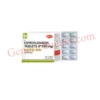
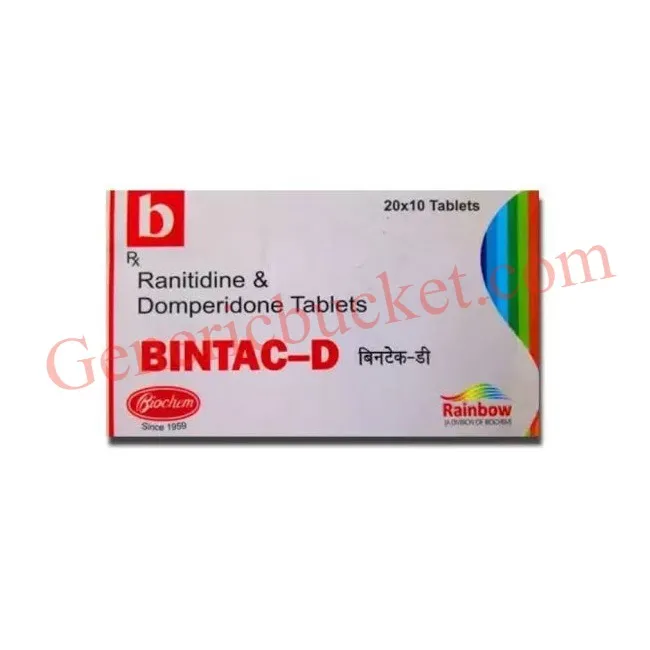

Bintac D Tablet (Domperidone 10mg / Ranitidine 150mg)
Price range: $27.00 through $75.00
| Country of Origin | india |
|---|---|
| Dosage Form | Tablets |
| Generic Name | Domperidone |
| Indication | Gastroesophageal reflux disease (Acid reflux) |
| Packaging | 10 tablets in 1 strip |
| Manufacturer | Biochem Pharmaceutical Industries |
| Composition | Domperidone (10mg) + Ranitidine (150mg) |
| Bintac D Tablet (Domperidone 10mg / Ranitidine 150mg) | |||
| Pack Size | Price | Price/Unit | Add To Cart |
| 100 Tablet/s | $27.00 (0.27/unit) | $0.27 | |
| 200 Tablet/s | $52.00 (0.26/unit) | $0.26 | |
| 300 Tablet/s | $75.00 (0.25/unit) | $0.25 | |
Bintac D Tablet is a prescription gastrointestinal medicine commonly listed as a combination of domperidone 10 mg and ranitidine 150 mg. Healthcare professionals may prescribe this combination for symptoms associated with acid reflux, gastroesophageal reflux disease (GERD), indigestion, and certain upper digestive complaints. The medicine combines an acid-reducing component with a medicine that promotes gastrointestinal movement, which can help address several digestive symptoms at the same time.
If you are considering Bintac D Tablet, check the strength and active ingredients printed on your actual medicine pack before use because online listings can differ. One current pharmacy listing identifies Bintac D as domperidone 10 mg plus ranitidine 150 mg, while another online listing has reported a different composition under the same brand name.
What Is Bintac D Tablet Used For?
Doctors may prescribe Bintac D Tablet to manage symptoms associated with acid reflux and indigestion. These symptoms can include heartburn, acid regurgitation, stomach discomfort, bloating, nausea, and a feeling of fullness after meals. Current medicine listings describe its uses primarily in GERD and indigestion.
The ranitidine component reduces the production of stomach acid by blocking histamine H2 receptors. Lower acid production can reduce acid-related irritation and help relieve heartburn. Domperidone affects dopamine receptors and increases upper gastrointestinal motility, helping food move through the stomach more efficiently and potentially reducing nausea and feelings of fullness.
Bintac D Tablet does not permanently cure every underlying cause of reflux or indigestion. Instead, it helps control symptoms while the underlying condition is evaluated and managed. Persistent heartburn, difficulty swallowing, unexplained weight loss, vomiting blood, black stools, or severe abdominal pain requires prompt medical assessment rather than prolonged self-treatment.
How Bintac D Tablet Works
The two components of Bintac D Tablet work through different mechanisms. Ranitidine belongs to the H2-receptor antagonist class and decreases stomach-acid secretion. Domperidone is a dopamine antagonist with prokinetic effects, meaning it can increase movement through the upper digestive tract. Together, these actions can reduce acid-related symptoms while supporting gastric emptying.
Patients should understand that improved symptoms do not necessarily mean that the underlying gastrointestinal condition has completely resolved. Your prescriber should determine how long treatment should continue.
How to Take Bintac D Tablet
Take BintacD Tablet only according to your healthcare professional’s instructions. Current product information commonly advises taking the tablet on an empty stomach and swallowing it whole with water rather than crushing or chewing it.
Do not increase the dose because your symptoms feel severe, and do not take extra tablets after missing a dose unless your prescriber or pharmacist tells you to do so. Taking more medicine than prescribed can increase the risk of adverse effects.
Avoid changing the treatment duration on your own. If symptoms continue despite treatment, contact your healthcare professional so they can reassess the diagnosis and treatment plan.
Related Product
Possible Side Effects
Like other medicines, BintacD Tablet can cause adverse effects. Reported effects associated with this combination or its individual ingredients can include headache, dizziness, fatigue, diarrhea, dry mouth, and other gastrointestinal symptoms. Some people may experience breast tenderness or enlargement with domperidone because of its effects on prolactin.
Seek urgent medical attention for serious or unusual symptoms such as fainting, severe palpitations, swelling of the face or throat, difficulty breathing, or signs of a severe allergic reaction. Domperidone has been associated with cardiac rhythm concerns, so people with certain heart conditions or risk factors require particular medical caution.
Important Safety Information
Before using BintacD Tablet, tell your healthcare professional about your medical history and all medicines or supplements you take. Discuss any history of heart disease, abnormal heart rhythm, liver or kidney problems, gastrointestinal bleeding, or other significant medical conditions.
Drug interactions can affect safety and treatment effectiveness. Your pharmacist should review your complete medication list before you start treatment.
Pregnant or breastfeeding patients should speak with their healthcare professional before using BintacD Tablet. Do not assume that a medicine is safe during pregnancy simply because it is commonly used for digestive symptoms.
Most importantly, Bintac D Tablet should not be promoted as a routine U.S. over-the-counter treatment. Ranitidine products were withdrawn from the U.S. market following FDA concerns about NDMA, and domperidone is not FDA-approved for routine gastrointestinal use in the United States. Patients in the U.S. should discuss appropriate FDA-approved alternatives with a licensed healthcare professional.
Storage and Handling
Store BintacD Tablet according to the instructions on the manufacturer’s packaging. A current listing recommends storage below 30°C. Keep the medicine in its original packaging, protect it from unsuitable temperatures and moisture, and keep it away from children.
Do not use tablets that have changed appearance or are past their expiration date. Dispose of unused medicine according to local pharmaceutical-disposal guidance.
Why Professional Guidance Matters
Digestive symptoms can result from many different conditions, including GERD, ulcers, medication-related irritation, gallbladder disorders, and other gastrointestinal problems. Treating symptoms without confirming the cause can delay appropriate care.
A healthcare professional can determine whether Bintac D Tablet is appropriate, review possible interactions, assess cardiovascular risk from domperidone, and determine whether another acid-reducing treatment would provide a safer option.
Frequently Asked Questions
What is Bintac D Tablet used for?
Bintac D Tablet is commonly listed for managing acid reflux, GERD, indigestion, and related upper digestive symptoms.
What are the ingredients in Bintac D Tablet?
Current listings most commonly identify the 10 mg/150 mg formulation as domperidone 10 mg plus ranitidine 150 mg. Always verify the composition printed on your package because brand listings can vary.
Can Bintac D Tablet cure acidity permanently?
No. It can help control symptoms, but treatment depends on the underlying cause of acid reflux or indigestion. Persistent symptoms require professional evaluation.
Should I take Bintac D Tablet before or after food?
Current product information commonly recommends taking it on an empty stomach, but follow the exact directions provided by your prescriber or pharmacist.
Can I take Bintac D Tablet every day?
Only use it for the duration and at the dose prescribed by a healthcare professional. Long-term use should not occur without medical supervision.
Be the first to review “Bintac D Tablet (Domperidone 10mg / Ranitidine 150mg)”
Related products
Acid Reducers

Acid Reducers
Acid Reducers
Acid Reducers
Acid Reducers
Acid Reducers
Acid Reducers

Acid Reducers
Acid Reducers

Acid Reducers
Acid Reducers
Reviews
There are no reviews yet.