
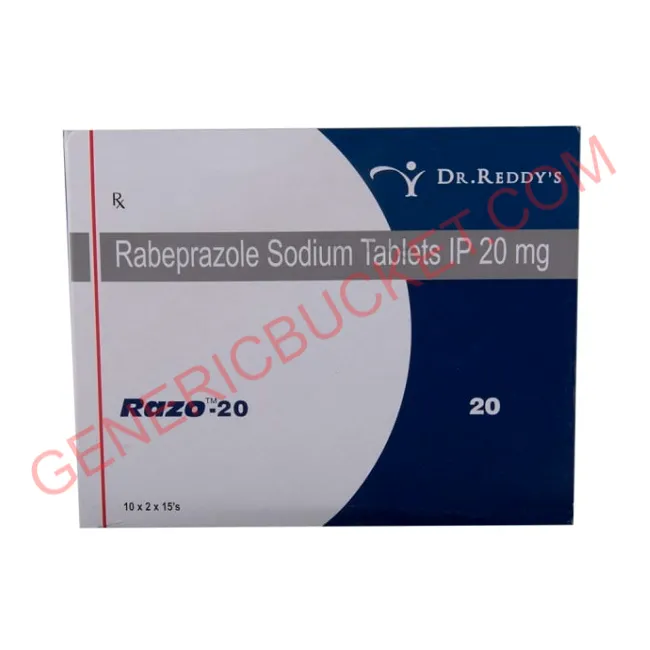

Razo 20mg Tablet (Rabeprazol 20mg)
Price range: $33.00 through $90.00
| Country of Origin | india |
|---|---|
| Dosage Form | Tablets |
| Equivalent Brand | AcipHex |
| Generic Name | Rabeprazole |
| Indication | Acidity, Heartburn, Stomach ulcers |
| Manufacturer | Dr Reddy's Laboratories Ltd |
| Packaging | 15 tablets in 1 strip |
| Composition | Rabeprazole (20mg) |
| Razo 20mg Tablet (Rabeprazol 20mg) | |||
| Pack Size | Price | Price/Unit | Add To Cart |
| 30 Tablet/s | $33.00 (1.1/unit) | $1.1 | |
| 60 Tablet/s | $62.00 (1.03/unit) | $1.03 | |
| 90 Tablet/s | $90.00 (1/unit) | $1 | |
Razo 20mg Tablet is a prescription acid-reducing medicine containing rabeprazole 20 mg, a proton pump inhibitor (PPI). It helps control excessive stomach acid and is commonly prescribed for acid reflux, gastroesophageal reflux disease (GERD), erosive esophagitis, and stomach or intestinal ulcers. It may also form part of combination treatment for Helicobacter pylori infection and help manage conditions involving excessive acid production, such as Zollinger-Ellison syndrome.
If frequent heartburn, acid regurgitation, or acid-related stomach discomfort affects your daily routine, proper treatment can make a meaningful difference. Razo 20mg Tablet works at the source of the problem by reducing the amount of acid released by the stomach. This allows irritated tissues in the esophagus and digestive tract to heal while helping control recurring acid-related symptoms. Always use this medicine according to your healthcare professional’s instructions.
What Is Razo 20mg Tablet?
The active ingredient in Razo 20mg Tablet is rabeprazole 20 mg. Rabeprazole belongs to the proton pump inhibitor class. It suppresses the final stage of stomach-acid production by inhibiting the gastric proton pump in the stomach lining. This action produces a substantial reduction in acid secretion and gives acid-damaged tissues an opportunity to recover.
The medicine does not simply mask heartburn for a short period. Instead, it reduces acid production, which can help manage the underlying acid exposure responsible for symptoms and tissue irritation. Because different conditions require different treatment durations and doses, your prescriber should determine how long you should use it.
Uses and Benefits
Doctors may prescribe Razo 20mg Tablet for several acid-related digestive conditions. It can help manage GERD, in which stomach contents repeatedly flow back into the esophagus and cause heartburn, sour taste, or irritation. By reducing stomach acid, rabeprazole decreases the acidity of refluxed material and supports healing when acid has damaged the esophageal lining.
Healthcare professionals also use rabeprazole to treat certain gastric and duodenal ulcers. Lowering stomach acid creates a more favorable environment for ulcerated tissue to heal. In appropriate treatment regimens, rabeprazole can also be combined with antibiotics to help eradicate H. pylori, a bacterium associated with peptic ulcers.
For people with excessive acid production caused by conditions such as Zollinger-Ellison syndrome, physicians may use proton pump inhibitors to achieve stronger acid suppression. The appropriate dose and treatment schedule can differ substantially in these situations, so patients should follow an individualized prescription rather than choosing a dose themselves.
How Razo 20mg Tablet Works
Razo 20mg Tablet works by inhibiting the gastric proton pump responsible for the final step of acid secretion. Rabeprazole binds to this acid-producing system and reduces the amount of hydrochloric acid released into the stomach. As acid exposure decreases, symptoms such as heartburn and acid-related irritation can improve, while damaged tissues can receive time to heal.
This mechanism makes rabeprazole different from simple antacids, which primarily neutralize acid that has already formed. Rabeprazole reduces acid production itself.
How to Take Razo 20mg Tablet
Take Razo 20mg Tablet exactly as prescribed. Product information commonly recommends taking rabeprazole before a meal, often before breakfast, although the exact instructions can depend on the condition being treated.
Swallow the tablet whole with water. Do not crush, split, or chew it unless your pharmacist or prescriber specifically instructs you to do so. Taking the medicine consistently at the recommended time can help maintain predictable acid control.
Do not increase the dose because your symptoms feel severe, and do not continue treatment longer than recommended without medical advice. If you miss a dose, follow your healthcare professional’s instructions or the product’s missed-dose guidance rather than taking extra tablets.
Possible Side Effects
Like other medicines, Razo 20mg Tablet can cause side effects. Some people may experience headache, nausea, vomiting, abdominal discomfort, diarrhea, constipation, dizziness, or other digestive symptoms.
Most mild effects do not require emergency treatment, but persistent or troublesome symptoms deserve medical attention. Seek prompt medical care if you develop signs of a serious allergic reaction, severe or persistent diarrhea, unusual weakness, or other concerning symptoms.
Long-term or repeated proton pump inhibitor therapy may require medical supervision because prolonged acid suppression can be associated with certain nutritional deficiencies, bone-related concerns, infections, and other complications. Your clinician can determine whether continued treatment remains appropriate.
Precautions and Safety Information
Before taking Razo 20mg Tablet, tell your healthcare professional about allergies, existing medical conditions, pregnancy or breastfeeding, and all prescription medicines, over-the-counter medicines, vitamins, and supplements you use. Rabeprazole can interact with some medicines, so professional review is particularly important when you take multiple medications.
Do not use rabeprazole simply because you experience occasional heartburn without determining whether a PPI is appropriate for you. Persistent heartburn, unexplained weight loss, difficulty swallowing, vomiting blood, black stools, recurrent vomiting, or severe chest or abdominal pain requires medical evaluation rather than self-treatment.
Patients who need long-term therapy should attend follow-up appointments as recommended. Your clinician may reassess your symptoms and determine whether you still need acid suppression.
Storage
Keep Razo 20mg Tablet in its original packaging and store it according to the manufacturer’s instructions. Keep medicines away from excessive heat, moisture, and direct sunlight, and keep them out of the reach of children.
Frequently Asked Questions
What is Razo 20mg Tablet used for?
Razo 20mg Tablet is used for acid-related conditions including GERD, reflux esophagitis, certain stomach and intestinal ulcers, and conditions involving excessive stomach-acid production. Doctors may also prescribe rabeprazole with antibiotics as part of an H. pylori eradication regimen.
Is Razo 20mg Tablet an antacid?
No. Rabeprazole is a proton pump inhibitor, not a traditional antacid. It reduces the production of stomach acid rather than simply neutralizing acid already present in the stomach.
When should I take Razo 20mg Tablet?
Follow your prescription. Rabeprazole is commonly taken before a meal, often in the morning. Your doctor may give different instructions depending on your diagnosis and treatment plan.
Can I take Razo 20mg Tablet every day?
You can take it daily when your healthcare professional has prescribed daily treatment. Do not extend treatment or change the dose on your own.
Can Razo 20mg Tablet cure GERD permanently?
It can effectively control acid production and help heal acid-related damage, but GERD can have several causes and may recur after treatment. Your clinician should determine the appropriate duration of therapy and whether lifestyle changes or additional evaluation are necessary.
Related products

Acid Reducers

Acid Reducers

Acid Reducers

Acid Reducers
Acid Reducers
Acid Reducers
Acid Reducers

Acid Reducers

Acid Reducers
Acid Reducers

Acid Reducers