
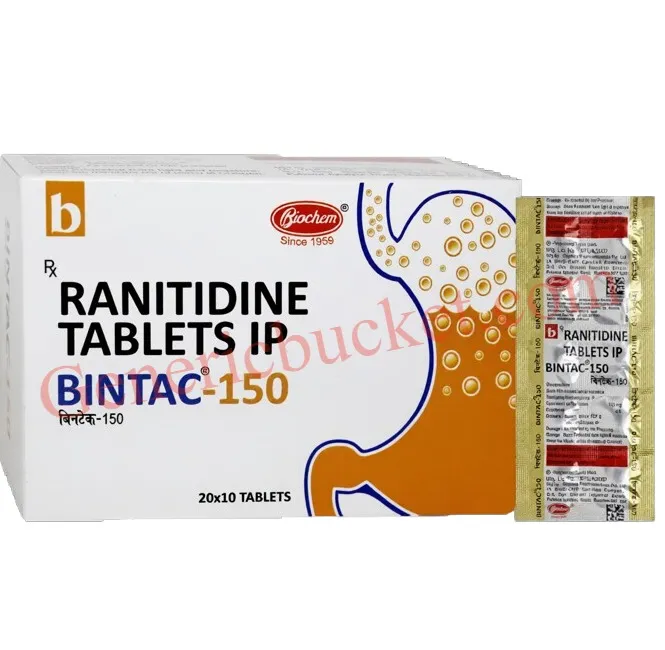

Bintac 150mg Tablet (Ranitidine 150mg)
Price range: $27.00 through $98.00
| Country of Origin | india |
|---|---|
| Dosage Form | Tablets |
| Generic Name | Ranitidine |
| Indication | Heartburn |
| Packaging | 10 tablets in 1 strip |
| Manufacturer | Biochem Pharmaceutical Industries |
| Composition | Ranitidine (150mg) |
| Bintac 150mg Tablet (Ranitidine 150mg) | |||
| Pack Size | Price | Price/Unit | Add To Cart |
| 100 Tablet/s | $27.00 (0.27/unit) | $0.27 | |
| 200 Tablet/s | $52.00 (0.26/unit) | $0.26 | |
| 300 Tablet/s | $98.00 (0.33/unit) | $0.33 | |
Bintac 150mg Tablet contains ranitidine 150mg, an H2-receptor antagonist that reduces the production of stomach acid. It has been marketed for acid-related gastrointestinal conditions, including heartburn, acid reflux, gastroesophageal reflux disease (GERD), and peptic ulcer disease. By lowering gastric acid, ranitidine can reduce acid-related irritation and give damaged stomach or esophageal tissue an opportunity to heal.
For anyone considering Bintac 150mg Tablet, the most important point is to verify the exact manufacturer, formulation, batch, regulatory status, and prescribing instructions before purchase or use. A product sold under the Bintac name outside the United States is not automatically equivalent to an FDA-approved ranitidine product. Patients in the United States should use only a ranitidine formulation specifically approved for the U.S. market and supplied through an appropriate pharmacy.
What Is Bintac 150mg Tablet Used For?
Doctors may prescribe ranitidine-containing medicines for conditions associated with excessive stomach acid. These include peptic ulcers, gastric or duodenal ulcers, GERD, reflux-related symptoms, and certain hypersecretory disorders. The medicine can reduce acid exposure and thereby help relieve symptoms such as heartburn and acid-related stomach discomfort.
In some clinical situations, ranitidine has also been used to reduce the risk of ulcer recurrence or manage excessive acid production associated with conditions such as Zollinger-Ellison syndrome. The appropriate indication depends on the patient’s diagnosis, medical history, and other medicines.
How Does Bintac 150mg Tablet Work?
Ranitidine belongs to the H2-receptor antagonist class. Histamine can stimulate H2 receptors on stomach parietal cells, encouraging those cells to produce hydrochloric acid. Ranitidine blocks these receptors and reduces gastric acid secretion. This action can decrease acidity and help relieve acid-related symptoms.
Because acid suppression does not treat every cause of abdominal discomfort, patients should not automatically use an acid-reducing medicine whenever they experience stomach pain. Persistent, severe, or unexplained symptoms require professional evaluation.
How to Take It
Take Bintac 150mg Tablet only according to the directions provided by your doctor or pharmacist. Available product information states that ranitidine tablets may be taken with or without food and should generally be swallowed whole rather than crushed or chewed.
The correct dose and treatment duration depend on the condition being treated and the patient’s response. Do not increase the dose because symptoms remain, and do not extend treatment without medical advice. Patients with kidney problems may require dose adjustment because ranitidine is substantially eliminated through the kidneys.
Benefits and Expected Results
The principal benefit of ranitidine therapy is reduction of excessive gastric acid. Lower acid exposure can reduce heartburn and reflux symptoms and support healing of acid-related ulceration. For patients with diagnosed acid-related disease, appropriate treatment can improve comfort and help protect irritated gastrointestinal tissue.
Patients should remember that symptom relief does not necessarily mean the underlying condition has completely healed. Complete the prescribed course when your clinician recommends ongoing treatment, and return for evaluation if symptoms persist, worsen, or repeatedly return.
Related Product
Possible Side Effects
Most patients tolerate H2 blockers reasonably well, but side effects can occur. Reported adverse effects associated with Bintac/ranitidine products include headache, gastrointestinal disturbances, diarrhea, constipation, and, in some reports, rash or other hypersensitivity symptoms.
Seek prompt medical attention for severe allergic symptoms, significant confusion, unusual weakness, severe abdominal symptoms, or other serious or unexpected reactions.
Important Precautions
Before taking Bintac 150mg Tablet, tell your healthcare professional about kidney or liver disease, allergies, pregnancy or breastfeeding, and every prescription medicine, OTC medicine, vitamin, and supplement you use. Ranitidine can interact with certain medicines, and acid suppression can affect the absorption or effectiveness of some drugs.
Do not use an unidentified, expired, damaged, or improperly stored product. Check the package carefully for the manufacturer, strength, batch number, expiration date, and regulatory information.
Special U.S. Consideration
The history of ranitidine requires particular attention. In April 2020, the FDA requested withdrawal of ranitidine products from the U.S. market after testing showed that NDMA levels could increase with time and temperature.
The situation subsequently changed. On November 24, 2025, the FDA announced approval of reformulated ranitidine following safety testing and manufacturing changes designed to address the previous NDMA impurity concern. The FDA also provided specific storage and handling instructions for the newly approved formulation.
Consequently, consumers should distinguish between Bintac 150mg Tablet containing ranitidine sold in other markets and a currently FDA-approved U.S. ranitidine formulation. Do not purchase an imported product simply because its active ingredient and strength appear similar.
Lifestyle Measures for Acid Reflux
Medication works best when patients also address factors that aggravate reflux. Smaller meals, avoiding meals immediately before bedtime, maintaining a healthy weight when appropriate, and identifying personal food triggers can help. Spicy or fatty foods, caffeine, alcohol, and smoking may worsen symptoms in some individuals. Lifestyle recommendations should complement—not replace—appropriate medical assessment.
Who Should Avoid Self-Treatment?
Do not self-treat persistent heartburn or stomach pain without professional evaluation. Seek medical assessment for difficulty swallowing, repeated vomiting, vomiting blood, black or tarry stools, unexplained weight loss, anemia, severe chest pain, or persistent symptoms. These signs can indicate a condition requiring prompt investigation rather than routine acid suppression.
Frequently Asked Questions
1. What is Bintac 150mg Tablet?
Bintac 150mg Tablet is a ranitidine 150mg product marketed for acid-related gastrointestinal conditions such as heartburn, GERD, and peptic ulcer disease.
2. Can Bintac 150mg Tablet treat acidity?
Ranitidine reduces stomach acid and has been used to manage acid-related symptoms such as heartburn and indigestion. However, recurrent acidity should be evaluated to identify the underlying cause.
3. Is Bintac 150mg Tablet safe in the United States?
Do not assume that an imported Bintac product is FDA-approved. Older ranitidine products were withdrawn from the U.S. market in 2020 because of NDMA concerns. The FDA later approved a reformulated ranitidine product in November 2025 following a safety review.
4. Can I take it every day?
The appropriate frequency and duration depend on the condition and formulation. Follow your prescriber’s instructions rather than taking it continuously for recurring symptoms without evaluation.
5. What are common side effects?
Headache and gastrointestinal disturbances such as diarrhea or constipation can occur. Contact a healthcare professional if side effects persist, become severe, or concern you.
Be the first to review “Bintac 150mg Tablet (Ranitidine 150mg)”
Related products
Acid Reducers

Acid Reducers
Acid Reducers
Acid Reducers

Acid Reducers
Acid Reducers
Acid Reducers
Acid Reducers
Acid Reducers
Acid Reducers
Acid Reducers
Acid Reducers
Reviews
There are no reviews yet.