
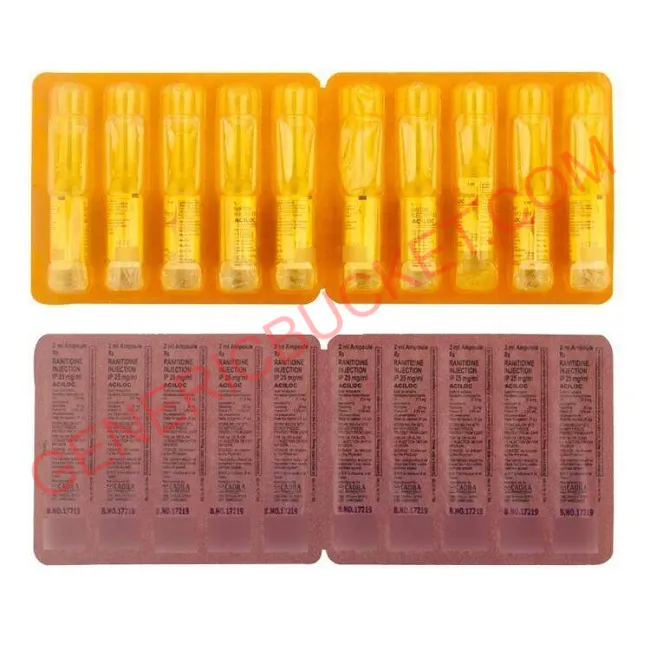

Aciloc Injection (Ranitidine 25mg)
Price range: $25.00 through $84.00
| Country of Origin | india |
|---|---|
| Dosage Form | Injection |
| Generic Name | Ranitidine |
| Indication | Treatment of Gastroesophageal reflux disease (Acid reflux) |
| Packaging | 2 ml in 1 vial |
| Manufacturer | Cadila Pharmaceuticals Ltd |
| Composition | Ranitidine (25mg) |
| Aciloc Injection (Ranitidine 25mg) | |||
| Pack Size | Price | Price/Unit | Add To Cart |
| 10 Injection/s | $25.00 (2.5/unit) | $2.5 | |
| 20 Injection/s | $44.00 (2.2/unit) | $2.2 | |
| 40 Injection/s | $84.00 (2.1/unit) | $2.1 | |
Aciloc Injection is a brand associated with ranitidine, an H2-receptor antagonist that reduces the amount of acid produced by the stomach. Ranitidine has historically been used for acid-related gastrointestinal conditions, including gastroesophageal reflux disease (GERD), peptic ulcers, and other conditions involving excessive stomach acid. However, patients should not assume that every product sold under this brand is currently approved or appropriate for use in the United States.
The U.S. Food and Drug Administration previously requested withdrawal of all ranitidine products from the U.S. market after testing identified concerns about the nitrosamine impurity N-nitrosodimethylamine (NDMA), which could increase in some ranitidine products over time and with higher temperatures. The FDA specifically confirmed that injectable ranitidine products were included in the withdrawal action.
Because of this history, patients should verify the exact manufacturer, formulation, strength, regulatory status, and source of any Aciloc Injection before receiving it. A healthcare professional should determine whether an appropriate and currently authorized alternative is available.
What Is Ranitidine Injection?
Ranitidine belongs to a group of medicines called histamine-2 (H2) receptor antagonists. It works by blocking histamine at H2 receptors in the stomach, thereby reducing gastric acid secretion. Reduced acid production can help manage conditions in which excessive stomach acid contributes to symptoms or tissue irritation.
Historically, injectable ranitidine was used when a patient required acid-suppression therapy and could not conveniently take medicine by mouth. Healthcare professionals administered the injection rather than having patients self-inject it.
Importantly, Aciloc Injection should not be described as a medicine that “cures” every cause of acidity, indigestion, reflux, or abdominal discomfort. Acid-related symptoms can have many causes, and treatment depends on the underlying diagnosis.
Historical Uses of Aciloc Injection
Ranitidine products were historically used for several acid-related disorders. These included GERD, gastric and duodenal ulcers, erosive esophagitis, and certain pathological hypersecretory conditions. The FDA describes ranitidine as an H2 blocker that decreases stomach-acid production and lists these types of indications among its former prescription uses.
Healthcare professionals may also have used injectable ranitidine in hospital settings when parenteral acid suppression was considered appropriate. The specific indication, dose, route, and duration depended on the patient’s medical condition and clinical circumstances.
These historical uses should not be interpreted as a recommendation to obtain or use an older ranitidine injection today.
Important U.S. Safety Information
The FDA requested removal of all ranitidine products from the U.S. market in April 2020 because laboratory testing showed that NDMA levels could increase in some products over time and with exposure to higher temperatures. The FDA stated that the action applied to all formulations, including injectable products.
NDMA is classified by the FDA as a probable human carcinogen. The concern involved potential exposure to unacceptable levels of the impurity, particularly as levels could increase during storage.
The regulatory situation has subsequently evolved. In November 2025, the FDA announced approval of a reformulated ranitidine tablet following a comprehensive safety review and manufacturing changes designed to address previous NDMA concerns. The approval described by the FDA concerned reformulated tablets, so it should not be used to assume that an older Aciloc injection product has equivalent U.S. approval.
Related Product
Administration
An injectable acid-suppressing medicine should only be administered by an appropriately trained healthcare professional. Patients should never attempt to inject an unfamiliar prescription medicine themselves.
The correct dose and administration method depend on the specific product, concentration, indication, patient characteristics, and current regulatory labeling. For an older ranitidine injection, consumers should not rely on internet dosing instructions or information from a different formulation.
Who Should Exercise Particular Caution?
Anyone considering treatment with an acid-reducing medicine should provide the healthcare professional with a complete medication and medical history. Kidney or liver problems, pregnancy, breastfeeding, allergies, and concurrent medicines may influence treatment selection.
Patients should also explain whether symptoms include difficulty swallowing, vomiting blood, black or tarry stools, unexplained weight loss, persistent vomiting, severe abdominal pain, or recurrent symptoms. These findings can require prompt medical evaluation rather than routine treatment for acidity.
Possible Side Effects
Historically reported adverse effects associated with ranitidine included headache, nausea, abdominal discomfort, diarrhea, constipation, and other gastrointestinal symptoms. More serious reactions can occur with medicines in this class, although their frequency varies by product and patient.
A patient receiving any injectable medication should promptly report signs of a severe allergic reaction, such as facial or throat swelling, difficulty breathing, widespread rash, or fainting.
For an older ranitidine injection product, the principal concern is not simply side-effect management; patients must also consider the product’s current regulatory status and potential NDMA-related safety concerns.
Why Professional Guidance Matters
Heartburn and acid reflux are common, but persistent symptoms can sometimes indicate GERD, ulcer disease, medication-related irritation, or another gastrointestinal disorder. Treating symptoms without identifying the underlying cause can delay appropriate care.
A pharmacist or physician can evaluate the symptoms, review current medicines, identify potential interactions, and recommend an appropriate acid-reducing treatment that is currently authorized for the patient’s location and circumstances.
Related Keywords
Aciloc Injection uses, Aciloc Injection safety, ranitidine injection, ranitidine H2 blocker, stomach acid medicine, acid reflux treatment, GERD treatment, peptic ulcer treatment, gastric acid reduction, ranitidine safety, NDMA ranitidine warning, injectable acid reducer, prescription acid medicine.
Frequently Asked Questions
1. What is Aciloc Injection used for?
Aciloc is a brand associated with ranitidine injection, an H2-receptor antagonist historically used to reduce stomach acid. Historical uses included GERD, peptic ulcers, erosive esophagitis, and hypersecretory conditions.
2. Can Aciloc Injection cure acidity permanently?
No. Ranitidine reduces gastric acid but does not necessarily cure the underlying cause of recurrent acidity, reflux, or abdominal symptoms. Persistent symptoms require medical evaluation.
3. Is Aciloc Injection available for use in the United States?
Older ranitidine injection products were affected by the FDA’s 2020 request to withdraw all ranitidine formulations from the U.S. market because of NDMA concerns.
4. Is ranitidine still available in the United States?
The regulatory situation has changed since the 2020 withdrawal. In November 2025, the FDA approved a reformulated ranitidine tablet after a comprehensive safety review. This does not mean that an older ranitidine injection is automatically approved.
5. Can I inject Aciloc myself?
No. An injectable prescription medicine should only be administered by a qualified healthcare professional according to the product’s authorized labeling and a clinician’s instructions.
Be the first to review “Aciloc Injection (Ranitidine 25mg)”
Related products

Acid Reducers
Acid Reducers
Acid Reducers
Acid Reducers
Acid Reducers
Acid Reducers
Acid Reducers
Acid Reducers

Acid Reducers
Acid Reducers
Acid Reducers
Reviews
There are no reviews yet.