

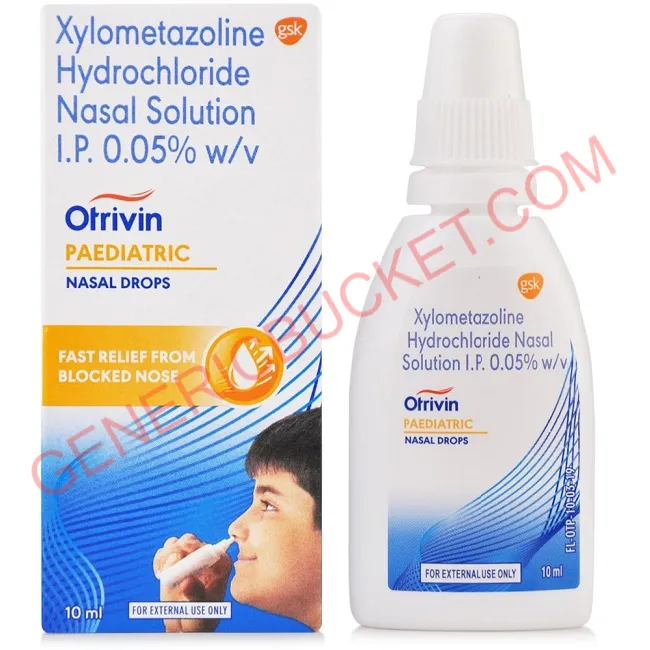

Otrivin Paediatric Nasal Drops (Xylometazoline Hydrochloride 0.05%)
Price range: $35.00 through $98.00
| Country of Origin | india |
|---|---|
| Dosage Form | drop |
| Generic Name | Otrivin Paediatric |
| Indication | Xylometazoline Hydrochloride solution |
| Packaging | 10 ml in 1 bottle |
| Manufacturer | Glaxo SmithKline Pharmaceuticals Ltd |
| Composition | Otrivin Paediatric 0.05% w/v Nasal Spray |
| Otrivin Paediatric Nasal Drops (Xylometazoline Hydrochloride 0.05%) | |||
| Pack Size | Price | Price/Unit | Add To Cart |
| 3 Bottle/s | $35.00 (11.67/unit) | $11.67 | |
| 6 Bottle/s | $68.00 (11.33/unit) | $11.33 | |
| 9 Bottle/s | $98.00 (10.89/unit) | $10.89 | |
Otrivin Paediatric Nasal Drops contain xylometazoline hydrochloride 0.05% w/v, a topical nasal decongestant designed to provide relief from nasal congestion in children. The product information for the Indian formulation states that it is intended for children 1–11 years old under adult supervision and helps relieve a blocked nose associated with conditions such as the common cold, allergic rhinitis, hay fever, and sinusitis.
A child with nasal congestion may have difficulty breathing comfortably through the nose, sleeping, eating, or participating normally in daily activities. Otrivin Paediatric Nasal Drops work locally inside the nose. Xylometazoline causes constriction of swollen blood vessels in the nasal lining, which helps reduce swelling and opens the nasal passages. The manufacturer describes the Indian paediatric product as acting rapidly and providing prolonged relief from congestion.
How Otrivin Paediatric Nasal Drops Work
The active ingredient, xylometazoline hydrochloride, belongs to the class of medicines known as sympathomimetic nasal decongestants. When applied inside the nose, it acts directly on blood vessels in the nasal mucosa. During a cold or allergic reaction, these blood vessels can become swollen, narrowing the nasal passages. Xylometazoline reduces this swelling, allowing air to pass more easily.
This action makes Otrivin Paediatric Nasal Drops useful for temporary symptomatic relief rather than treatment of the underlying infection or allergy. Parents should therefore understand that the medicine does not cure the common cold, eliminate an allergy, or eradicate a sinus infection. Instead, it helps manage the uncomfortable symptom of nasal blockage while the underlying condition resolves or receives appropriate treatment.
Uses and Benefits
Otrivin Paediatric Nasal Drops may help relieve nasal congestion associated with the common cold, hay fever, allergic rhinitis, and sinusitis. The official product leaflet specifically lists these uses.
By reducing nasal swelling, the drops can make nasal breathing easier. This may be particularly useful when congestion interferes with a child’s sleep or normal comfort. Because the medicine acts directly at the site of congestion, it does not need to travel throughout the body to produce its local nasal effect.
Parents should use this product only when the formulation and age instructions are appropriate for their child. Different countries can approve different ages, concentrations, and maximum treatment durations for xylometazoline products. For example, the Indian Otrivin Paediatric leaflet gives directions for children aged 1–11 years, while another country’s child formulation may carry different age restrictions. Always follow the package supplied with your product and the advice of your pediatrician or pharmacist.
How to Use Otrivin Paediatric Nasal Drops
For the Indian 0.05% paediatric formulation, the product leaflet states that children 1–5 years may receive 1–2 drops into each nostril once or twice daily, while children 6–11 years may receive 2–4 drops into each nostril two or three times daily as needed. The leaflet says not to exceed three applications per nostril in one day.
An adult should administer the drops. First, gently clear the child’s nose. Tilt the child’s head slightly backward, apply the prescribed number of drops without allowing the nozzle to touch the nose, and keep the head tilted back briefly so the solution can spread. Clean and dry the nozzle after use and replace the cap. The manufacturer also recommends that one bottle be used by only one person to reduce the possibility of spreading infection.
Do not increase the dose because congestion appears severe. More medicine does not necessarily provide better relief and may increase the risk of adverse effects.
Important Duration and Safety Information
Do not use Otrivin Paediatric Nasal Drops for longer than the period specified in the product leaflet or recommended by a healthcare professional. The Indian product information states that the paediatric formulation should not be used for more than 10 consecutive days and warns that prolonged or excessive use can cause nasal stuffiness to return or become worse.
Avoid this product in children below the age specified on the applicable package. The Indian leaflet contraindicates its use below 1 year and also lists conditions such as allergy to xylometazoline, certain recent trans-nasal surgery, narrow-angle glaucoma, and chronic dry nasal inflammation as reasons not to use it.
Speak with a healthcare professional before use if a child has cardiovascular disease, high blood pressure, hyperthyroidism, diabetes, or other conditions listed in the product information. The leaflet also warns about interactions involving monoamine oxidase inhibitors and certain antidepressants.
Possible Side Effects
Some children may experience temporary nasal irritation, dryness, burning, or discomfort after using a medicated nasal decongestant. Excessive or prolonged use can cause rebound congestion, making the nose feel more blocked after the medicine wears off. More serious symptoms such as unusual dizziness, tremor, insomnia, abnormal heart rhythm, or elevated blood pressure require medical advice.
If the child accidentally receives too much medicine, develops concerning symptoms, or experiences persistent or worsening congestion, contact a healthcare professional promptly.
Storage and Handling
Store the product according to the package instructions and keep it safely out of children’s reach. Do not share the bottle between children. Inspect the packaging before use and do not use a product if the container is damaged or the medicine appears abnormal.
Who Should Consider This Product?
Otrivin Paediatric Nasal Drops may be appropriate when a child has temporary nasal congestion and the specific formulation is suitable for the child’s age. Parents should distinguish medicated decongestant drops from saline nasal drops: saline products primarily moisturize and cleanse the nasal passages, whereas xylometazoline-containing drops actively reduce swelling of the nasal lining.
For recurring congestion, persistent symptoms, breathing difficulties, fever, severe facial pain, or other concerning symptoms, seek professional medical assessment rather than repeatedly treating the congestion at home.
Frequently Asked Questions
1. What are Otrivin Paediatric Nasal Drops used for?
They provide temporary relief from nasal congestion associated with conditions such as the common cold, allergic rhinitis, hay fever, and sinusitis.
2. What is the active ingredient?
The Indian Otrivin Paediatric formulation contains xylometazoline hydrochloride 0.05% w/v.
3. Can babies use Otrivin Paediatric Nasal Drops?
Age restrictions depend on the specific country’s formulation. The Indian product leaflet indicates use in children aged 1–11 years under adult supervision and contraindicates use below 1 year.
4. Can I use the drops every day?
Use them only according to the package directions or your healthcare professional’s instructions. Do not exceed the recommended dose or duration because prolonged use can cause rebound nasal congestion.
5. Can Otrivin cure a cold?
No. It relieves nasal congestion but does not cure the viral infection responsible for an ordinary cold.
Be the first to review “Otrivin Paediatric Nasal Drops (Xylometazoline Hydrochloride 0.05%)”
Related products




Allergy
Reviews
There are no reviews yet.