
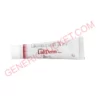



Luliderm Cream (Luliconazole 1%) 20gm
Price range: $38.00 through $104.00
| Country of Origin | india |
|---|---|
| Dosage Form | Cream |
| Generic Name | Luliconazole |
| Indication | Fungal skin infections |
| Packaging | 20 gm in 1 tube |
| Manufacturer | Aristo Pharmaceuticals Pvt Ltd |
| Composition | Luliconazole (1% w/w) |
| Luliderm Cream (Luliconazole 1%) 20gm | |||
| Pack Size | Price | Price/Unit | Add To Cart |
| 3 Tube/s | $38.00 (12.67/unit) | $12.67 | |
| 6 Tube/s | $72.00 (12/unit) | $12 | |
| 9 Tube/s | $104.00 (11.56/unit) | $11.56 | |
Luliderm Cream is a topical antifungal medicine containing luliconazole 1% w/w, designed to treat certain fungal infections of the skin, including ringworm of the body, jock itch, and athlete’s foot. The product is manufactured by Aristo Pharmaceuticals and is listed as a 1% luliconazole topical cream.
Rather than simply masking itching or redness, this treatment targets the fungal organisms responsible for the infection. Luliconazole belongs to the azole antifungal class and interferes with fungal cell-membrane formation, helping stop the fungus from surviving and spreading. The U.S. prescribing information for luliconazole 1% cream identifies it for topical treatment of interdigital tinea pedis, tinea cruris, and tinea corporis caused by specified organisms.
What Is Luliderm Cream Used For?
Luliderm Cream may be prescribed for fungal skin infections such as tinea corporis (ringworm of the body), tinea cruris (jock itch), and tinea pedis (athlete’s foot). These infections can cause itching, redness, scaling, burning, cracking, or discomfort. Treating the underlying fungal infection can help the affected skin gradually return to a healthier appearance.
It is important to understand that not every itchy or irritated rash comes from fungus. Eczema, psoriasis, bacterial infections, allergic reactions, and other skin conditions can look similar. Therefore, you should use an antifungal medicine when a healthcare professional has determined that a fungal infection is likely or has prescribed the medication for you.
How Does Luliconazole Work?
The active ingredient, luliconazole, is an azole antifungal. It interferes with the production of ergosterol, an important component of fungal cell membranes. Disrupting this process weakens the fungal cell membrane and prevents the organism from maintaining normal growth and survival.
Because the medicine is applied directly to affected skin, it delivers treatment to the area where the fungal infection occurs. You should not apply extra cream simply because you want faster results. Using more medicine than directed can increase irritation without necessarily improving the outcome.
How to Use Luliderm Cream
Before application, wash your hands and gently clean the affected skin. Dry the area thoroughly because moisture can encourage fungal growth. Apply a thin layer to the affected skin and the immediately surrounding area, following the directions provided by your healthcare professional.
For FDA-labeled luliconazole 1% cream, treatment of interdigital athlete’s foot generally involves once-daily application for two weeks, while tinea corporis and tinea cruris are generally treated once daily for one week. Your specific product instructions and prescriber’s directions should take priority.
Use the medicine consistently for the prescribed duration, even if symptoms begin improving sooner. Stopping treatment prematurely may leave viable fungi behind and increase the possibility that the infection will return.
After applying the medicine, wash your hands unless your hands are the treatment area. Keep the affected area clean and dry, and avoid sharing towels, footwear, clothing, or other personal items that may help spread fungal infections.
Related Product
Important Safety Information
Luliderm Cream is intended for external use. Do not put it into the eyes, mouth, or vagina, and do not use it as an oral medicine. U.S. labeling specifically states that luliconazole cream is not for ophthalmic, oral, or intravaginal use.
Avoid applying the cream to broken or severely irritated skin unless your healthcare professional tells you to do so. If the medicine gets into your eyes, rinse thoroughly with water and seek medical advice if irritation persists.
Topical reactions can occur. Clinical trials of luliconazole 1% cream reported application-site reactions in less than 1% of subjects. If you develop significant swelling, severe burning, worsening irritation, or signs of a serious allergic reaction, stop using the product and seek appropriate medical attention.
Pregnant or breastfeeding patients should discuss treatment with a healthcare professional before using a luliconazole product. Likewise, ask a clinician before using it in children because age-specific labeling and recommendations can differ between products and markets.
Why Choose Luliderm Cream?
When a fungal infection has been correctly identified, an effective topical antifungal can address the cause rather than merely providing temporary relief from symptoms. Luliderm Cream provides luliconazole 1% in a topical formulation, making it convenient for localized fungal skin infections.
Its once-daily regimen for labeled indications can also make treatment easier to follow. Consistent application, good skin hygiene, keeping affected areas dry, and completing the prescribed course all contribute to successful management.
However, no topical antifungal can guarantee a cure for every rash. If the skin condition does not improve, becomes worse, spreads, or repeatedly returns, consult a qualified healthcare professional for reassessment.
Storage and Handling
Store the product according to the instructions on its package. Keep the tube tightly closed and away from excessive heat and moisture. Keep all medicines out of the reach of children.
Do not use a product after its expiration date or if its appearance, texture, or packaging has changed unexpectedly. Always check the label for the exact storage instructions for your particular tube.
Frequently Asked Questions
1. What is Luliderm Cream?
Luliderm Cream is a topical antifungal containing luliconazole 1% w/w. It is used for certain fungal infections of the skin.
2. Can Luliderm Cream treat ringworm?
Luliconazole 1% cream is indicated for tinea corporis, commonly called ringworm of the body, when the infection is caused by susceptible fungi listed in the prescribing information.
3. Can it treat athlete’s foot?
Yes. Luliconazole 1% cream is indicated for interdigital tinea pedis, commonly known as athlete’s foot. The U.S. label specifies once-daily application for two weeks for this indication.
4. Can I use it for any itchy rash?
No. Itching does not always mean that a fungal infection is present. A healthcare professional can help distinguish fungal infections from eczema, dermatitis, bacterial infections, and other conditions.
5. Can I apply it more often for faster results?
Do not apply it more frequently or use a larger amount than directed. More medicine does not necessarily produce faster healing and may increase local irritation.
Be the first to review “Luliderm Cream (Luliconazole 1%) 20gm”
Related products
Anti fungal
Anti fungal
Anti fungal
Anti fungal
Anti fungal
Anti fungal
Anti fungal

Anti fungal

Anti fungal

Anti fungal
Anti fungal

Anti fungal
Reviews
There are no reviews yet.