

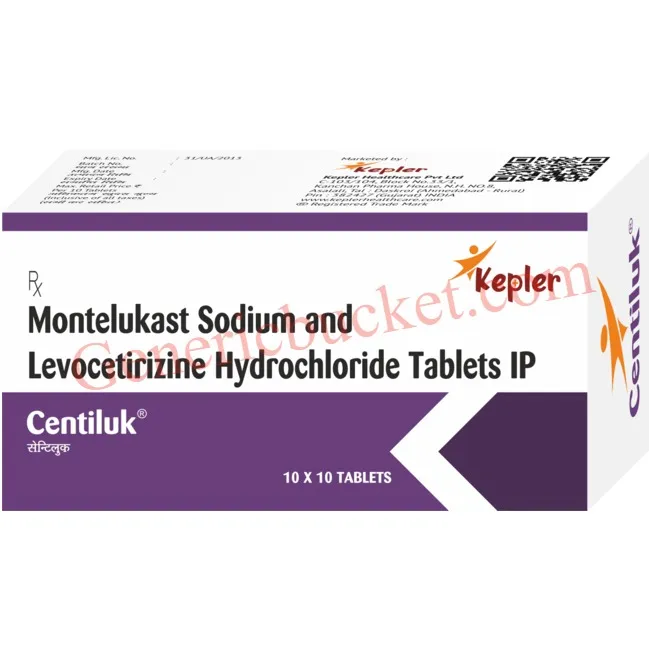

Centiluk Tablet (Levocetirizine 5mg / Montelukast 10mg)
Price range: $53.00 through $145.00
| Country of Origin | india |
|---|---|
| Dosage Form | Tablets |
| Generic Name | Levocetirizine |
| Indication | treatment of sneezing and runny nose due to allergies |
| Manufacturer | Kepler Health Care |
| Composition | Levocetirizine (5mg) + Montelukast (10mg) |
| Centiluk Tablet (Levocetirizine 5mg / Montelukast 10mg) | |||
| Pack Size | Price | Price/Unit | Add To Cart |
| 50 Tablet/s | $53.00 (1.06/unit) | $1.06 | |
| 100 Tablet/s | $100.00 (1/unit) | $1 | |
| 150 Tablet/s | $145.00 (0.97/unit) | $0.97 | |
Centiluk Tablet is a prescription combination medicine containing levocetirizine 5 mg and montelukast 10 mg. It is primarily used to manage symptoms associated with allergic rhinitis, including sneezing, runny or stuffy nose, nasal itching, and watery or itchy eyes. The manufacturer identifies these two active ingredients as levocetirizine and montelukast.
Patients should understand that this medicine manages allergy symptoms rather than permanently curing the underlying tendency to develop allergies. Your healthcare professional should determine whether this combination is appropriate for your condition, particularly because montelukast carries an important FDA boxed warning concerning serious neuropsychiatric reactions.
How Centiluk Tablet Works
Centiluk Tablet combines two medicines that work through different mechanisms. Levocetirizine is an antihistamine. It blocks histamine, a chemical involved in allergic reactions, thereby helping reduce sneezing, itching, runny nose, and watery eyes. Montelukast belongs to a group called leukotriene receptor antagonists. It blocks leukotriene activity, which can contribute to inflammation and swelling in the airways and nasal passages.
This dual mechanism can provide broader symptom control when a healthcare professional considers both histamine-mediated and leukotriene-mediated allergy symptoms relevant. However, patients should not assume that combining two medicines is automatically better than using one. Your prescriber should select treatment according to your symptoms, medical history, other medicines, and response to therapy.
Uses and Potential Benefits
Doctors may prescribe Centiluk Tablet for allergic rhinitis, including seasonal or perennial allergy symptoms. Common symptoms include repeated sneezing, nasal discharge, nasal congestion, nasal itching, and irritated or watery eyes. Product information also lists allergic dermatitis and asthma-related indications, although montelukast-containing therapy should be selected carefully according to the individual patient’s clinical needs.
For people whose allergies interfere with sleep, concentration, work, school, or outdoor activities, controlling symptoms can improve everyday comfort. Reducing exposure to known allergens can further support treatment. Patients can keep indoor areas clean, reduce dust exposure, avoid tobacco smoke, and follow their clinician’s recommendations for managing environmental triggers.
How to Take Centiluk Tablet
Take Centiluk Tablet exactly as prescribed. Do not increase the dose, take extra tablets for faster relief, or continue treatment longer than recommended without discussing it with your healthcare professional. Available product information states that the tablet may be taken with or without food, although instructions can vary according to the prescribed regimen.
Swallow the tablet with water unless your healthcare professional gives you different instructions. Try to take your dose consistently at the recommended time. If you forget a dose, follow your prescriber’s or pharmacist’s instructions rather than doubling the next dose.
If you use Centiluk Tablet for allergy symptoms, remember that montelukast is not considered a first-choice treatment for mild allergic rhinitis in the United States. The FDA recommends reserving montelukast for allergic rhinitis when alternative treatments have not worked adequately or cannot be tolerated because of its serious mental-health warning.
Related Product
Side Effects and Important Safety Information
Centiluk Tablet can cause side effects. Reported effects may include drowsiness, dizziness, headache, dry mouth, fatigue, abdominal discomfort, nausea, diarrhea, rash, or other symptoms. Not every patient experiences these reactions, and individual responses can vary.
Because levocetirizine can cause drowsiness, avoid driving, operating machinery, or performing activities requiring full alertness until you know how the medicine affects you. Alcohol may increase drowsiness and should be avoided unless your healthcare professional says otherwise.
The most important safety issue involves montelukast. The FDA requires a boxed warning because serious neuropsychiatric events have been reported, including agitation, aggression, anxiety, depression, abnormal dreams, hallucinations, sleep disturbances, suicidal thoughts, and suicidal behavior. These reactions have occurred in people with and without previous psychiatric illness.
If you or someone taking Centiluk Tablet develops a new or worsening mood or behavior change, suicidal thoughts, hallucinations, severe agitation, or another concerning mental-health symptom, stop the montelukast-containing medicine and contact a healthcare professional immediately. Seek emergency help for an immediate danger to yourself or others.
Precautions Before Using Centiluk Tablet
Tell your healthcare professional about kidney or liver problems, pregnancy, breastfeeding, allergies, asthma, psychiatric history, and every prescription, over-the-counter, or herbal product you use. Levocetirizine requires particular caution in patients with significant renal impairment, while montelukast requires careful consideration of its neuropsychiatric risks.
Do not use Centiluk Tablet to treat a sudden asthma attack. Montelukast is used for prevention and long-term control in appropriate patients, not as a rescue medicine for acute bronchospasm. Patients with asthma should keep their prescribed quick-relief medication available as directed by their clinician.
Storage and Responsible Use
Store Centiluk Tablet according to the product label, generally in a dry place at an appropriate room temperature, and keep it away from children. Do not share prescription medicines with another person, even when that person has similar allergy symptoms.
When purchasing prescription medication, use a properly licensed pharmacy and follow applicable prescription requirements. Rather than choosing a medicine solely because of an online product description, discuss your symptoms and medical history with a qualified healthcare professional before ordering or starting treatment.
Frequently Asked Questions
1. What is Centiluk Tablet used for?
Centiluk Tablet is used to manage symptoms of allergic rhinitis such as sneezing, runny or stuffy nose, nasal itching, and watery or itchy eyes. It contains levocetirizine and montelukast.
2. Does Centiluk Tablet cure allergies permanently?
No. Centiluk Tablet helps control allergy symptoms but does not permanently eliminate the body’s tendency to react to allergens. Your clinician can recommend longer-term allergy-management strategies when appropriate.
3. Can Centiluk Tablet make me sleepy?
Yes. Levocetirizine may cause drowsiness or fatigue. Avoid driving or operating machinery until you know how you respond to the medicine. Alcohol can worsen drowsiness.
4. Can I take Centiluk Tablet during pregnancy?
Discuss pregnancy or plans to become pregnant with your healthcare professional before using this medicine. Your clinician can assess the potential benefits and risks and recommend an appropriate treatment.
5. Can I take Centiluk Tablet with other allergy medicines?
Do not automatically combine it with another antihistamine or montelukast-containing product. Tell your pharmacist or doctor about all medicines you take so they can identify unnecessary duplication or possible interactions.
Be the first to review “Centiluk Tablet (Levocetirizine 5mg / Montelukast 10mg)”
Related products





Reviews
There are no reviews yet.