
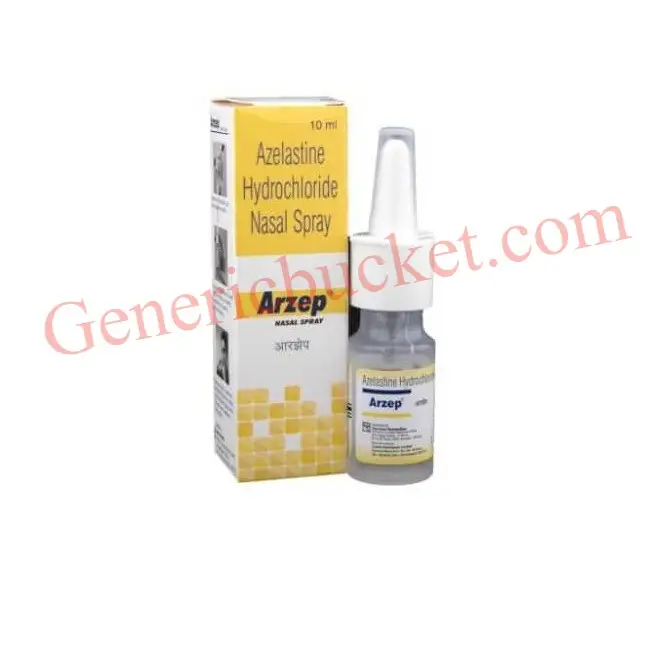

Arzep Nasal Spray (Azelastine 0.1%)
Price range: $23.00 through $110.00
| Country of Origin | India |
|---|---|
| Dosage Form | Nasal Spray |
| Equivalent Brand | Astelin |
| Generic Name | Azelastine |
| Indication | Nasal allergy symptoms |
| Manufacturer | Zydus Cadila Pharma |
| Packaging | 10 ml in 1 packet |
| Composition | Azelastine (0.1% w/v) |
| Pack Size | 1 Nasal Spray/s, 3 Nasal Spray/s, 6 Nasal Spray/s |
| Arzep Nasal Spray (Azelastine 0.1%) | |||
| Pack Size | Price | Price/Unit | Add To Cart |
| 1 Nasal Spray/s | $23.00 (23/unit) | $23 | |
| 3 Nasal Spray/s | $58.00 (19.33/unit) | $19.33 | |
| 6 Nasal Spray/s | $110.00 (18.33/unit) | $18.33 | |
Arzep Nasal Spray is an antihistamine nasal medicine containing azelastine, commonly used to relieve symptoms associated with allergic rhinitis, including sneezing, runny nose, itchy nose, and nasal congestion. Available product information identifies azelastine 0.1% w/v as the active ingredient. It works locally inside the nasal passages by blocking the effects of histamine, a chemical involved in many allergy symptoms. Because it delivers the medicine directly into the nose, it can provide targeted relief without requiring an oral allergy tablet.
Rather than describing allergies as something this medicine permanently “cures,” it is more accurate to say that Arzep Nasal Spray helps control and relieve nasal allergy symptoms. Allergic rhinitis can occur seasonally because of pollen, grass, or weeds, or throughout the year because of triggers such as dust mites, mold, and animal dander. Arzep Nasal Spray may help reduce the uncomfortable nasal symptoms that occur when the body reacts to these allergens.
How Arzep Nasal Spray Works
The active ingredient, azelastine, belongs to the antihistamine class. When an allergic reaction occurs, the body releases histamine, which can contribute to itching, sneezing, swelling, and increased mucus production. Arzep Nasal Spray blocks histamine activity in the nasal passages, helping reduce symptoms such as a watery or runny nose, repeated sneezing, nasal itching, and congestion.
This targeted mechanism makes Arzep Nasal Spray useful for people whose primary allergy symptoms affect the nose. It does not eliminate the underlying tendency to develop allergies, so patients should continue to identify and reduce exposure to known triggers whenever practical.
Uses and Potential Benefits
Doctors may recommend Arzep Nasal Spray for allergic rhinitis and related nasal allergy symptoms. Product references describe its use for seasonal and perennial allergic rhinitis. Depending on the individual patient’s symptoms, treatment may help with:
- Sneezing caused by allergies
- Runny or watery nasal discharge
- Itchy nasal passages
- Stuffy or congested nose
- Nasal irritation associated with allergic rhinitis
- Seasonal allergy symptoms
- Year-round allergy symptoms
One advantage of Arzep Nasal Spray is that it delivers azelastine directly to the nasal tissues. This approach can be particularly convenient when nasal symptoms are the main concern. Your healthcare professional can determine whether an antihistamine spray is appropriate for your symptoms or whether another treatment would provide better control.
How to Use Arzep Nasal Spray
Use Arzep Nasal Spray exactly as prescribed or according to the current product labeling. Do not increase the number of sprays or use it more frequently simply because your symptoms feel severe. Product information commonly instructs patients to gently blow their nose first, prepare the pump according to the instructions, and administer the spray into the nostril while keeping the head upright.
Do not point the nozzle toward the nasal septum, which is the tissue separating the nostrils. Instead, direct the spray appropriately into the nasal passage while breathing gently. Clean the nozzle as instructed and replace the protective cap after use. Never swallow the medication or use the nasal spray in the eyes.
Your prescribed dose may differ depending on your age, symptoms, medical history, and the specific formulation. Always follow your prescription label rather than relying on a general online dosage recommendation.
Side Effects and Precautions
Most people tolerate Arzep NasalSpray when they use it correctly, but side effects can occur. Commonly reported problems include a bitter or unpleasant taste, nasal irritation, burning, or discomfort. Some people may also experience drowsiness or headache.
The bitter taste can occur because some of the spray travels toward the throat after administration. Correct spraying technique can help minimize this problem. If side effects become persistent, severe, or troublesome, contact your healthcare professional.
Before starting Arzep Nasal Spray, tell your doctor or pharmacist about allergies, nasal injuries, nasal ulcers, recent nasal surgery, and all medicines or supplements you use. You should also discuss pregnancy or breastfeeding before beginning treatment.
Because azelastine can cause drowsiness in some people, use caution when driving or operating machinery until you know how the medicine affects you. Alcohol and other medicines that cause sleepiness may increase this effect.
Important Information for Buyers
Arzep Nasal Spray is a prescription medicine in the product references reviewed for this description. In the United States, availability, approval status, labeling, and prescribing requirements can differ from those in other countries. Patients should therefore verify the product’s regulatory status and obtain it through a licensed pharmacy and appropriate healthcare professional.
If you are considering ordering Arzep Nasal Spray, check the active ingredient, strength, manufacturer, packaging, expiration date, and prescription requirements before purchase. Do not substitute another nasal spray simply because its brand name looks similar. A pharmacist can confirm whether the product matches your prescription.
Store Arzep Nasal Spray according to the manufacturer’s current instructions, keep it away from excessive heat and moisture, and keep medicines out of children’s reach. Do not use an expired or damaged product.
Why Proper Allergy Management Matters
Untreated nasal allergy symptoms can interfere with sleep, concentration, exercise, work, and everyday activities. Medication works best as part of an overall allergy-management strategy. Reducing exposure to known allergens, keeping living spaces clean, and following your clinician’s treatment plan can complement medication.
Arzep Nasal Spray can be a useful option when an antihistamine nasal treatment is appropriate. However, persistent congestion, recurrent nosebleeds, facial pain, fever, breathing difficulty, or symptoms that do not improve deserve medical evaluation because they may indicate another condition rather than uncomplicated allergic rhinitis.
Frequently Asked Questions
1. What is Arzep Nasal Spray used for?
Arzep Nasal Spray contains azelastine and is used to relieve nasal symptoms associated with allergies, including sneezing, runny nose, itching, and congestion.
2. Is Arzep Nasal Spray a steroid?
No. Arzep Nasal Spray containing azelastine is an antihistamine nasal spray, not a corticosteroid. It works by blocking histamine activity.
3. Does Arzep Nasal Spray cure allergies permanently?
No medicine should be described as permanently curing an allergy. Arzep Nasal Spray helps control and relieve allergy symptoms while you use it as directed.
4. What are the common side effects?
A bitter taste and nasal irritation are among the commonly reported effects. Drowsiness may also occur in some people.
5. Can I drive after using it?
Azelastine may cause drowsiness in some individuals. Avoid driving or operating machinery until you know how Arzep Nasal Spray affects you.
Be the first to review “Arzep Nasal Spray (Azelastine 0.1%)”
Related products


Allergy
Reviews
There are no reviews yet.