
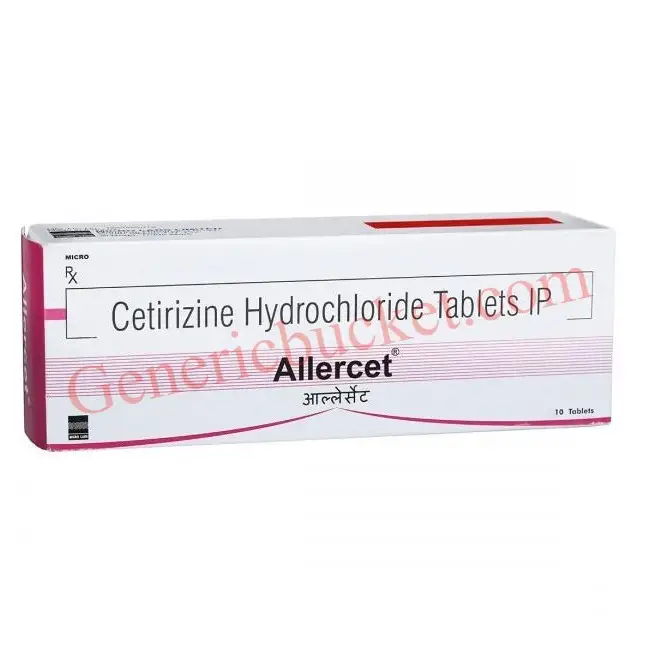

Allercet Tablet (Cetirizine 10mg)
Price range: $25.00 through $60.00
| Country of Origin | india |
|---|---|
| Dosage Form | Tablets |
| Generic Name | Cetirizine |
| Indication | Treatment of Allergic conditions |
| Packaging | 10 tablets in 1 strip |
| Manufacturer | Micro Labs Ltd |
| Composition | Cetirizine (10mg) |
| Allercet Tablet (Cetirizine 10mg) | |||
| Pack Size | Price | Price/Unit | Add To Cart |
| 100 Tablet/s | $25.00 (0.25/unit) | $0.25 | |
| 200 Tablet/s | $44.00 (0.22/unit) | $0.22 | |
| 300 Tablet/s | $60.00 (0.2/unit) | $0.2 | |
Allercet Tablet is an antihistamine medicine commonly used to relieve symptoms associated with allergies, including sneezing, runny nose, itchy or watery eyes, and itching of the nose or throat. If the product contains cetirizine hydrochloride, its active ingredient works by blocking histamine, a chemical involved in many allergic reactions. Cetirizine products are recognized as antihistamines used for temporary relief of common upper-respiratory allergy symptoms.
What Is Allercet Tablet?
Allercet Tablet is generally associated with cetirizine, a second-generation antihistamine. Histamine can cause familiar allergy symptoms after your body encounters triggers such as pollen, dust, pet dander, or other allergens. By reducing histamine activity, cetirizine can help decrease symptoms and make daily activities more comfortable.
Unlike antibiotics, antihistamines do not treat bacterial infections. Allercet Tablet also does not permanently cure an underlying allergy. Instead, it provides symptomatic relief while the medicine remains active. This distinction helps patients use allergy medicine appropriately and avoid expecting it to eliminate the underlying cause of allergic disease.
Uses and Benefits
Allercet Tablet may help manage several common allergy symptoms. People commonly use cetirizine-containing products for temporary relief of sneezing, runny nose, itchy nose or throat, and itchy or watery eyes caused by hay fever or other upper-respiratory allergies. FDA labeling for cetirizine 10 mg tablets identifies these symptoms as approved temporary-relief uses.
Some cetirizine formulations are also used for hives, medically called urticaria. Hives can produce raised, itchy welts on the skin. Cetirizine can reduce the histamine-related itching associated with this condition, although persistent, severe, or unexplained hives require medical assessment.
How Allercet Tablet Works
When an allergen triggers the immune system, the body may release histamine. Histamine can contribute to itching, sneezing, nasal discharge, watery eyes, and other allergy symptoms. Cetirizine acts as an H1 antihistamine and reduces histamine’s effects.
This mechanism makes Allercet Tablet useful for controlling symptoms rather than removing the allergen itself. For example, avoiding known triggers, keeping indoor spaces clean, and reducing exposure to pollen can complement appropriate antihistamine treatment.
How to Take It
Take Allercet Tablet exactly according to the product label or your healthcare professional’s instructions. Cetirizine tablets are generally taken by mouth and may be taken with or without food, depending on the specific product instructions.
Do not automatically increase the dose if symptoms continue. For common 10 mg cetirizine products, FDA labeling states that adults and children 6 years and older may take one 10 mg tablet once daily, with no more than one 10 mg tablet in 24 hours; however, individual products and patients may require different instructions.
Older adults and people with kidney or liver disease should seek professional advice before using cetirizine because dose adjustment may be appropriate.
Related Product
Possible Side Effects
Most people tolerate cetirizine well, but Allercet Tablet may cause side effects in some users. Common effects can include drowsiness, tiredness, dry mouth, or headache. The degree of drowsiness varies between individuals.
Because cetirizine can cause drowsiness, use caution when driving, operating machinery, or performing tasks requiring full alertness until you know how the medicine affects you. FDA labeling also advises avoiding alcohol and exercising caution with sedatives or tranquilizers because they may increase impairment.
Stop using the medicine and seek urgent medical attention if you develop signs of a serious allergic reaction, such as swelling of the face, lips, tongue, or throat, difficulty breathing, or severe dizziness.
Precautions and Drug Interactions
Before taking Allercet Tablet, tell your doctor or pharmacist about existing medical conditions and all medicines or supplements you use. Particular caution is appropriate if you have kidney or liver disease. The FDA label specifically recommends medical advice before use in people with these conditions.
Tell a healthcare professional if you take sedatives, tranquilizers, or other medicines that cause drowsiness. Combining medicines with similar sedating effects can increase impairment.
Pregnant or breastfeeding individuals should consult a healthcare professional before using an antihistamine. Do not give an allergy medicine to a young child unless the child’s healthcare professional recommends an appropriate product and dose.
Allercet Tablet and Daily Allergy Management
Medicine works best as part of a broader allergy-management plan. Try to identify and minimize exposure to known triggers. During high-pollen periods, keeping windows closed when pollen counts are high and showering after outdoor exposure may help reduce allergen exposure. For indoor allergies, regular cleaning and appropriate measures to control dust mites or pet allergens may also help.
If Allercet Tablet does not adequately control your symptoms, do not simply take extra tablets. A clinician can determine whether another antihistamine, nasal treatment, eye treatment, allergy testing, or another approach would better address your symptoms.
Who Should Seek Medical Advice?
Speak with a healthcare professional before using Allercet Tablet if you have kidney or liver problems, take medicines that cause sedation, are pregnant or breastfeeding, or are considering treatment for a child. Seek medical care if symptoms are severe, unusual, persistent, or accompanied by breathing difficulty.
Allergy symptoms can sometimes resemble infections or other medical conditions. A pharmacist or physician can help determine whether an antihistamine is appropriate for your situation.
Frequently Asked Questions
1. What is Allercet Tablet used for?
Allercet Tablet is generally used to relieve allergy symptoms such as sneezing, runny nose, itchy or watery eyes, and itching associated with histamine-related allergic reactions.
2. Does Allercet Tablet cure allergies permanently?
No. Cetirizine provides symptom relief but does not permanently eliminate the underlying tendency to develop allergies.
3. Can Allercet Tablet cause sleepiness?
Yes. Cetirizine may cause drowsiness in some people. Avoid driving or operating machinery until you know how it affects you.
4. Can I take Allercet Tablet every day?
Some cetirizine products are labeled for once-daily use. Follow the specific package directions or your healthcare professional’s advice, and do not exceed the recommended dose.
5. Can children take Allercet Tablet?
The appropriate age and dose depend on the formulation and the child’s circumstances. Check the product label and consult a pediatrician or pharmacist before giving it to a child.
Be the first to review “Allercet Tablet (Cetirizine 10mg)”
Related products



Allergy

Reviews
There are no reviews yet.