

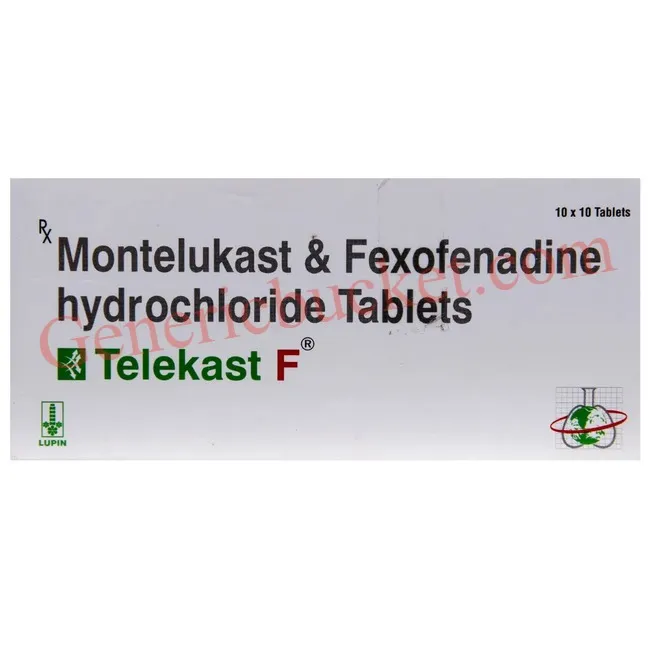

Telekast F Tablet (Montelukast 10mg / Fexofenadine 120mg)
Price range: $64.00 through $176.00
| Country of Origin | india |
|---|---|
| Dosage Form | Tablets |
| Generic Name | Fexofenadine |
| Indication | treatment of sneezing and runny nose due to allergies |
| Packaging | 10 Tablets in 1 strip |
| Manufacturer | Lupin Ltd |
| Composition | Montelukast (10mg) + Fexofenadine (120mg) |
| Telekast F Tablet (Montelukast 10mg / Fexofenadine 120mg) | |||
| Pack Size | Price | Price/Unit | Add To Cart |
| 50 Tablet/s | $64.00 (1.28/unit) | $1.28 | |
| 100 Tablet/s | $120.00 (1.2/unit) | $1.2 | |
| 150 Tablet/s | $176.00 (1.17/unit) | $1.17 | |
Telekast F Tablet is a prescription anti-allergy medicine that combines montelukast 10 mg and fexofenadine 120 mg. It is primarily used to manage symptoms of allergic rhinitis, including sneezing, runny or blocked nose, nasal congestion, itchy nose, and watery or itchy eyes.
This combination works through two complementary mechanisms. Fexofenadine is an antihistamine that blocks histamine, a chemical responsible for many common allergy symptoms. Montelukast blocks leukotriene receptors and helps reduce inflammation associated with allergic reactions. Together, these ingredients can provide broader symptom control when a healthcare professional considers combination treatment appropriate.
It is important to understand that Telekast F Tablet manages allergy symptoms rather than permanently curing an allergy. Allergic rhinitis can occur when your immune system reacts to substances such as pollen, dust mites, mold, or animal dander. Avoiding known triggers remains an important part of long-term allergy management.
How Telekast F Tablet Works
The two active ingredients target different parts of the allergic response. Fexofenadine blocks histamine H1 receptors, which helps reduce sneezing, itching, watery eyes, and a runny nose. Montelukast blocks leukotrienes, inflammatory chemical messengers that can contribute to swelling and mucus production in the respiratory tract.
Because the medicine combines these actions, doctors may prescribe it when allergy symptoms involve several complaints at the same time. Your healthcare professional should determine whether this combination is suitable for you based on your symptoms, age, medical history, and other medicines.
Uses of Telekast F Tablet
Doctors commonly prescribe Telekast F Tablet for allergic rhinitis and related allergy symptoms. These may include persistent sneezing, runny nose, nasal blockage, nasal itching, watery eyes, and congestion.
Allergic rhinitis may be seasonal, such as during pollen seasons, or perennial, meaning symptoms can occur throughout the year. Treatment should address both symptom control and exposure to triggers whenever possible.
Do not assume that this medicine is appropriate for every respiratory condition. It does not replace a rescue inhaler during an acute asthma attack. Patients with asthma should follow their prescribed asthma action plan and keep their quick-relief medication available when instructed.
How to Take Telekast F Tablet
Take Telekast F Tablet exactly as prescribed by your doctor. Swallow the tablet whole with water and do not crush, chew, or break it unless your healthcare professional specifically tells you otherwise. It can generally be taken with or without food.
Take your dose at the same time each day if your doctor recommends regular treatment. Do not take more tablets than prescribed to obtain faster relief. If you miss a dose, follow your prescriber’s instructions rather than taking an extra dose without professional advice.
Avoid taking fexofenadine with apple, orange, or grapefruit juice because these juices can reduce fexofenadine absorption and may decrease its effect. Water is the preferred beverage for taking the tablet.
Related Product
Possible Side Effects
Like other medicines, Telekast F Tablet can cause side effects. Reported effects include headache, dizziness, nausea, diarrhea, vomiting, skin rash, and occasional drowsiness.
Many mild effects may improve as your body adjusts to treatment. However, seek medical advice if symptoms become severe, persistent, or unusual. Stop and seek urgent medical attention for signs of a serious allergic reaction, such as facial or throat swelling, difficulty breathing, or widespread severe rash.
Montelukast also carries an important warning concerning serious neuropsychiatric effects. Contact a healthcare professional promptly if you experience significant mood or behavior changes, unusual dreams, agitation, depression, sleep disturbances, or suicidal thoughts while taking a montelukast-containing medicine. Your prescriber can determine whether you should continue treatment.
Precautions and Safety Information
Before using Telekast F Tablet, tell your doctor about allergies to montelukast, fexofenadine, or any other medicine. Also provide a complete list of prescription medicines, over-the-counter products, vitamins, and supplements you use.
Discuss treatment with your doctor if you have kidney disease, liver problems, or a history of significant reactions to allergy medicines. Pregnant or breastfeeding patients should consult their healthcare professional before starting treatment because the suitability of the combination depends on individual circumstances.
Although fexofenadine is generally considered a less-sedating antihistamine, some people can still experience dizziness or drowsiness. Avoid driving or operating machinery until you know how the medicine affects you.
Keep the medicine in its original packaging, away from excessive heat, moisture, and direct sunlight, and keep it out of children’s reach.
Who Should Not Self-Treat With This Medicine?
You should not purchase or use Telekast F Tablet simply because you have symptoms that resemble an allergy. A healthcare professional should confirm the likely cause, particularly when symptoms are severe, recurrent, or unexplained.
Children should receive an age-appropriate formulation and strength only when prescribed. The available tablet is not automatically suitable for younger children; pediatric formulations and doses differ.
People experiencing breathing difficulty, swelling of the lips or tongue, fainting, or other signs of a potentially serious allergic reaction need urgent medical assessment rather than relying on an oral allergy tablet.
Lifestyle Measures That Can Help
Medicine works best when you also reduce exposure to known allergens. Keep living areas clean, minimize dust accumulation, wash bedding regularly, and consider appropriate measures to reduce exposure to pollen or animal dander when these trigger symptoms.
Saline nasal rinsing may also help clear allergens from the nasal passages. Use properly prepared saline and appropriate hygiene practices. Staying hydrated and following your clinician’s treatment plan can further support symptom management.
Frequently Asked Questions
1. What is Telekast F Tablet used for?
It is a combination of montelukast and fexofenadine used primarily to manage allergic rhinitis symptoms such as sneezing, runny or blocked nose, congestion, and watery eyes.
2. What are the ingredients in Telekast F Tablet?
The commonly marketed tablet contains montelukast 10 mg and fexofenadine 120 mg.
3. Does Telekast F Tablet cure allergies permanently?
No. It helps control allergy symptoms but does not permanently eliminate the underlying tendency to develop allergies. Trigger avoidance and appropriate medical management remain important.
4. Can I take Telekast F Tablet with food?
It can generally be taken with or without food. Follow the instructions provided by your doctor or pharmacist.
5. Can I take it with fruit juice?
Avoid apple, orange, and grapefruit juice when taking fexofenadine because these juices can reduce its absorption. Water is preferable.
Be the first to review “Telekast F Tablet (Montelukast 10mg / Fexofenadine 120mg)”
Related products






Reviews
There are no reviews yet.