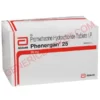
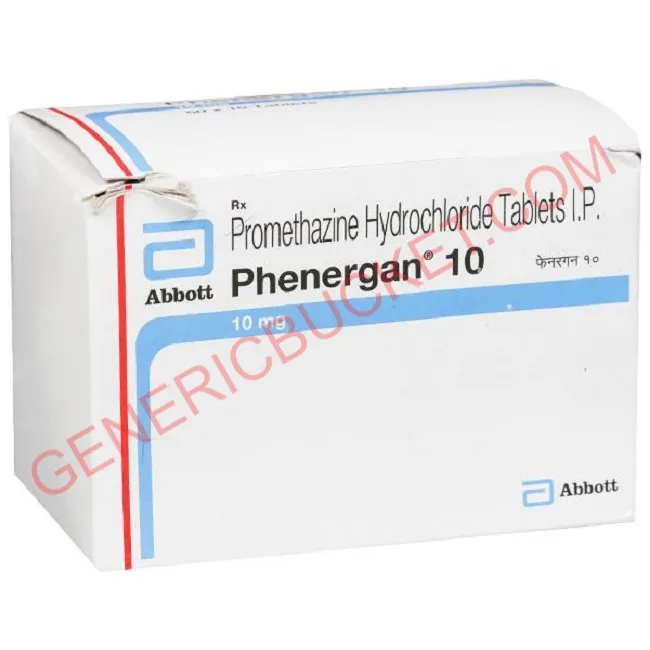

Phenergan 10mg Tablet (Promethazine 10mg)
Price range: $25.00 through $60.00
| Country of Origin | india |
|---|---|
| Dosage Form | Tablets |
| Generic Name | Promethazine |
| Indication | Nausea and vomiting due to chemotherapy |
| Manufacturer | Abbott India Pvt Ltd |
| Packaging | 10 tablets in 1 strip |
| Composition | Promethazine (10mg) |
| Phenergan 10mg Tablet (Promethazine 10mg) | |||
| Pack Size | Price | Price/Unit | Add To Cart |
| 100 Tablet/s | $25.00 (0.25/unit) | $0.25 | |
| 200 Tablet/s | $44.00 (0.22/unit) | $0.22 | |
| 300 Tablet/s | $60.00 (0.2/unit) | $0.2 | |
Phenergan 10mg Tablet is a requested product name for a medicine containing promethazine, an antihistamine with antiemetic and sedative properties. However, an important strength check is necessary before purchase: current U.S. labeling for Phenergan tablets lists 12.5 mg, 25 mg, and 50 mg strengths, not a 10 mg tablet. Therefore, patients should verify the exact strength, manufacturer, and active ingredient with a licensed pharmacist before using or ordering this product.
Promethazine works mainly by blocking histamine H1 receptors. This action can reduce symptoms associated with certain allergic conditions and can also help control nausea and vomiting in appropriate clinical situations. The medicine may also produce significant drowsiness because of its central nervous system effects. For that reason, patients should use promethazine only according to the prescribed directions and should not assume that a particular strength is interchangeable with another strength.
What Is Promethazine Used For?
Phenergan 10mg Tablet, if a product is being supplied under this description, should not be considered a general-purpose treatment for every type of nausea, allergy, or stomach problem. Promethazine products have labeled uses that include certain allergic conditions, allergic rhinitis, allergic conjunctivitis, uncomplicated allergic skin manifestations, and the prevention or control of nausea and vomiting associated with certain anesthesia and surgical situations. The appropriate use depends on the patient’s condition and the prescriber’s assessment.
For allergy-related symptoms, promethazine can reduce histamine-mediated symptoms such as sneezing, runny nose, and itching in appropriate patients. For nausea and vomiting, its antiemetic properties may help control symptoms when a clinician considers it appropriate. It does not necessarily treat the underlying cause of vomiting, so persistent or unexplained symptoms require medical evaluation rather than repeated self-treatment.
How Does Phenergan 10mg Tablet Work?
The active medicine, promethazine hydrochloride, belongs to the phenothiazine group and acts as an H1 histamine receptor blocker. Its antihistamine activity helps reduce allergic symptoms, while its effects on the central nervous system contribute to its antiemetic and sedating properties. Oral promethazine is absorbed through the gastrointestinal tract, and clinical effects can begin relatively quickly.
Because promethazine can impair alertness, patients should plan activities carefully after taking it. Never drive, operate machinery, or perform other hazardous activities until you know how the medicine affects you. Alcohol and other medicines that cause drowsiness can increase central nervous system depression and may make impairment more pronounced.
How Should You Take Promethazine?
Take promethazine exactly as your healthcare professional prescribes. Do not increase the dose, take additional doses, or change the frequency because symptoms have not improved. The correct dosage depends on the medical condition, age, other medicines, and individual response.
Because the requested Phenergan 10mg Tablet strength does not correspond to the tablet strengths listed in the current U.S. Phenergan labeling, confirm the package and prescription before administration. Current labeling identifies 12.5 mg, 25 mg, and 50 mg tablets.
Related Product
Important Safety Information
Promethazine requires particular caution because it can cause serious respiratory depression. The current labeling warns that respiratory depression can potentially be fatal and recommends avoiding use in patients with compromised respiratory function, including conditions such as chronic obstructive pulmonary disease or sleep apnea.
Promethazine can also cause substantial sedation. Combining it with alcohol, opioids, sedatives, sleeping medicines, tranquilizers, certain antidepressants, or other central nervous system depressants can increase impairment and respiratory-depression risks. Always provide your complete medication list to your prescriber or pharmacist before starting treatment.
Healthcare professionals should also consider seizure risk, drug interactions, and other individual factors before recommending treatment. Promethazine may lower the seizure threshold and requires caution in people with seizure disorders or those taking medicines that can have similar effects.
Use in Children
Promethazine has particularly important pediatric safety considerations. U.S. labeling states that promethazine should not be used in children younger than 2 years because of the risk of potentially fatal respiratory depression. In children aged 2 years and older, clinicians should use the lowest effective dose and avoid combinations with other medicines that depress respiration.
Parents and caregivers should never administer an adult prescription to a child simply by adjusting the tablet or guessing a dose. A pediatrician or pharmacist should determine the appropriate treatment and strength.
Common Side Effects
Possible adverse effects include drowsiness, dizziness, blurred vision, dry mouth, and reduced alertness. These effects can interfere with normal activities, particularly when a person first begins treatment. Some people may experience confusion or unusual reactions.
Seek urgent medical attention for severe breathing problems, extreme difficulty staying awake, severe confusion, seizures, or other serious symptoms. Do not ignore symptoms that appear unusually intense or rapidly worsen.
Drug Interactions
Before using Phenergan 10mg Tablet, tell your healthcare professional about every prescription medicine, over-the-counter product, supplement, and herbal product you use. Particular attention is necessary with medicines that affect the brain, including sedatives, sleeping medicines, narcotic pain medicines, tranquilizers, certain antidepressants, and other central nervous system depressants. Anticholinergic medicines and monoamine oxidase inhibitors can also require special consideration.
A pharmacist can review your medication profile and identify potentially significant interactions before dispensing promethazine.
Who Should Avoid or Carefully Consider This Medicine?
People with breathing disorders, sleep apnea, seizure disorders, certain blood disorders, or significant sensitivity to sedating medicines should discuss these conditions with a healthcare professional. Older adults may also be more susceptible to dizziness, confusion, and other adverse effects.
Pregnant or breastfeeding patients should consult their healthcare professional before taking promethazine. Do not start or stop the medicine based solely on information found online.
Ordering and Strength Verification
If you are searching for Phenergan 10mg Tablet, verify the exact product before placing an order. Current U.S. labeling for Phenergan tablets identifies 12.5 mg, 25 mg, and 50 mg strengths. A reputable pharmacy should confirm the prescription, product strength, manufacturer, and dispensing information rather than substituting a different strength without appropriate authorization.
For safe treatment, order prescription medicines only through a properly licensed pharmacy and provide a valid prescription when required. Do not purchase an unidentified product solely because its name or strength appears similar to your prescription.
Frequently Asked Questions
Is Phenergan 10mg Tablet available in the United States?
The current U.S. DailyMed labeling for Phenergan tablets lists 12.5 mg, 25 mg, and 50 mg strengths. A product advertised specifically as 10 mg should therefore be verified carefully with a pharmacist before use.
Does Phenergan 10mg Tablet cure nausea?
Promethazine can help control nausea and vomiting in appropriate clinical circumstances, but it does not necessarily cure the underlying cause. Persistent vomiting requires medical assessment.
Does promethazine make you sleepy?
Yes. Sedation and impaired alertness are important effects of promethazine. Avoid driving or hazardous activities until you know how it affects you.
Can I drink alcohol while taking promethazine?
Avoid alcohol unless your healthcare professional specifically advises otherwise. Alcohol can increase the sedating and central nervous system effects of promethazine.
Can children take promethazine?
Children younger than 2 years should not receive promethazine because of the risk of potentially fatal respiratory depression. Children aged 2 years and older require careful professional dosing.
Related products