


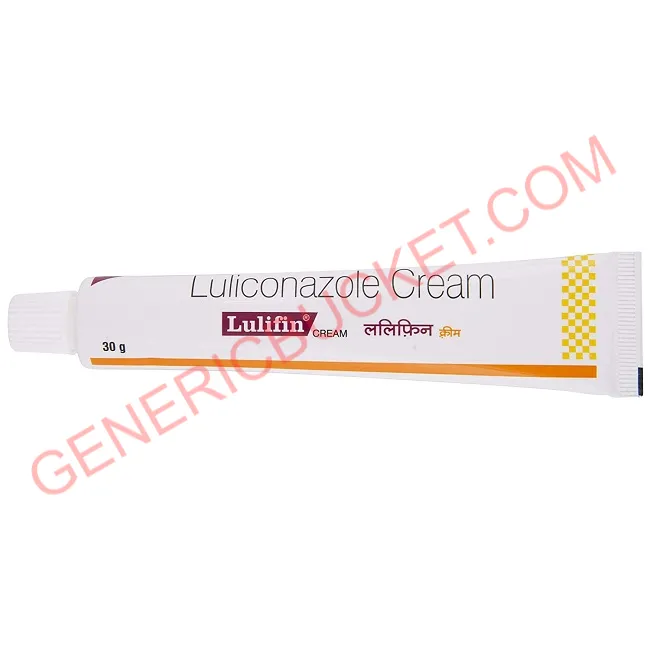

Lulifin Cream (Luliconazole 1%) 30gm
Price range: $45.00 through $124.00
| Active Ingredient (Generic Name): | Luliconazole |
|---|---|
| Indication: | used in the treatment of fungal infections |
| Manufacturer: | Sun Pharmaceutical Industries Ltd |
| Packaging: | 30 gm in 1 tube |
| Strength | Luliconazole (1% w/w) |
| Pack Size | 3 Tube/s, 6 Tube/s, 9 Tube/s |
| Lulifin Cream (Luliconazole 1%) 30gm | |||
| Pack Size | Price | Price/Unit | Add To Cart |
| 3 Tube/s | $45.00 (15/unit) | $15 | |
| 6 Tube/s | $86.00 (14.33/unit) | $14.33 | |
| 9 Tube/s | $124.00 (13.78/unit) | $13.78 | |
Lulifin Cream is a topical antifungal medicine used to treat fungal skin infections such as athlete’s foot, ringworm, and jock itch. It contains luliconazole, an antifungal agent that helps stop the growth of fungi responsible for these uncomfortable infections. When used correctly, Lulifin Cream can help reduce itching, redness, scaling, burning, and other symptoms associated with fungal infections.
What Is Lulifin Cream?
Lulifin Cream contains luliconazole, which belongs to the imidazole class of antifungal medicines. It works by interfering with the production of ergosterol, an essential component of the fungal cell membrane. By disrupting this process, luliconazole weakens the fungal cell and helps eliminate the infection.
Unlike products intended only to soothe itching temporarily, Lulifin Cream addresses the underlying fungal cause. This makes appropriate antifungal treatment important when symptoms result from a fungal infection rather than eczema, allergy, bacterial infection, or another skin condition.
Uses of Lulifin Cream
Doctors commonly prescribe luliconazole cream for certain superficial fungal infections, including interdigital tinea pedis (athlete’s foot), tinea cruris (jock itch), and tinea corporis (ringworm), depending on the patient’s condition and the prescribed formulation.
Athlete’s foot often develops between the toes and may cause peeling, cracking, itching, or burning. Jock itch typically affects the groin and surrounding skin, while ringworm can produce an itchy, scaly, ring-shaped rash on different areas of the body.
Before treating a rash yourself, make sure the diagnosis is appropriate. Several skin conditions can look similar to fungal infections, and an antifungal will not treat every type of rash.
How Does Lulifin Cream Work?
The active ingredient, luliconazole, interferes with fungal cell membrane formation. Fungi require ergosterol to maintain the structure and function of their cell membranes. By interfering with ergosterol synthesis, luliconazole helps inhibit fungal growth and supports clearance of the infection.
As the fungal burden decreases, symptoms such as itching, scaling, redness, and irritation can gradually improve. You should continue treatment exactly as directed, even if the skin begins to look better before the prescribed course ends.
How to Use Lulifin Cream
Clean and dry the affected skin before application. Apply a thin layer of Lulifin Cream to the affected area according to your healthcare professional’s directions. Wash your hands before and after application unless your hands themselves are being treated.
Do not apply more medicine than recommended. Using an excessive amount does not necessarily make the infection disappear faster and may increase skin irritation.
Avoid getting the cream into your eyes, mouth, or other mucous membranes. Do not cover the treated area with a tight or airtight dressing unless your healthcare professional specifically tells you to do so.
Follow the prescribed treatment duration carefully. Stopping treatment too early may allow the infection to persist or return.
Related Product
Benefits of Lulifin Cream
When appropriately prescribed and used, Lulifin Cream offers several practical benefits. It directly targets susceptible fungi rather than merely masking uncomfortable symptoms. Regular application can help control fungal growth and support improvement of affected skin.
Patients may notice gradual reduction in itching, redness, scaling, and irritation as the infection responds. Keeping the affected area clean and dry and following good hygiene practices can also support treatment.
Remember that improvement does not always occur immediately. Give the medicine adequate time to work according to your healthcare professional’s instructions.
Possible Side Effects
Most people tolerate topical luliconazole well, but some users may experience application-site reactions. Possible effects include mild burning, stinging, redness, itching, irritation, or dryness.
Stop using the product and seek medical advice if you develop severe irritation, significant swelling, blistering, or signs of a serious allergic reaction. If symptoms continue to worsen or fail to improve after appropriate treatment, contact your healthcare professional for evaluation.
Precautions and Safety Information
Use Lulifin Cream only as directed by a healthcare professional or according to the product labeling. Tell your healthcare professional about allergies, other medicines you use, and any skin conditions that could affect treatment.
For external use only. Avoid unnecessary contact with the eyes. If accidental eye contact occurs, rinse thoroughly with water and seek medical advice if irritation persists.
Do not share your cream with another person. Fungal infections can spread between people, and sharing topical medicines may also spread infection or delay proper diagnosis.
Keep the affected skin clean and dry. Change socks and underwear regularly, avoid sharing towels, and keep personal items clean when treating contagious fungal infections.
When Should You Seek Medical Advice?
Contact a healthcare professional if the rash spreads, becomes painful, develops drainage, or does not improve with appropriate treatment. You should also seek professional evaluation if you are unsure whether your skin problem is fungal.
People with recurrent fungal infections may need evaluation for contributing factors and confirmation of the diagnosis rather than repeatedly using an antifungal product without guidance.
Frequently Asked Questions
1. What is Lulifin Cream used for?
It is a topical antifungal medicine containing luliconazole. Healthcare professionals use it to treat certain superficial fungal skin infections, including athlete’s foot, jock itch, and ringworm.
2. How long does Lulifin Cream take to work?
Some symptoms may improve during treatment, but the response varies by infection and individual. Use the medicine for the full duration recommended by your healthcare professional.
3. Can I use Lulifin Cream for itching?
It can reduce itching when the itching results from a fungal infection. However, not every itchy rash is caused by fungus, so proper diagnosis matters.
4. Can I stop treatment when my rash improves?
Do not stop treatment early unless your healthcare professional tells you to. Completing the recommended course helps ensure the infection receives adequate treatment.
5. Can I apply it to my face?
Do not use luliconazole on the face unless your healthcare professional specifically recommends it for your condition and provides appropriate directions.
Be the first to review “Lulifin Cream (Luliconazole 1%) 30gm”
Related products
Anti fungal

Anti fungal
Anti fungal
Anti fungal
Anti fungal

Anti fungal
Anti fungal
Anti fungal
Anti fungal
Anti fungal

Anti fungal

Anti fungal
Reviews
There are no reviews yet.