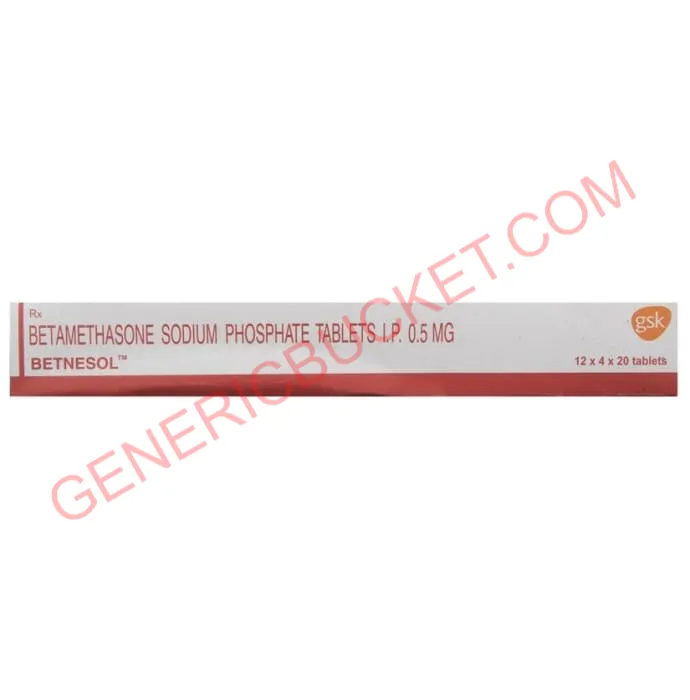

Betnesol Tablet (Betamethasone 0.5mg)
Price range: $25.00 through $62.00
| Active Ingredient (Generic Name): | Betamethasone Dipropionate |
|---|---|
| Indication: | Allergy symptoms, Severe allergic reactions, Asthma |
| Manufacturer: | GlaxoSmithKline Pharmaceuticals Ltd |
| Packaging: | 20 Tablets in strip |
| Strength | 0.5mg |
| Pack Size | 100 Tablet/s, 200 Tablet/s, 300 Tablet/s |
| Betnesol Tablet (Betamethasone 0.5mg) | |||
| Pack Size | Price | Price/Unit | Add To Cart |
| 100 Tablet/s | $25.00 (0.25/unit) | $0.25 | |
| 200 Tablet/s | $46.00 (0.23/unit) | $0.23 | |
| 300 Tablet/s | $62.00 (0.21/unit) | $0.21 | |
Betnesol Tablet is a corticosteroid medicine commonly associated with betamethasone, a glucocorticoid that helps reduce inflammation and excessive immune-system activity. It may be prescribed for certain inflammatory, allergic, or immune-related conditions when a healthcare professional considers corticosteroid treatment appropriate. Because corticosteroids can produce significant effects throughout the body, patients should use this medicine only according to the prescription and instructions provided by their clinician.
The exact strength, ingredients, and approved uses can vary by manufacturer and country. Therefore, always check the product label and prescription before taking Betnesol Tablet. In the United States, oral corticosteroid products and indications can differ from products marketed under the Betnesol brand in other countries. A pharmacist or physician can confirm whether the specific product is appropriate for your condition.
How Betnesol Tablet Works
Betamethasone belongs to the glucocorticoid class of corticosteroids. It works by modifying inflammatory and immune responses in the body. This action can decrease swelling, redness, irritation, and other symptoms associated with inflammation. Corticosteroids are used for a range of conditions because they can act on several inflammatory pathways rather than targeting only one symptom.
Betnesol Tablet does not eliminate every underlying cause of inflammation. Instead, it controls the inflammatory response while the underlying condition receives appropriate medical management. Your doctor may therefore prescribe it for a limited period or use a carefully adjusted dose depending on your diagnosis and response to treatment.
Uses and Potential Benefits
Doctors may prescribe Betnesol Tablet for selected inflammatory or allergic disorders. Depending on the specific formulation and clinical situation, betamethasone may be used when suppression of inflammation or immune activity is medically necessary. Potential benefits include reducing inflammation, easing swelling, and improving symptoms associated with corticosteroid-responsive conditions.
The medicine should not be considered a general-purpose treatment for pain, infection, or ordinary skin irritation. A corticosteroid can sometimes make an infection more difficult to recognize or control because it suppresses immune activity. For this reason, your healthcare professional should determine whether a corticosteroid is suitable before treatment begins.
How to Take Betnesol Tablet
Take Betnesol Tablet exactly as prescribed. Follow the dose, timing, and duration specified by your healthcare professional. Do not increase the dose because symptoms remain uncomfortable, and do not take additional tablets to compensate for a missed dose unless your healthcare professional specifically instructs you to do so.
Some patients may need to take corticosteroids with food to reduce stomach discomfort. Follow the instructions on your prescription because dosing requirements can vary according to the condition being treated. If you have taken corticosteroids for an extended period, do not stop treatment suddenly unless your prescriber tells you to. Sudden withdrawal after prolonged systemic corticosteroid use can cause problems because the body may need time to restore its natural corticosteroid production.
Possible Side Effects
Like other corticosteroids, Betnesol Tablets can cause side effects. The likelihood depends on the dose, duration of therapy, individual health, and other medicines being used. Possible effects may include increased appetite, indigestion, difficulty sleeping, mood changes, fluid retention, increased blood pressure, or changes in blood glucose.
Longer or higher-dose corticosteroid therapy can cause more significant complications. These may include increased susceptibility to infections, changes in bone health, eye complications, adrenal suppression, and other metabolic or hormonal effects. Systemic corticosteroids can also interact with other medicines, so provide your doctor and pharmacist with a complete list of prescription medicines, over-the-counter products, and supplements.
Seek prompt medical advice if you develop signs of a serious infection, severe mood or behavioral changes, unusual vision problems, significant swelling, or other concerning symptoms while using Betnesol Tablet.
Related product
Important Precautions
Before starting Betnesol Tablet, tell your healthcare professional about your medical history. Mention any history of infections, diabetes, high blood pressure, osteoporosis, stomach ulcers, psychiatric conditions, liver or kidney problems, or eye disease. Also tell your clinician if you are pregnant, planning pregnancy, or breastfeeding.
Corticosteroids can affect immune responses. People taking systemic corticosteroids may need special precautions around certain infections and vaccinations. Your healthcare professional can determine which vaccines and preventive measures are appropriate during treatment.
Children may require particular attention because prolonged corticosteroid exposure can affect growth and development. Older adults may also have increased susceptibility to certain corticosteroid-related complications. Your prescriber should individualize treatment rather than relying on a standard dose.
Drug Interactions
Betnesol Tablet may interact with other medicines. Tell your healthcare professional if you use medicines for diabetes, blood pressure, seizures, infections, inflammation, or other chronic conditions. Corticosteroids can also interact with certain medicines that influence steroid exposure or immune function.
For example, corticosteroid labeling warns about interactions with some antifungal medicines, diuretics, and other drugs. The specific interaction risk depends on the formulation and dose. Your pharmacist can review your complete medication list before you begin treatment.
Storage and Responsible Use
Keep Betnesol Tablet in its original packaging and store it according to the manufacturer’s instructions. Keep medicines away from children and avoid using tablets that have expired or appear damaged.
Do not share corticosteroids with another person, even if that person has symptoms similar to yours. A medicine that is appropriate for one inflammatory condition may be inappropriate for another. Use the medicine only for the condition for which your healthcare professional prescribed it.
If you are considering purchasing Betnesol Tablet, verify the product’s active ingredient, strength, manufacturer, expiration date, and dispensing requirements. Prescription medicines should be obtained through a legitimate, licensed pharmacy and used under appropriate medical supervision.
Frequently Asked Questions
What is Betnesol Tablet used for?
Betnesol Tablet is associated with betamethasone, a corticosteroid used to reduce inflammation and suppress excessive immune activity in selected medical conditions. The appropriate indication depends on the specific product and a patient’s diagnosis.
Is Betnesol Tablet an antibiotic?
No. Betnesol Tablet is a corticosteroid, not an antibiotic. It does not directly kill bacteria. Because corticosteroids can suppress immune responses, they may sometimes worsen or mask infections if used inappropriately.
Can I stop Betnesol Tablet suddenly?
Do not stop Betnesol Tablet suddenly after prolonged or high-dose treatment unless your healthcare professional instructs you to do so. Your clinician may gradually reduce the dose to allow the body to adjust.
Can Betnesol Tablet cause side effects?
Yes. Betnesol Tablet can cause corticosteroid-related side effects, particularly with higher doses or longer treatment. Report persistent or severe symptoms to your healthcare professional.
Can I take Betnesol Tablet with other medicines?
Potentially, but your pharmacist should review your medicines first. Betnesol Tablet may interact with certain prescription drugs, over-the-counter medicines, and supplements.
Related products


Allergy