
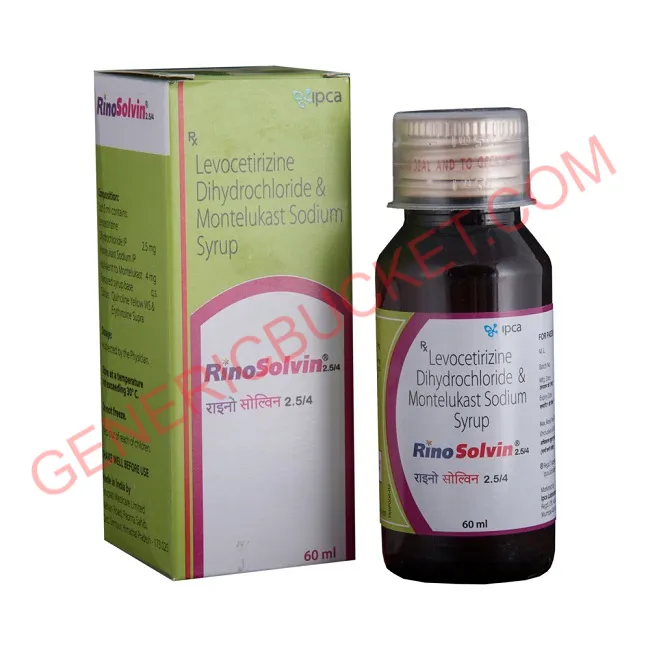

Rinosolvin 2.5/4mg Syrup (Levocetirizine 2.5mg / Montelukast 4mg)
Price range: $22.00 through $108.00
| Country of Origin | india |
|---|---|
| Dosage Form | Syrup |
| Generic Name | Levocetirizine |
| Indication | Treatment of Bronchial Asthma |
| Packaging | 60 ml in 1 bottle |
| Manufacturer | Ipca Laboratories Ltd |
| Composition | Levocetirizine (2.5mg/5ml) + Montelukast (4mg/5ml) |
| Rinosolvin 2.5/4mg Syrup (Levocetirizine 2.5mg / Montelukast 4mg) | |||
| Pack Size | Price | Price/Unit | Add To Cart |
| 1 Bottle/s | $22.00 (22/unit) | $22 | |
| 3 Bottle/s | $56.00 (18.67/unit) | $18.67 | |
| 6 Bottle/s | $108.00 (18/unit) | $18 | |
Rinosolvin 2.5/4mg Syrup is a prescription combination medicine used to manage allergy-related symptoms, particularly allergic rhinitis in children. It contains levocetirizine 2.5 mg and montelukast 4 mg in the reported formulation. Levocetirizine is an antihistamine that reduces the effects of histamine, while montelukast blocks leukotriene activity involved in allergic inflammation.
It is important to understand that Rinosolvin 2.5/4mg Syrup does not permanently “cure” allergies. Instead, it helps control symptoms while the medicine is being used as prescribed. Common symptoms that may improve include sneezing, runny or blocked nose, nasal itching, and itchy or watery eyes. Some sources also describe its use for allergy-associated skin symptoms and as part of treatment for asthma associated with allergies.
How Rinosolvin 2.5/4mg Syrup Works
The two active ingredients work through different pathways. Levocetirizine selectively blocks H1 histamine receptors. Histamine contributes to many familiar allergy symptoms, including sneezing, itching, watery eyes, and nasal discharge. By reducing histamine activity, levocetirizine helps decrease these symptoms.
Montelukast works differently. It blocks leukotriene receptors. Leukotrienes can contribute to inflammation and airway narrowing during allergic reactions. This action can help control certain allergy-related respiratory symptoms when a clinician considers montelukast appropriate. Rinosolvin 2.5/4mg Syrup therefore combines an antihistamine with a leukotriene receptor antagonist to address different components of an allergic response.
Uses and Potential Benefits
Doctors may prescribe Rinosolvin 2.5/4mg Syrup for allergic rhinitis and related allergy symptoms. Allergic rhinitis can cause persistent sneezing, nasal congestion, runny nose, and itchy or watery eyes. These symptoms may interfere with sleep, school, outdoor activities, and everyday comfort.
By controlling the allergic response, Rinosolvin 2.5/4mg Syrup may help a child breathe more comfortably through the nose and experience fewer bothersome allergy symptoms. A clinician may also consider the medicine when allergies occur alongside certain respiratory symptoms. However, parents and caregivers should never use it as a substitute for a prescribed rescue inhaler during an acute asthma attack.
Dosage and Administration
Give Rinosolvin 2.5/4mg Syrup only according to the child’s prescription and the instructions supplied by the healthcare professional. The appropriate dose depends on factors such as age, medical history, symptoms, and other medicines the child takes. Do not increase the dose because symptoms appear severe, and do not give extra doses to compensate for a missed dose without professional advice.
Shake the bottle if the product label instructs you to do so and measure the liquid with an appropriate oral measuring device rather than an ordinary household spoon. Available product information states that the medicine may be taken with or without food.
Related Product
Important Safety Information
Parents should discuss the child’s complete medical history with the prescriber before using Rinosolvin 2.5/4mg Syrup. Tell the healthcare professional about kidney or liver problems, allergies, asthma, and every prescription, nonprescription, or herbal product the child uses.
Levocetirizine may cause drowsiness in some children. Other reported effects include headache, stomach discomfort, dizziness, dry mouth, nausea, fatigue, or rash.
Montelukast also carries an important safety concern involving neuropsychiatric effects. Parents should watch for new or unusual changes in mood, behavior, sleep, agitation, aggression, anxiety, depression, hallucinations, or suicidal thoughts or behavior. Contact the child’s healthcare professional promptly if concerning behavioral or mood changes occur. The FDA recommends reserving montelukast for allergic rhinitis when alternative treatments are ineffective or not tolerated because of these risks.
Seek urgent medical attention if the child develops serious allergic symptoms such as swelling of the face, lips, tongue, or throat, severe breathing difficulty, or a rapidly developing severe rash.
Who Should Avoid It?
Do not give Rinosolvin 2.5/4mg Syrup to a child who has a known allergy to levocetirizine, montelukast, or another ingredient in the formulation. A doctor should determine whether this combination is appropriate, especially for children with significant kidney or liver impairment.
Do not combine it casually with other antihistamines or cold-and-flu products because duplicate ingredients can increase adverse effects. Always provide the pharmacist with a complete medication list before starting Rinosolvin 2.5/4mg Syrup.
Storage
Store Rinosolvin 2.5/4mg Syrup according to the manufacturer’s label, away from excessive heat, moisture, and direct light. Keep the bottle securely out of children’s reach. Do not use expired medicine, and follow the product-specific instructions for disposal after opening. Available product information recommends storage below 30°C.
Why Professional Guidance Matters
Although allergy medicines can provide significant symptom relief, every child has different needs. A persistent runny nose or cough may result from allergies, infection, asthma, environmental irritation, or another condition. A pharmacist or pediatric clinician can help determine whether Rinosolvin 2.5/4mg Syrup is appropriate and whether another treatment would provide a better safety profile.
For customers seeking Rinosolvin 2.5/4mg Syrup, use a legitimate pharmacy and provide a valid prescription when required. Do not purchase prescription medicines solely because an online description promises a cure. A responsible pharmacy should verify the prescription, provide appropriate counseling, and help identify potential interactions.
Frequently Asked Questions
What is Rinosolvin 2.5/4mg Syrup used for?
Rinosolvin 2.5/4mg Syrup is used to manage allergy symptoms such as sneezing, runny or blocked nose, and itchy or watery eyes. It may also be prescribed in selected allergy-related respiratory conditions.
Does Rinosolvin 2.5/4mg Syrup cure allergies permanently?
No. Rinosolvin 2.5/4mg Syrup controls allergy symptoms but does not eliminate the underlying tendency to develop allergies. Your child’s clinician should determine the appropriate duration of treatment.
What ingredients does it contain?
The reported formulation contains levocetirizine 2.5 mg and montelukast 4 mg.
Can children take Rinosolvin 2.5/4mg Syrup?
The product is described as a pediatric formulation, but the exact suitability and dose should come from the child’s healthcare professional.
Can it cause sleepiness?
Yes. Levocetirizine can cause drowsiness in some patients. Monitor the child for excessive sleepiness or dizziness, particularly when treatment begins.
Be the first to review “Rinosolvin 2.5/4mg Syrup (Levocetirizine 2.5mg / Montelukast 4mg)”
Related products





Allergy

Reviews
There are no reviews yet.