


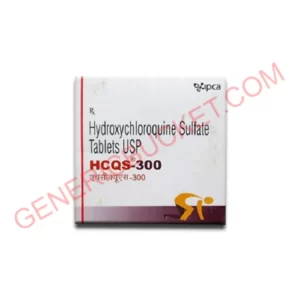
HCQS 400mg Tablet (Hydroxychloroquine 400mg)
Price range: $45.00 through $120.00
| Country of Origin | india |
|---|---|
| Dosage Form | Tablets |
| Generic Name | Hydroxychloroquine |
| Indication | Rheumatoid arthritis |
| Packaging | 10 tablets in 1 strip |
| Manufacturer | Ipca Laboratories Ltd |
| Composition | Hydroxychloroquine (400mg) |
| HCQS 400mg Tablet (Hydroxychloroquine 400mg) | |||
| Pack Size | Price | Price/Unit | Add To Cart |
| 50 Tablet/s | $45.00 (0.9/unit) | $0.9 | |
| 100 Tablet/s | $83.00 (0.83/unit) | $0.83 | |
| 150 Tablet/s | $120.00 (0.8/unit) | $0.8 | |
HCQS 400mg Tablet contains hydroxychloroquine sulfate, a prescription medicine used under medical supervision for certain autoimmune conditions and malaria. It can help reduce inflammation and control symptoms associated with conditions such as rheumatoid arthritis and systemic or chronic discoid lupus erythematosus. Hydroxychloroquine is also FDA-approved for the treatment or prevention of malaria.
What Is HCQS 400mg Tablet?
HCQS 400mg Tablet is an oral medicine containing 400 mg of hydroxychloroquine sulfate. Doctors prescribe hydroxychloroquine when its anti-inflammatory or antimalarial effects are appropriate for the patient’s condition. The medicine does not work as an instant painkiller. Instead, when prescribed for autoimmune disease, it can help control disease activity and reduce inflammation over time.
Patients should use this medicine only according to the prescription and treatment plan provided by their healthcare professional. The appropriate dose can vary according to the condition being treated, body weight, kidney function, other medicines, and individual risk factors.
How HCQS 400mg Tablet Works
Hydroxychloroquine affects immune-system activity and inflammatory pathways. In autoimmune diseases, the immune system becomes overactive and can attack healthy tissues. By modifying certain immune responses, hydroxychloroquine can help reduce inflammation and disease activity.
For malaria, hydroxychloroquine works against susceptible malaria parasites. However, resistance to hydroxychloroquine exists in some regions, so a healthcare professional should determine whether it remains an appropriate treatment or preventive option.
Uses of HCQS 400mg Tablet
Doctors may prescribe HCQS 400mg Tablet for approved indications including rheumatoid arthritis, systemic lupus erythematosus, chronic discoid lupus erythematosus, and susceptible malaria.
For rheumatoid arthritis and lupus, treatment may help control symptoms such as joint discomfort, stiffness, swelling, and inflammatory activity. The response can take time, so patients should not assume that the medicine has failed simply because they do not notice immediate improvement.
Hydroxychloroquine should not be promoted as a treatment or prevention for COVID-19. The FDA determined that hydroxychloroquine was not shown to be safe and effective for COVID-19 and revoked its emergency authorization for that use.
How to Take HCQS 400mg Tablet
Take HCQS 400mg Tablet exactly as prescribed. FDA-approved labeling advises taking hydroxychloroquine sulfate with food or milk and not crushing the tablet.
Try to take your dose consistently at the prescribed time. If you forget a dose, follow your prescriber’s or pharmacist’s instructions rather than taking extra medicine without professional advice.
Do not increase the dose because you want faster relief. Hydroxychloroquine can accumulate in the body, and excessive exposure can cause serious toxicity.
Important Safety Information
Hydroxychloroquine requires appropriate medical monitoring because it can cause serious adverse effects in some patients. One of the most important concerns is retinal toxicity. The risk increases with cumulative exposure and treatment duration. FDA labeling identifies higher daily doses, longer treatment duration, kidney impairment, tamoxifen use, and certain macular conditions as risk factors.
A baseline eye examination is recommended within the first year of treatment, with ongoing monitoring based on individual risk. Patients should promptly report changes in vision or difficulty adapting to darkness.
Hydroxychloroquine can also affect the heart. Serious cardiomyopathy and abnormal heart rhythms, including QT prolongation and ventricular arrhythmias, have been reported. Seek urgent medical attention for fainting, severe dizziness, a fast or irregular heartbeat, or other concerning cardiac symptoms.
Patients should also tell their healthcare professional about kidney disease, heart problems, eye disease, psoriasis, porphyria, G6PD deficiency, and all prescription or nonprescription medicines they use.
Possible Side Effects
Some patients may experience nausea, stomach discomfort, diarrhea, headache, dizziness, or skin-related reactions. Taking the medicine with food or milk may help reduce stomach upset.
More serious reactions require prompt medical attention. These include significant vision changes, severe skin reactions, muscle weakness, symptoms of heart rhythm disturbance, or signs of severe allergic reaction. Serious skin reactions, including Stevens-Johnson syndrome and toxic epidermal necrolysis, have been reported with hydroxychloroquine sulfate.
Drug Interactions
Before starting HCQS 400mg Tablet, provide your healthcare professional with a complete medication list. Hydroxychloroquine may interact with medicines that affect heart rhythm, particularly drugs that can prolong the QT interval. FDA information also highlights increased cardiac risk in certain patients with kidney or heart disease and when hydroxychloroquine is combined with other QT-prolonging medicines.
Do not start, stop, or combine medicines without professional advice.
Who Should Use Extra Caution?
Older adults and people with kidney impairment may require particular attention because reduced clearance can increase drug exposure. Patients with existing retinal disease, cardiac disease, or medicines that affect cardiac rhythm should discuss these factors with their prescriber.
Regular follow-up appointments help healthcare professionals evaluate whether treatment remains appropriate and whether monitoring needs to change.
Why Choose Prescription-Based Treatment?
A prescription medicine should never be selected solely by product name or strength. A qualified healthcare professional needs to determine whether hydroxychloroquine is appropriate, establish the correct dose, review interactions, and arrange necessary monitoring.
If you are looking to obtain HCQS 400mg Tablet, use a legitimate, licensed pharmacy and provide a valid prescription when required. Avoid unverified online sellers because counterfeit or improperly handled medicines can create serious health risks. The FDA specifically advises consumers not to purchase hydroxychloroquine from online pharmacies without a prescription from a healthcare professional.
Frequently Asked Questions
1. What is HCQS 400mg Tablet used for?
HCQS 400mg Tablet contains hydroxychloroquine sulfate and may be prescribed for rheumatoid arthritis, lupus, and susceptible malaria, depending on the patient’s medical circumstances.
2. Can HCQS 400mg Tablet cure rheumatoid arthritis?
It is not generally described as an instant cure. Hydroxychloroquine can help control disease activity and inflammation as part of a long-term treatment plan prescribed by a healthcare professional.
3. Can I take HCQS 400mg Tablet without a prescription?
No. Hydroxychloroquine should be taken under appropriate medical supervision because it can cause serious eye and heart-related adverse effects.
4. Should I take HCQS 400mg Tablet with food?
FDA labeling advises taking hydroxychloroquine sulfate with food or milk.
5. Does HCQS 400mg Tablet treat COVID-19?
No. Hydroxychloroquine has not been shown to be safe and effective for treating or preventing COVID-19, and the FDA revoked its emergency authorization for that use.
Related products
Anti Malarial

Anti Malarial

Anti Malarial

Anti Malarial
Anti Malarial

Anti Rejection Drugs
Anti Malarial

Anti Malarial
Anti Malarial

Anti Rejection Drugs
Anti Malarial