
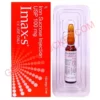



Grandem Injection (Granisetron 1mg)
Price range: $25.00 through $86.00
| Country of Origin | india |
|---|---|
| Dosage Form | Injection |
| Generic Name | Granisetron |
| Indication | Nausea and vomiting due to chemotherapy |
| Packaging | 3ml in a vial |
| Manufacturer | Aristo Pharmaceuticals Pvt Ltd |
| Composition | Granisetron (1mg) |
| Grandem Injection (Granisetron 1mg) | |||
| Pack Size | Price | Price/Unit | Add To Cart |
| 3 Vial/s | $25.00 (8.33/unit) | $8.33 | |
| 6 Vial/s | $46.00 (7.67/unit) | $7.67 | |
| 10 Vial/s | $86.00 (8.6/unit) | $8.6 | |
Grandem Injection contains granisetron, a 5-HT3 receptor antagonist used to prevent and control nausea and vomiting associated with cancer treatment and, depending on the product labeling and clinical setting, postoperative nausea and vomiting. Aristo Pharma lists the product as containing granisetron 1 mg and identifies it as an antiemetic. Rather than claiming that this medicine “cures” an underlying illness, it is more accurate to say that it helps prevent or relieve nausea and vomiting while healthcare professionals address the underlying cause.
For people receiving chemotherapy or other treatments that can trigger severe nausea, effective antiemetic therapy can make treatment considerably more manageable. Granisetron works by blocking serotonin signals involved in the vomiting reflex. U.S. prescribing information identifies granisetron hydrochloride injection as a serotonin-3 receptor antagonist indicated for prevention of nausea and/or vomiting associated with emetogenic cancer therapy.
What Is Grandem Injection?
Grandem Injection is a prescription antiemetic preparation containing granisetron. The Indian product information identifies a 1 mg strength, with presentations including 1 mL and 3 mL packs. Because injectable medicines require appropriate preparation, administration, and monitoring, a doctor, nurse, or other qualified healthcare professional should administer this medicine rather than allowing patients to inject it themselves.
The medicine is particularly relevant when nausea and vomiting occur around chemotherapy, radiotherapy, or surgical procedures. The exact approved indication can vary by formulation and jurisdiction, so patients should follow the prescription and the labeling supplied with their specific product.
How Grandem Injection Works
Chemotherapy and some other medical treatments can cause cells in the gastrointestinal tract to release serotonin. Serotonin can activate 5-HT3 receptors and send signals that contribute to nausea and vomiting. Granisetron blocks these receptors and reduces the transmission of those signals. This pharmacological action helps control treatment-related nausea and vomiting.
This action does not treat cancer itself, infection, digestive disease, or another underlying condition causing nausea. Instead, it provides supportive symptom control. This distinction matters because persistent vomiting may indicate a condition that requires separate medical evaluation.
Uses and Potential Benefits
Doctors may prescribe Grandem Injection when a patient needs rapid or reliable antiemetic support in a clinical setting. Its principal role involves preventing or controlling nausea and vomiting associated with cancer therapy. U.S. labeling also supports prevention and treatment of postoperative nausea and vomiting in adults for appropriately labeled granisetron injection products.
Controlling vomiting can help patients maintain hydration, tolerate necessary treatment, and recover more comfortably after procedures. However, the appropriate antiemetic strategy depends on the treatment being received, the patient’s medical history, and the risk of vomiting. Some patients may require granisetron together with other antiemetic medicines.
Related Product
Dosage and Administration
Do not determine your own injectable dose. The healthcare professional administering Grandem Injection should follow the prescribed regimen and the applicable product labeling. For U.S.-labeled granisetron hydrochloride injection, chemotherapy-related dosing is weight-based and administered intravenously before chemotherapy. The U.S. label also provides specific adult dosing for postoperative nausea and vomiting.
The dose can differ according to the indication, formulation, patient characteristics, and local labeling. Never use someone else’s prescription, change the dose, or administer an injection without professional instruction.
Side Effects and Safety
Like other medicines, Grandem Injection can cause side effects. Headache and constipation are among the commonly reported adverse reactions with granisetron injection in clinical labeling. Some product information also reports injection-site discomfort, swelling, diarrhea, or other reactions.
Granisetron requires particular caution in people with certain heart-rhythm conditions because QT prolongation has been reported. Healthcare professionals should also consider potential hypersensitivity reactions and clinically important interactions. Serotonin syndrome has been reported, particularly when granisetron is used with other serotonergic medicines.
Tell your healthcare professional about all prescription medicines, over-the-counter products, and supplements you use. Also disclose any history of heart-rhythm problems, electrolyte abnormalities, allergies to granisetron or other 5-HT3 antagonists, liver problems, pregnancy, or breastfeeding.
Storage and Handling
Store the product according to the specific package instructions. One current product listing advises storage below 25°C, while storage requirements can differ among formulations and manufacturers. Keep injectable medicines in their original packaging and protect them from inappropriate temperature, contamination, and unauthorized use.
A healthcare professional should inspect injectable medication before administration and should not use a product that appears damaged, discolored, or otherwise unsuitable.
Why Choose Grandem Injection?
When prescribed appropriately, Grandem Injection offers targeted antiemetic support through granisetron’s 5-HT3 receptor-blocking action. Patients undergoing demanding medical treatment may benefit from effective nausea control because it can improve comfort and make treatment easier to tolerate.
If you are considering ordering this prescription medicine, verify the strength, formulation, manufacturer, packaging, expiry information, and prescription requirements before purchase. Choose a legitimate pharmacy and consult a qualified healthcare professional whenever you are uncertain about suitability.
Frequently Asked Questions
1. What is Grandem Injection used for?
Grandem Injection contains granisetron and is used as an antiemetic to prevent or control nausea and vomiting associated with certain cancer treatments and, for appropriately labeled products, postoperative nausea and vomiting.
2. Does Grandem Injection cure cancer?
No. It does not cure cancer or the underlying cause of nausea. It controls or prevents nausea and vomiting so patients can receive necessary treatment more comfortably.
3. Can I administer Grandem Injection myself?
No. Injectable medicines should be administered by a qualified healthcare professional according to the prescription.
4. What are common side effects?
Headache and constipation are commonly reported with granisetron injection. Other reactions can occur depending on the individual and formulation.
5. Can people with heart problems use it?
Patients with heart-rhythm disorders should tell their healthcare professional before treatment because granisetron can affect the QT interval. The clinician can determine whether it is appropriate and whether monitoring is necessary.
Be the first to review “Grandem Injection (Granisetron 1mg)”
Related products

Anti Emetic

Anti Emetic

Anti Emetic

Acid Reducers

Anti Emetic

Anti Emetic
Acid Reducers

Anti Emetic
Anti Emetic
Anti Emetic
Reviews
There are no reviews yet.