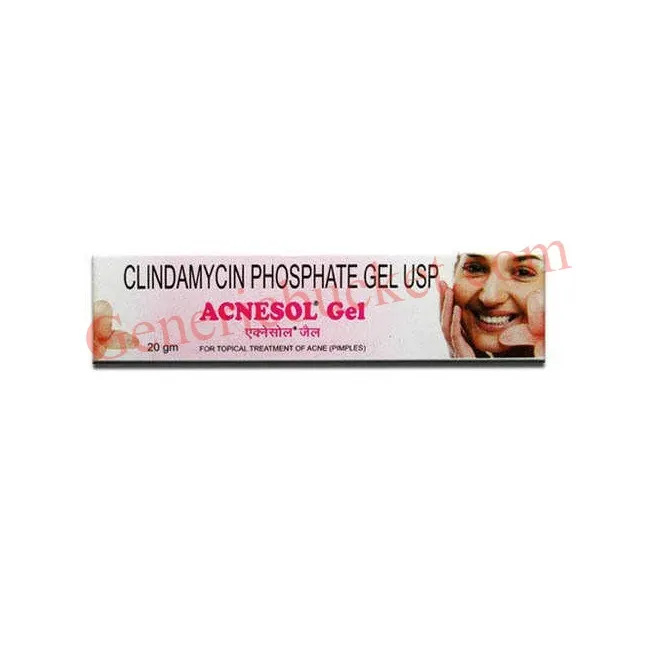

Acnesol Gel (Clindamycin 1%) 20gm
Price range: $24.00 through $86.00
| Country of Origin | india |
|---|---|
| Dosage Form | Gel |
| Equivalent Brand | Cleocin T |
| Generic Name | Clindamycin |
| Indication | Acne |
| Manufacturer | Systopic Laboratories Pvt Ltd |
| Packaging | 20 gm in 1 tube |
| Composition | Clindamycin (1% w/w) |
| Acnesol Gel (Clindamycin 1%) 20gm | |||
| Pack Size | Price | Price/Unit | Add To Cart |
| 3 Tube/s | $24.00 (8/unit) | $8 | |
| 6 Tube/s | $46.00 (7.67/unit) | $7.67 | |
| 12 Tube/s | $86.00 (7.17/unit) | $7.17 | |
Acnesol Gel is a topical prescription medicine used to treat acne vulgaris, including inflammatory pimples that can appear on the face, chest, shoulders, and back. The formulation identified as Acnesol Gel contains clindamycin 1% w/w, a topical antibiotic that helps reduce acne-causing bacteria and associated inflammation.
Acne develops when hair follicles become blocked with oil and dead skin cells and inflammation develops within the follicle. Bacteria can contribute to the inflammatory process, resulting in red, swollen, or tender pimples. As a topical antibiotic, Acnesol Gel works directly on the skin to reduce susceptible bacterial growth. This can help decrease inflammation and improve the appearance of acne lesions when you use the medicine exactly as prescribed.
How Acnesol Gel Works
The active ingredient in Acnesol Gel is clindamycin 1% w/w. Clindamycin belongs to the lincosamide class of antibiotics. When applied to acne-affected skin, it inhibits bacterial protein synthesis, which interferes with the growth of susceptible bacteria. Reducing bacterial activity can subsequently help reduce the inflammation associated with acne.
Because this product contains an antibiotic, you should not treat it like an ordinary cosmetic acne cream. Your healthcare professional should determine whether topical clindamycin is appropriate for your type and severity of acne. Antibiotic treatment also requires responsible use because inappropriate or prolonged antibiotic exposure can contribute to antimicrobial resistance.
Uses and Potential Benefits
Doctors may prescribe Acnesol Gel when acne requires topical antibiotic treatment. It can help reduce inflammatory pimples and the bacterial component associated with acne. Consistent treatment may gradually improve the number and severity of active lesions.
The medicine may be particularly useful when acne appears repeatedly and produces redness or inflammation. However, it does not permanently “cure” every underlying cause of acne. Hormonal changes, excess oil production, blocked follicles, genetics, skincare products, and other factors can continue to influence breakouts. Your healthcare professional may therefore combine topical clindamycin with another acne treatment when clinically appropriate.
How to Apply Acnesol Gel
Before applying Acnesol Gel, gently wash the affected area with a mild cleanser and allow the skin to dry. Apply a thin layer over the acne-affected area according to your prescriber’s instructions. Do not apply a thick layer because using more medicine does not necessarily produce faster results and may increase irritation.
Wash your hands before and after application. Avoid contact with your eyes, lips, inside of your nose, and other sensitive areas. If accidental contact occurs, rinse the area thoroughly with water. Do not cover treated skin with an occlusive dressing unless your healthcare professional specifically tells you to do so.
Use the medicine regularly for the prescribed duration. Acne treatment often requires patience, and visible improvement may take several weeks. Do not stop treatment early simply because your skin begins to look better, and do not extend treatment beyond the prescribed period without medical advice.
Possible Side Effects
Some people may experience local skin reactions after applying Acnesol Gel. These can include dryness, irritation, redness, burning, itching, or discomfort at the application site. Mild reactions may improve as the skin becomes accustomed to treatment.
Contact your healthcare professional if irritation becomes severe, persistent, or bothersome. Because clindamycin is an antibiotic, seek medical advice if you develop significant or persistent diarrhea or abdominal symptoms during treatment or afterward. Your clinician can determine whether the medicine should be discontinued or replaced.
Do not use Acnesol Gel if you have previously experienced an allergic reaction to clindamycin or any component of the product. Tell your healthcare professional about your medical history and all medicines or topical products you use before beginning treatment.
Related Product
Important Precautions
Use Acnesol Gel only on the skin and only as directed. Avoid applying it to cuts, broken skin, or severely irritated areas unless your prescriber specifically recommends it.
Tell your healthcare professional if you have a history of gastrointestinal disease, particularly colitis, or have previously developed severe diarrhea while taking antibiotics. Also discuss pregnancy or breastfeeding before starting treatment so your healthcare professional can assess whether topical clindamycin is appropriate for you.
Avoid combining multiple acne products without professional guidance. Ingredients such as strong exfoliants, alcohol-based products, or other irritating topical medicines may increase dryness and irritation. A gentle cleanser and non-comedogenic moisturizer can help support your skin barrier while you follow your prescribed acne regimen.
Storage and Handling
Keep the tube tightly closed and store it according to the product label and pharmacist’s instructions. Keep medicines away from children and pets. Do not use the gel after its expiry date, and do not share prescription acne medicines with another person, even if that person has similar-looking pimples.
Who Should Use Acnesol Gel?
Acnesol Gel is intended for people for whom a healthcare professional has determined that topical clindamycin is suitable. It is not appropriate for every type of acne or every patient. Your prescriber may recommend a different treatment if your acne is primarily non-inflammatory, severe, cystic, widespread, or resistant to previous treatment.
For persistent, painful, scarring, or worsening acne, professional evaluation is especially important. Early treatment can help reduce the risk of long-lasting acne marks and scars.
Frequently Asked Questions
1. What is Acnesol Gel used for?
Acnesol Gel contains clindamycin 1% w/w and is prescribed as a topical antibiotic for acne. It helps reduce susceptible acne-associated bacteria and inflammation.
2. Does Acnesol Gel remove pimples immediately?
No. Acne treatment generally requires consistent use over time. Do not apply extra gel to try to accelerate results.
3. Can I apply Acnesol Gel to my whole face?
Follow your prescriber’s directions. Usually, a thin layer is applied to the acne-affected area rather than using an excessive amount.
4. Can I use Acnesol Gel with other acne products?
Sometimes clinicians combine acne medicines, but you should not add another active acne treatment without professional advice because combinations can increase irritation.
5. Can I use Acnesol Gel during pregnancy?
Discuss pregnancy or plans to become pregnant with your healthcare professional before using this prescription medicine. Your clinician can assess the potential benefits and risks for your individual situation.
Related products