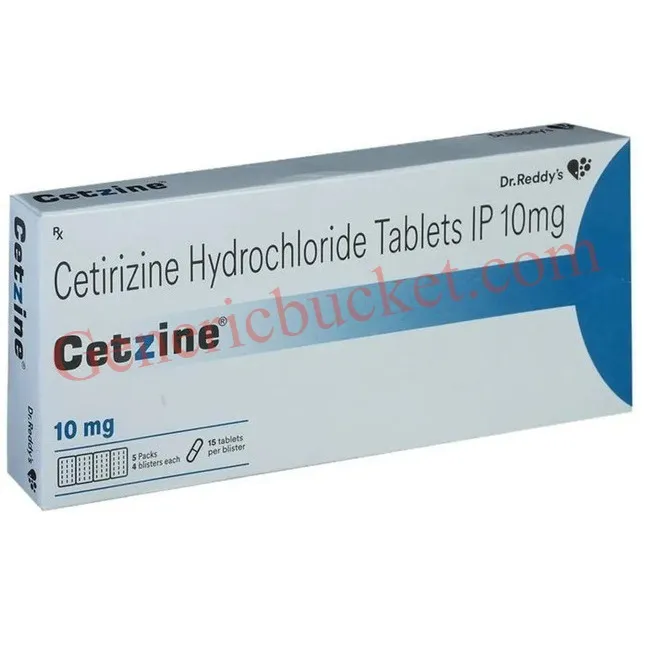

Cetzine Tablet (Cetirizine 10mg)
Price range: $23.00 through $78.00
| Country of Origin | india |
|---|---|
| Dosage Form | Tablets |
| Generic Name | Cetirizine |
| Indication | Allergic conditions |
| Packaging | 10 tablets in 1 strip |
| Manufacturer | Dr Reddy's Laboratories Ltd |
| Composition | Cetirizine (10mg) |
| Cetzine Tablet (Cetirizine 10mg) | |||
| Pack Size | Price | Price/Unit | Add To Cart |
| 50 Tablet/s | $23.00 (0.46/unit) | $0.46 | |
| 100 Tablet/s | $42.00 (0.42/unit) | $0.42 | |
| 200 Tablet/s | $78.00 (0.39/unit) | $0.39 | |
Cetzine Tablet is commonly used to relieve symptoms associated with allergies, including sneezing, runny nose, itchy or watery eyes, and itching. Its active ingredient is generally cetirizine, a second-generation antihistamine that reduces the effects of histamine, a natural chemical involved in allergic reactions. Because formulations and strengths can vary by market, always check the package label for the active ingredient and strength before use.
What Is Cetzine Tablet?
Cetzine Tablet is an antihistamine medicine used for symptomatic relief of several common allergic conditions. Cetirizine works by blocking histamine at H1 receptors. Histamine contributes to symptoms such as nasal irritation, repeated sneezing, watery eyes, itching, and skin reactions. By reducing histamine activity, this medicine can make allergy symptoms easier to manage.
Unlike older antihistamines, cetirizine generally causes less drowsiness in many people, although sleepiness can still occur. People respond differently, so you should understand how the medicine affects you before driving, operating machinery, or performing tasks that require full alertness.
What Does Cetzine Tablet Treat?
Doctors and pharmacists may recommend cetirizine for symptoms caused by allergic rhinitis and certain itchy skin conditions. It may help relieve seasonal allergy symptoms triggered by pollen as well as year-round symptoms caused by dust mites, animal dander, or other allergens. It can also help reduce itching and hives associated with urticaria.
The medicine does not remove the underlying allergy or permanently cure an allergic condition. Instead, it controls symptoms while the medicine remains active. For persistent or severe symptoms, healthcare professionals may recommend additional allergy-management strategies.
How Does Cetzine Tablet Work?
The active ingredient cetirizine blocks the action of histamine. When your immune system encounters an allergen, it may release histamine. Histamine then binds to receptors in different tissues and produces familiar allergy symptoms.
By blocking H1 histamine receptors, Cetzine Tablet can reduce itching, sneezing, nasal discharge, and watery eyes. Its action helps control symptoms without directly removing the allergen responsible for the reaction. Avoiding known triggers remains an important part of long-term allergy management.
How to Take Cetzine Tablet
Take Cetzine Tablet exactly according to the product label or the directions provided by your healthcare professional. Adults and children may require different doses, and the appropriate dose can depend on age, kidney function, and other individual factors.
Swallow the tablet with water. It can generally be taken with or without food unless your product label states otherwise. Do not take more than the recommended amount in an attempt to obtain faster relief. Taking additional doses can increase the risk of unwanted effects without necessarily improving symptom control.
If you forget a dose, follow the instructions on the package or ask your pharmacist what to do. Do not routinely double the next dose unless a healthcare professional specifically tells you to do so.
Benefits of Cetzine Tablet
One important advantage of Cetzine Tablet is its ability to provide relief from several allergy symptoms with one antihistamine treatment. It may reduce sneezing, itching, runny nose, and watery eyes. For people with hives, it can also decrease allergy-related itching.
Because cetirizine is considered a second-generation antihistamine, it typically produces less sedation than many first-generation antihistamines. However, some users still experience drowsiness. Alcohol and other medicines that cause sedation may increase this effect.
Possible Side Effects
Most people tolerate Cetzine Tablet well when they use it appropriately. Common side effects may include drowsiness, tiredness, dry mouth, headache, or dizziness. These effects are usually mild, but you should speak with a healthcare professional if they become troublesome or persistent.
Seek urgent medical attention if you develop signs of a serious allergic reaction to the medicine itself, such as swelling of the face, lips, tongue, or throat, severe difficulty breathing, or fainting. Serious reactions are uncommon but require immediate medical evaluation.
Precautions Before Using Cetzine Tablet
Before taking Cetzine Tablet, tell your healthcare professional about kidney problems, liver disease, pregnancy, breastfeeding, allergies to cetirizine or related medicines, and all prescription or nonprescription medicines you use.
People with reduced kidney function may require a different dosage. Older adults may also need individualized advice because medicines can remain in the body longer as kidney function changes with age.
Avoid alcohol if it makes you excessively sleepy while taking cetirizine. Also use caution with sedatives, sleeping medicines, or other products that can cause drowsiness. Always check with a pharmacist before combining medicines when you are uncertain.
Drug Interactions
Cetzine Tablet may interact with medicines or substances that increase drowsiness. Although clinically important interactions are not common with cetirizine, your complete medication list still matters. Tell your pharmacist about prescription medicines, over-the-counter products, herbal supplements, and other antihistamines.
Do not combine multiple allergy medicines containing antihistamines unless a healthcare professional recommends the combination. This helps prevent accidental duplication and unnecessary side effects.
Who Should Use Cetzine Tablet?
Cetzine Tablet may be appropriate for people who need relief from allergy symptoms when cetirizine is suitable for them. However, the correct product and dose depend on age and health status. Parents should follow age-specific directions carefully and ask a pediatric healthcare professional when uncertain.
Pregnant or breastfeeding individuals should discuss cetirizine use with their healthcare professional before starting treatment. A pharmacist can also help determine whether the product is appropriate based on the individual’s circumstances.
Storage and Responsible Use
Keep Cetzine Tablet in its original packaging and store it according to the manufacturer’s instructions. Keep medicines away from excessive heat, moisture, and direct sunlight. Store them where children cannot access them.
Never share your medicine with another person, even when that person has symptoms that appear similar. Allergy symptoms can have different causes, and another person may have a medical condition or medication interaction that makes cetirizine unsuitable.
When to Seek Medical Advice
Contact a healthcare professional if allergy symptoms remain severe, repeatedly return despite treatment, or interfere significantly with daily activities. You should also seek evaluation when symptoms suggest something other than a routine allergy, such as persistent fever, severe facial pain, significant breathing difficulty, or unexplained swelling.
For sudden severe breathing problems, throat swelling, or other signs of a potentially life-threatening allergic reaction, seek emergency medical care immediately rather than relying on an oral antihistamine alone.
Frequently Asked Questions
1. What is Cetzine Tablet used for?
Cetzine Tablet is generally used to relieve allergy symptoms such as sneezing, runny nose, itchy or watery eyes, and itching associated with hives.
2. Does Cetzine Tablet make you sleepy?
It can. Although cetirizine usually causes less sedation than many older antihistamines, some people experience drowsiness or tiredness.
3. Can I take Cetzine Tablet every day?
Some people use cetirizine regularly for ongoing allergies, but the appropriate duration depends on the individual’s symptoms and the product directions. Follow the label or your healthcare professional’s advice.
4. Can I take Cetzine Tablet with food?
Cetirizine products can generally be taken with or without food. Follow the instructions supplied with your specific product.
5. Can children take Cetzine Tablet?
Children may use cetirizine products at age-specific doses, but dosing varies by age and formulation. Check the package directions and consult a pediatric healthcare professional when unsure.
Related products




Allergy